European hoofweed
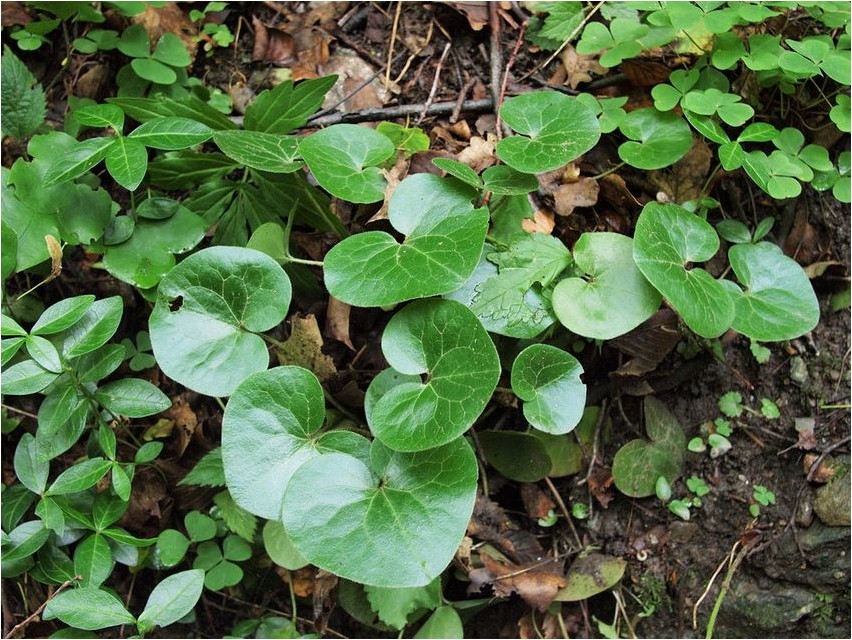
European hooffoot is one of the plants of the family called Circassaceae; in Latin the name of this plant will be as follows: Asarum europaeum L.
As for the name of the European ungulate family itself, in Latin it will be like this: Aristolochiaceae Juss.
Description of the European ungulate
European hoofweed is known under numerous popular names: chicken foot, butterbur, vomit, varagushe, blyakotnik, consumable, emetic root, fever grass, man’s ear, money grass, hare root and many others. European smokeweed is a perennial herbaceous rhizomatous plant, the height of which will fluctuate between five and ten centimeters. It should be noted that the stems of this plant will be endowed with the smell of pepper. The leaves of the European hoofweed are kidney-shaped and long-petiolate, they will overwinter and turn dark green. The flowers are quite small in shape, tripartite, bell-shaped and dirty yellow-purple in color. The fruits of this plant are six-celled capsules.
The seeds of the European hoofweed will be endowed with uterine appendages, and their distribution occurs through ants. This plant blooms from early spring to the very beginning of summer. Under natural conditions, the plant is found almost everywhere in the European part of Russia, west of the Ob River in Western Siberia, Ukraine, Belarus and Altai. For growth, the European hoofed grass prefers shady broad-leaved and coniferous-deciduous forests, as well as humus soil.
Description of the medicinal properties of European ungulate
European ungulate is endowed with very valuable healing properties, and it is recommended to use rhizomes, roots and leaves of this plant for medicinal purposes. It is recommended to harvest leaves in the month of May, while roots and rhizomes are stored already in late autumn. It should be noted that it is preferable to use such raw materials fresh as medicine, which is due to the fact that changes in the chemical composition may occur during drying. It is noteworthy that European hoofweed is a poisonous plant and for this reason extreme care should be taken when handling this plant.
The presence of such valuable healing properties should be explained by the content of flavonoids, glycosides, coumarin, kaempferol and quercetin, saponins, phytosterols, tannins, resins, organic acids, starch, mucus, coumaric, caffeic and ferulic acids in the plant. In addition, the roots and rhizomes of the European ungulate contain an essential oil that contains the following volatile toxic substances: eugenol, asarone, pinene, diazarone, asaronic aldehyde, bornyl acetate and methyl eugenol.

As for scientific medicine, here the rhizomes of this plant are used as a very valuable emetic and expectorant in the form of an aqueous infusion and powder.
It should be noted that it was experimentally established that the European hoof is endowed with blood pressure-increasing and anthelmintic effects, as well as vasoconstrictor and cardiac-enhancing properties.
The roots of this plant are used for gout, epilepsy, jaundice, tongue paralysis, rheumatism, hysteria, migraine, hypertension, nervous diseases, bronchial asthma, and also as an emetic. In a mixture with immortelle flowers, the roots of European hoofed grass are used for various pains in the heart, as well as for hepatitis. The boiled root of this plant, which is recommended to be applied to the head, will help cope with headaches.