Brussonetia
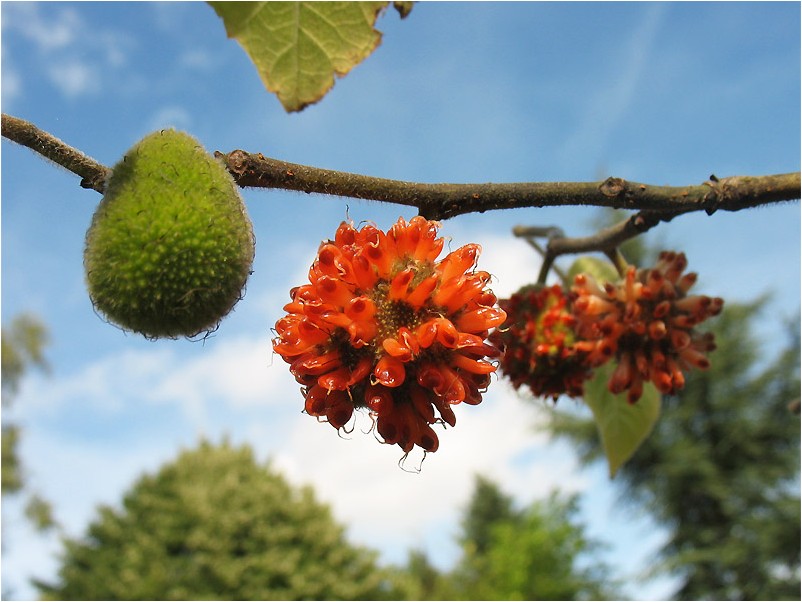
Broussonetia (lat. Broussonetia) is a small genus of trees, classified by botanists as belonging to the Mulberry family (lat. Moraceae).
Among the four or five species classified as a genus by different botanical classifications, the species with the name “Broussonetia papyrifera” is especially popular in East Asia. The Chinese, Koreans and Japanese learned to make fiber from the bark of this species to make paper of high quality.
What”s in your name
The Latin name of the genus “Broussonetia” is associated with wooden beams made from tree trunks. However, in this case, the timber has nothing to do with it. In the name of the genus, a French botanist with the name Etienne Pierre Ventenat (03/01/1757 — 08/13/1808) immortalized the name of another French botanist, whose name is Pierre Marie Auguste Broussonet (02/28/1761 — 01/17/1807).
Popular with gardeners
Although the British botanist (and physician) John Sims (10/13/1749 — 02/26/1831) in 1822 wrote about “Broussonetia papyrifera”, also called “Paper-Mulberry”, that it is a shrub that is not particularly ornamental, plant lovers have found its attractive sides and have been growing the tree for many years in Asian and European gardens.
For example, back in 1751, an English botanist and gardener named Peter Collinson (01/28/1694 — 08/11/1768), who “part-time” traded silk and velvet from China, grew “Paper-Mulberry” from Chinese seeds, sharing the seeds with his friends.
But the main value of the tree is, of course, its bark, from which paper of various textures is produced, which is very popular in the world.

In addition to the species “Broussonetia papyrifera”, the species “Broussonetia kazinoki” is very picturesque with lobed, serrated along the edge, decorative leaves and openwork spherical inflorescences.
Description
Briton John Sims clearly underestimated the decorative aspects of plants of the genus “Broussonetia”. With such a small number of species, trees exhibit great external diversity. Their height, depending on the living conditions and age of the individual, varies from 5 (five) to 16 (sixteen) meters.
The variety of shapes of petiole leaves is surprising, which can be very narrow, ovoid and whole, or lobed, with three figured lobes. The edge of the leaf blade is decorated with coquettish teeth, and the surface is dotted with veins, giving a very picturesque appearance to the green part of the plant. The stipules present on the leaves fall off.
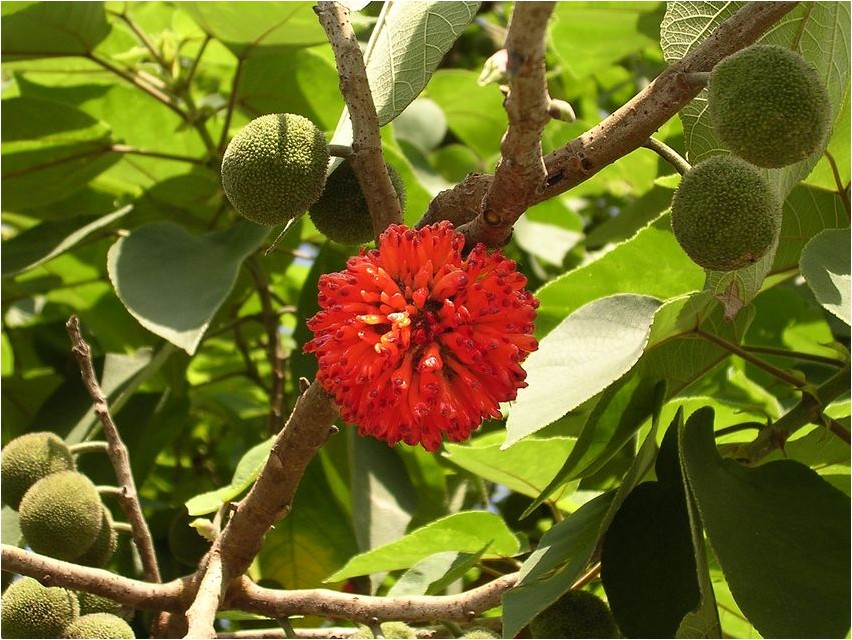
The flowers of the plants are unisexual, forming quite decorative inflorescences. Male flowers form earring inflorescences and have an even number of stamens and petals, equal to four. Female flowers form bright, spherical inflorescence heads, displaying three to five petals and a thread-like stigma on a thread-like style. The color of flower petals is varied and complements the picturesqueness of the plants.

The crown of the growing season is the infructescence, formed by fleshy berries fused with the inflorescence stem and with each other, replacing the pollinated female spherical inflorescences.
Usage
As already noted, plants of the genus are popular among gardeners and are grown as landscape decorators far from their native places in East Asia.
In a number of East Asian countries, a species called “Broussonetia papyrifera” is an important source of replenishment of the country’s budget and the wallets of enterprising citizens. The fibrous inner bark of the tree, called “lub” in Rus”, is an excellent raw material for the production of amazing types of paper, which are made by hand.
“Brassonetia paper” has long been a source of food, fiber for making clothing, and a healing drug in the countries of East Asia and a number of Pacific Islands.
Broussonetia paper tree/Japanese paper tree/Broussonetia papyrifera
Brussonetia
Broussonetia (lat. Broussonetia) is a small genus of trees, classified by botanists as belonging to the Mulberry family (lat. Moraceae).
Among the four or five species classified as a genus by different botanical classifications, the species with the name “Broussonetia papyrifera” is especially popular in East Asia. The Chinese, Koreans and Japanese learned to make fiber from the bark of this species to make paper of high quality.
What”s in your name
The Latin name of the genus “Broussonetia” is associated with wooden beams made from tree trunks. However, in this case, the timber has nothing to do with it. In the name of the genus, a French botanist with the name Etienne Pierre Ventenat (03/01/1757 — 08/13/1808) immortalized the name of another French botanist, whose name is Pierre Marie Auguste Broussonet (02/28/1761 — 01/17/1807).
Popular with gardeners
Although the British botanist (and physician) John Sims (10/13/1749 — 02/26/1831) in 1822 wrote about “Broussonetia papyrifera”, also called “Paper-Mulberry”, that it is a shrub that is not particularly ornamental, plant lovers have found its attractive sides and have been growing the tree for many years in Asian and European gardens.
For example, back in 1751, an English botanist and gardener named Peter Collinson (01/28/1694 — 08/11/1768), who “part-time” traded silk and velvet from China, grew “Paper-Mulberry” from Chinese seeds, sharing the seeds with his friends.
But the main value of the tree is, of course, its bark, from which paper of various textures is produced, which is very popular in the world.
In addition to the species “Broussonetia papyrifera”, the species “Broussonetia kazinoki” is very picturesque with lobed, serrated along the edge, decorative leaves and openwork spherical inflorescences.
Description
Briton John Sims clearly underestimated the decorative aspects of plants of the genus “Broussonetia”. With such a small number of species, trees exhibit great external diversity. Their height, depending on the living conditions and age of the individual, varies from 5 (five) to 16 (sixteen) meters.
The variety of shapes of petiole leaves is surprising, which can be very narrow, ovoid and whole, or lobed, with three figured lobes. The edge of the leaf blade is decorated with coquettish teeth, and the surface is dotted with veins, giving a very picturesque appearance to the green part of the plant. The stipules present on the leaves fall off.
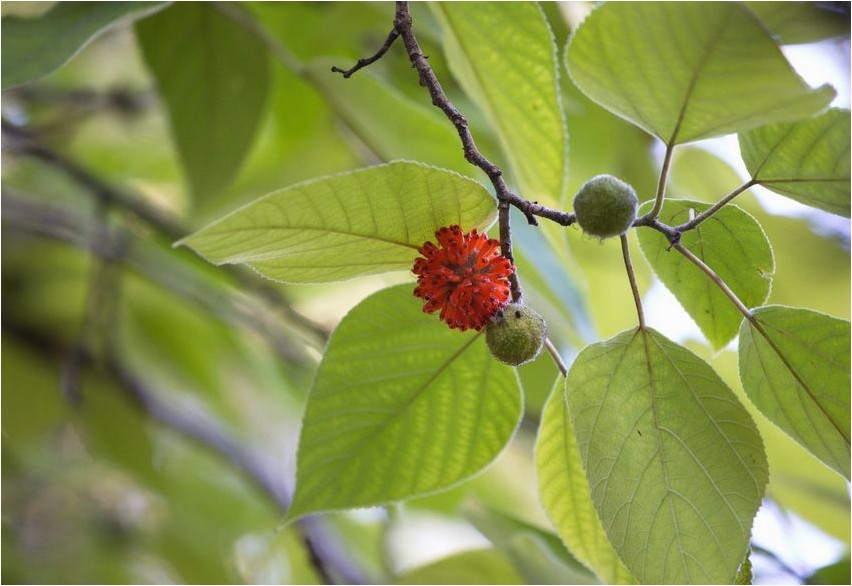
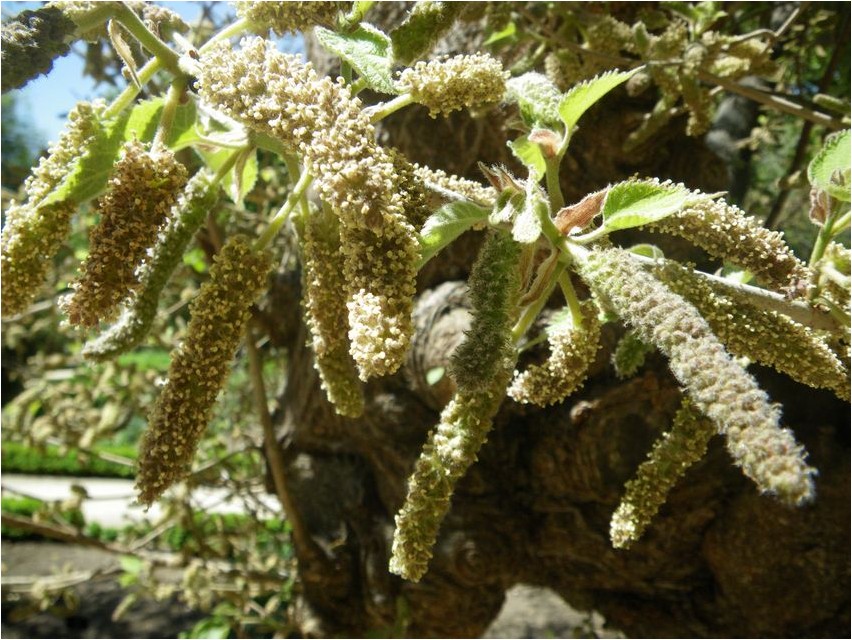
The flowers of the plants are unisexual, forming quite decorative inflorescences. Male flowers form earring inflorescences and have an even number of stamens and petals, equal to four. Female flowers form bright, spherical inflorescence heads, displaying three to five petals and a thread-like stigma on a thread-like style. The color of flower petals is varied and complements the picturesqueness of the plants.
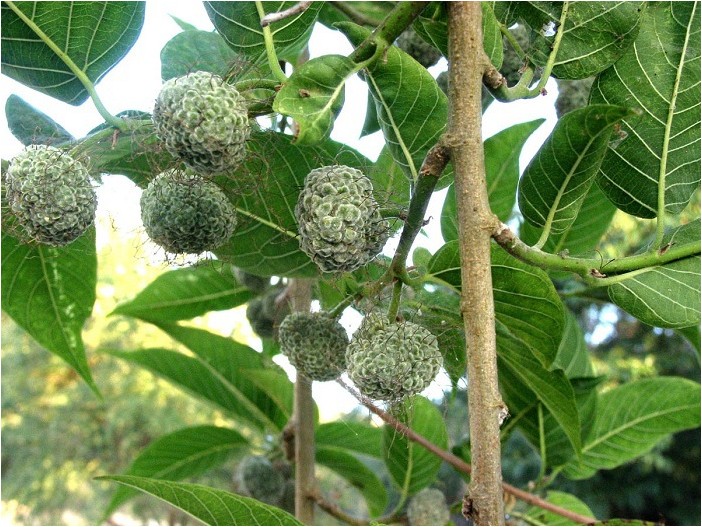
The crown of the growing season is the infructescence, formed by fleshy berries fused with the inflorescence stem and with each other, replacing the pollinated female spherical inflorescences.
Usage
As already noted, plants of the genus are popular among gardeners and are grown as landscape decorators far from their native places in East Asia.
In a number of East Asian countries, a species called “Broussonetia papyrifera” is an important source of replenishment of the country’s budget and the wallets of enterprising citizens. The fibrous inner bark of the tree, called “lub” in Rus”, is an excellent raw material for the production of amazing types of paper, which are made by hand.
“Brassonetia paper” has long been a source of food, fiber for making clothing, and a healing drug in the countries of East Asia and a number of Pacific Islands.





