Fitzroya
Fitzroya (Latin: Fitzroya) is a coniferous evergreen tree belonging to the Cupressaceae family. It can be either monoecious or dioecious.
This plant received its interesting name in honor of Robert Fitzroy, captain of the enormous ship HMS Beagle. It was this ship that set out in 1831 on an incredibly exciting five-year circumnavigation of the globe with the greatest scientist of all time, Charles Darwin.
Description
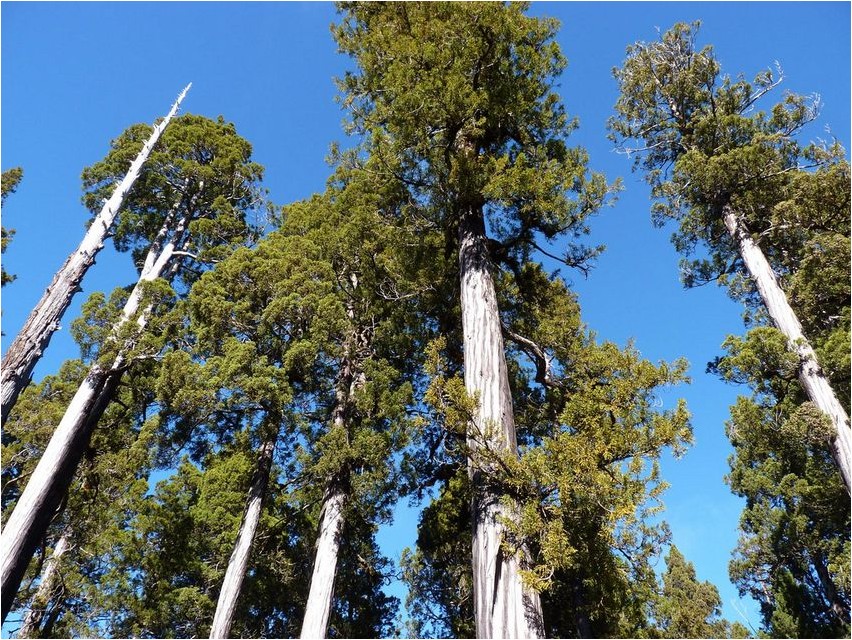
Fitzroya is a coniferous evergreen tree renowned for being one of the tallest South American trees—it can reach heights of not only fifty meters, but even exceed that! This tree also has incredibly thick trunks—some specimens can reach a diameter of five meters! The average trunk diameter is approximately 1. 25 m.
The bark of this tree is usually brown, and the slender green branches of the Fitzroya form luxurious, lacy crowns, almost always pyramidal in shape. The Fitzroya”s leaves are whorled and scale-like.
The Fitzroya is not only slow-growing, but also remarkably long-lived: the oldest specimen is a whopping 3, 600 years old (determined using the most traditional method—tree rings)! Furthermore, it is one of the oldest tree species on our vast planet: the Fitzroya is almost as old as the redwood tree and the magnificent bristlecone pine!
Currently, the Fitzroya is represented by a single species—the Fitzroya cypress. Where it grows

Fitzroya, native to northern Patagonia, is quite widespread in Argentina and southern Chile. It is most often seen in regions characterized by relatively high annual rainfall. It typically grows in vast, mossy, and damp coniferous forests. These forests are typically located on swampy plains, although they can sometimes be found in mountainous regions. Fitzroya has also been introduced to the distant British Isles, but there it rarely exceeds twenty meters in height.
Use
The soft yet durable reddish-brown wood of Fitzroya boasts impressive resistance to rot. Its uniform, fine texture, free from any defects, is due to the relatively slow growth of this unusual tree and is somewhat reminiscent of the wood of the well-known giant arborvitaes. The average density of this wood is approximately 510 kg per cubic meter. It has always responded well to mechanical processing, only slightly dulling the cutting edges used for this purpose. These valuable qualities allowed Fitzroya wood to be used for furniture and finishing a wide variety of structures. The bark was also widely used as oakum in the construction of wooden ships and their subsequent repair.
Overharvesting of this remarkable tree in the early twentieth century led to the Fitzroya being on the brink of extinction. The most severe damage was inflicted on the once dense and virtually impenetrable forests located in the coastal lowlands. This is why harvesting such timber has been banned in Chile since 1977. Furthermore, local laws prohibit citizens from even harvesting wood from already dead trees. Furthermore, the beautiful Fitzroya is listed as a CITES I species, meaning international trade in this tree is now completely prohibited.
Fitzroya fitzroya