Calathea Makoya
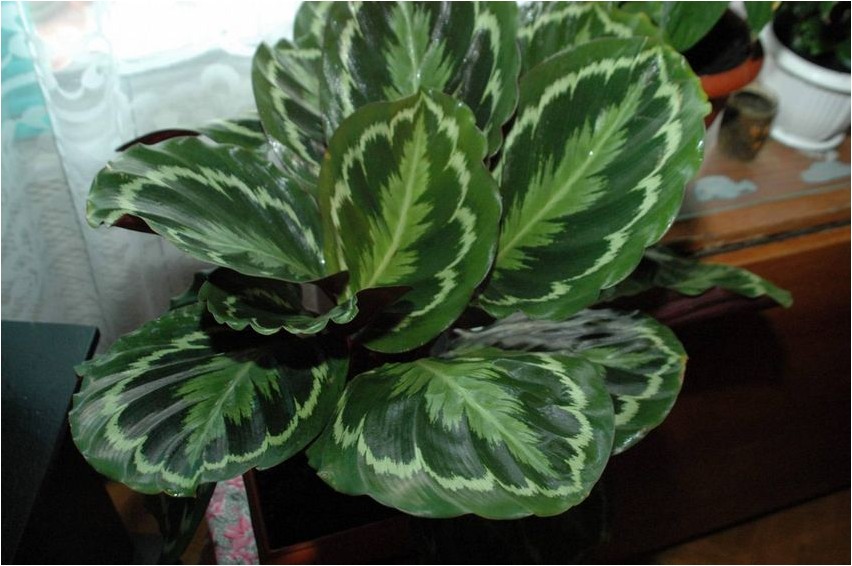
Calathea Makoya is one of the plants of the family called arrowroot, in Latin the name of this plant is as follows: Calathea makoyana.
As for the Latin name of this family itself, it will be like this: Marantaceae.
Description of Calathea makoya
It should be noted that this plant is not particularly demanding to care for. However, in order for the plant to develop favorably, certain conditions will need to be met. It will be necessary to provide calathea makoya with a light regime of partial shade or shade. In the summer, the plant should be watered abundantly, and air humidity should remain high. The life form of Calathea makoya is a herbaceous plant.
Calathea makoya is grown indoors, and it is important to place the plant at a distance of approximately one to two meters from the eastern and northern windows. In addition, the plant can often be found in winter gardens, florariums, and also in so-called display windows. As for the maximum size of this crop, the height of calathea makoya can reach approximately fifty to one hundred and fifty centimeters, and in diameter these values can be about thirty to sixty centimeters.
Features of care and cultivation of calathea makoya
In order for the plant to please its owner for a long time, regular replanting will be required. Calathea makoya should be replanted once a year or once every two years. Transplantation can be done both in summer and in spring. As for pots, you should choose fairly wide containers. This circumstance is due to the fact that the root system of this plant is shallow and almost completely superficial; Calathea makoya also has tubers. The following soil soil should be used: one part sand, two parts leaf soil and three parts peat. The acidity of such a soil mixture should be slightly acidic.
It is important to remember that if the plant is placed directly under direct sunlight, the plant may burn. Such a burn will result in the appearance of brown spots on the leaves of Calathea makoya. Dry air is also extremely undesirable: if such conditions are met, the leaves of the plant may turn brown, the leaves will begin to dry out and curl. In the case when the soil is maintained in a waterlogged state for a long time, rotting of the root system and tubers of the plant can occur. Also, such unfavorable changes can also occur due to sudden temperature changes. Sometimes Calathea macoya can be affected by scale insects or spider mites.

During the rest period, the air temperature should be maintained at sixteen to twenty degrees Celsius. Watering should be provided to the plant moderately, and air humidity should remain average. When calathea makoya is grown indoors, the dormant period is forced. The dormant period begins in October and continues until February. The dormant period occurs because the plant receives insufficient light, and the air humidity is also quite low.
Calathea makoya can be propagated by dividing the root ball. This division should be performed when replanting the plant, and each tuber should have about two or three roots and several leaves.
It should be noted that tobacco smoke harms this plant. It is important to maintain air humidity in the desired condition, otherwise the plant will develop incorrectly. You should also protect calathea makoya from strong temperature changes.