Clementine
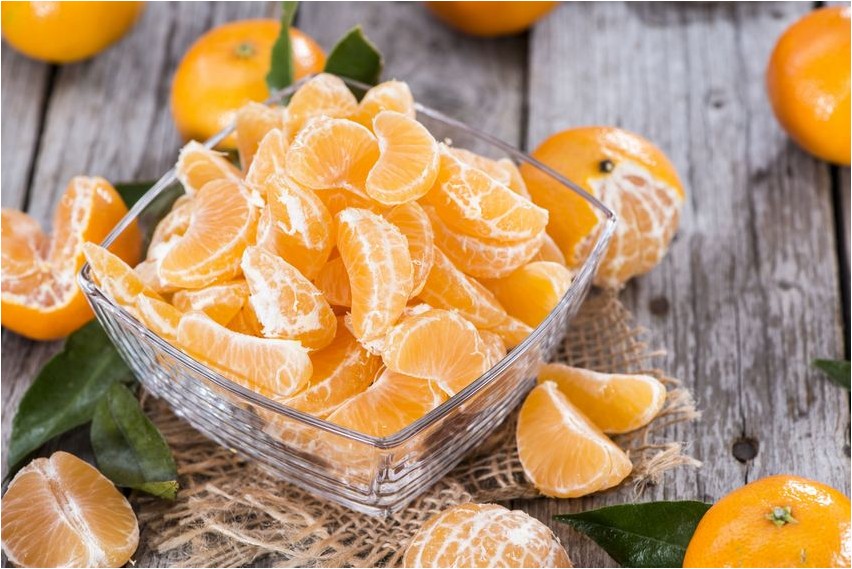
Clementine (lat. Citrus clementina) is a fruit tree from the Rutaceae family.
Description
Clementine is a fairly successful hybrid of a tangerine and a juicy, but rather bitter Seville orange, obtained in 1902 by Pierre Clément, a famous collector and priest from France.
The shape of the fruits of this plant is very similar to the usual tangerines — they are just as spherical and not large at all. But they taste much sweeter. All fruits are painted in bright orange tones, and on top they are covered with a rather hard skin, which is very tightly connected to incredibly juicy pulp.
Clementines ripen mainly in September or October — the harvested crop is immediately sent to markets, where it will not be difficult to purchase it until February.
These days, three varieties of clementine are especially common: Montreal, as well as Spanish and Corsican.
Where does it grow
Clementine grows mainly in Mediterranean countries — in Italy and distant Algeria, as well as in Morocco and sunny Spain.

Application
These fruits are eaten fresh, periodically candied, and also added to some alcoholic drinks and excellent juice is squeezed out of them, which is often added to all kinds of cocktails and drinks without alcohol, and is also frozen for subsequent production of sorbet. And the British make wonderful liqueurs and rich marinades based on these fruits.
Clementine is endowed with a huge number of useful properties — in this it is very similar to other representatives of the Rutaceae family. Moreover, in a cold place these fruits can be stored for a long time without processing — thanks to this, almost all their beneficial properties are preserved.
These juicy fruits are enriched with vitamin C, which long ago gained fame as a powerful antioxidant that promotes the absorption of a huge amount of various substances that come with food. It perfectly strengthens the thinning walls of capillaries and very vulnerable vessels, and also helps iron be better absorbed. Systematic consumption of these fruits allows you not only to prevent, but also to get rid of a great variety of different ailments. They will be especially useful during epidemics of influenza or ARVI, because they are an excellent general strengthening agent.
B vitamins are excellent in supporting the immune system and have an extremely beneficial effect on the nervous system, and vitamin E, which plays the role of an antioxidant, helps slow down the aging process, and this slowdown occurs at the genetic level. And the most important vitamin of the bright representatives of the citrus genus is rutin, which in every possible way contributes to the normalization of blood pressure and is endowed with powerful anti-edematous, as well as pronounced antispasmodic and excellent anti-inflammatory properties.
Clementine is an excellent helper for a wide variety of digestive disorders (regular hiccups, progressive dyspepsia, stomach colic, gastritis, intestinal spasms, etc.). Regular consumption of juice squeezed from these fruits helps regulate metabolism and significantly improve appetite.
The essential oil from these wonderful fruits, which has a pronounced analgesic and excellent calming effect, is no less in demand. And in aromatherapy it is widely used as an antidepressant.
Contraindications
Clementine is a fairly potent primary allergen, so caution should be exercised when consuming it. And expectant mothers and breastfeeding women should stop using it altogether. These fruits also have other contraindications: enteritis, stomach ulcers, nephritis, colitis and gastritis accompanied by high acidity.