Small-leaved Maple
The small-leaved maple is a member of the maple family, and its Latin name is Acer mono Maxim.
The family name of the small-leaved maple is Aceraceae Juss.
Description of the Small-leaved Maple
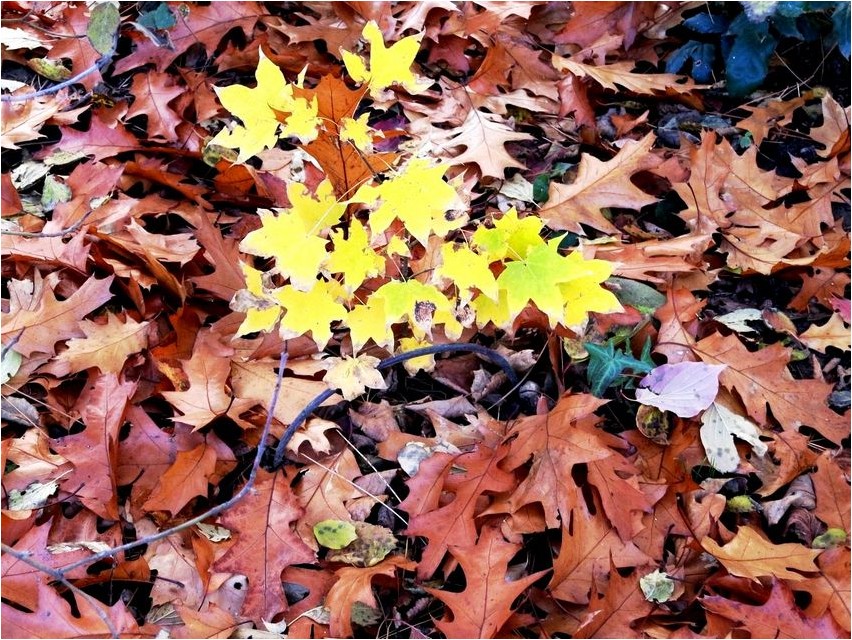
The small-leaved maple is a tree that can reach a height of fifteen meters, with individual specimens reaching up to twenty-four meters, and a diameter of fifty to sixty centimeters. The bark of this plant is gray or dark gray, while young shoots are yellowish, glabrous, and more or less pubescent. The leaves of the small-leaved maple are almost always five-lobed, but occasionally an additional pair of rudimentary lobes may be present at the base. The leaves of this plant are approximately six to eleven centimeters long and nine to twelve centimeters wide. The lobes are entire, occasionally slightly wavy along the edges. These leaves of the small-leaved maple are drawn out into a rather long, pointed tip. The leaves are thick and glabrous, but only the youngest leaves may have beards on the underside at the very corners of the veins. It should be noted that on new shoots, the leaves of this plant can reach fifteen centimeters in length, and these leaves are usually even more deeply incised. The inflorescences of the small-leaved maple contain approximately fifteen to thirty flowers, which can be colored in shades of slightly greenish or light yellow. The diameter of the flowers of this plant is approximately six to eight millimeters. The fruits of the small-leaved maple are samaras, one and a half to three centimeters long; these fruits will diverge at an acute or obtuse angle. The wings are somewhat narrowed towards the top, and their length will be one and a half to two times greater than the length of the nuts.
The flowering of this plant occurs at the very moment the leaves begin to bloom, which occurs around the end of May or at the beginning of June. In this case, the seeds ripen during the period from the end of August to the beginning of September. Under natural conditions, this plant is found in the Far East. As for the general distribution, small-leaved maple is found in Korea and Japan. For growth, the plant prefers the edges of coniferous forests, slopes, river terraces, deciduous and mixed forests, at an altitude of up to a thousand meters above sea level. It is noteworthy that the plant can grow not only singly, but also in small groups.
Description of the medicinal properties of small-leaved maple
Small-leaved maple is endowed with very valuable healing properties, and it is recommended to use the bark and leaves of this plant for medicinal purposes. Small-leaved maple bark is recommended for use as a very valuable astringent. As for the leaves of this plant, they should be used as a wound healing agent.
It should be noted that small-leaved maple juice is suitable for the production of various soft drinks, sweet cereals, jelly, and the juice will also be used in baking. Small-leaved maple wood is used in the production of high grades of plywood, and is also used for small crafts.

It is noteworthy that small-leaved maple can also be quite successfully used for green construction. This circumstance should be associated with the fact that the plant is decorative, and its foliage is colored golden-yellow in autumn. In some specimens, the foliage is painted in dark purple, almost violet tones.