Pachysandra
Pachysandra (lat. Pachysandra) is a shade-tolerant and shade-loving perennial from the Boxwood family.
Description
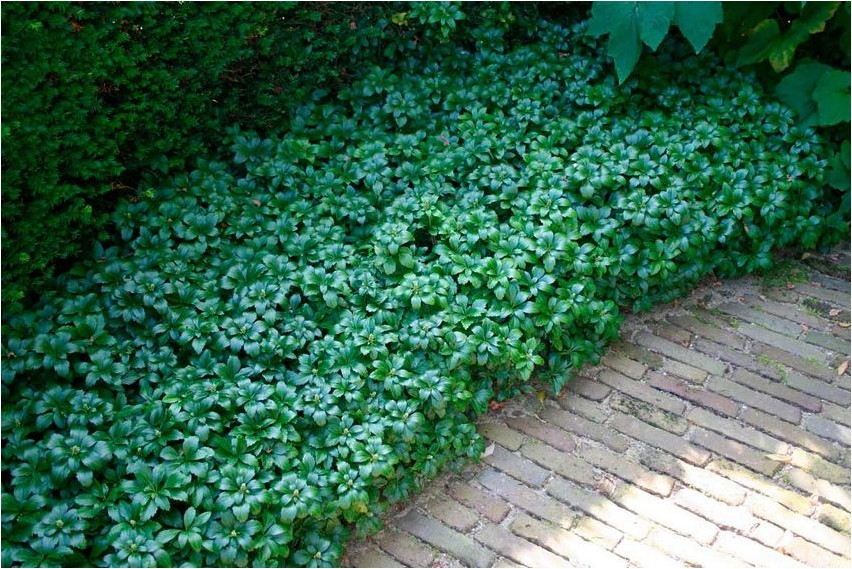
Pachysandra, which is a close relative of the well-known boxwood, is a small subshrub, the height of which ranges from twenty-five to thirty-five centimeters. On the straight, semi-lignified stems of this plant there are as many as three tiers of spectacular leaves. The leaf blades of these leaves are quite dense, lush green and with jagged edges, and their length usually ranges from five to ten centimeters.
The inconspicuous flowers of pachysandra are painted in pleasant greenish tones and are collected in spectacular spike-shaped inflorescences, all of which boast a very pleasant aroma. By the way, sometimes flowers bloom before leaves appear on subshrubs!
As for pachysandra seeds, it is almost impossible to obtain them in the temperate zone of our country — they simply do not have time to ripen.
The pachysandra genus is very small — it includes no more than five species.
Where does it grow
China and Japan are considered to be the birthplace of pachysandra.

Usage
Pachysandra apical is especially widespread in cultivation at present. It grows well and is even endowed with the ability to actively resist harmful weeds. This pachysandra is also ideal for decorating numerous shady corners of the garden — its carved green leaves will become a magnificent decoration! In addition, pachysandra makes wonderful low hedges, excellent borders and unparalleled versatile flower beds. It goes especially well with low-growing hoofweed, periwinkle, sedum, hosta and jeffersonia. A union of pachysandra with similarly sized crops: brunnera, blackhead, burnet, lobelia or loosestrife will be no worse.
The light greenery of this beauty stands out very noticeably against the background of all other garden vegetation, and its graceful and unusually elegant form will decorate absolutely any landscape. That is why pachysandra is often planted near houses, all kinds of outbuildings or fences — it perfectly shades both the wood of facades and brick, and its root system will in no way harm building structures! Pachysandra can also be safely planted on wide areas between paths. And it will also fit perfectly into compositions imitating a wild forest!
Growing and care
When growing pachysandra, it”s best to choose shaded areas. However, if these aren”t available, don”t worry—this plant grows quite well in full sunlight. Pachysandra isn”t particularly picky about soil (though garden soil is still preferred), and this beauty doesn”t require much fertilizing or watering.
Pachysandra boasts excellent winter hardiness and is virtually never affected by pests or diseases. It doesn”t need to be replanted every year, as it”s a perennial.
Pachysandra is usually propagated in the spring by cutting rhizome sections with buds and then covering them with approximately three to four centimeters of soil. It”s crucial to maintain a distance of twenty to twenty-five centimeters between these rhizome sections. Typically, the plants close together after one to one and a half years. In the first few years after planting, pachysandra usually spreads very slowly, but then it gradually gains strength and begins to actively fill all available space.