Brassavola
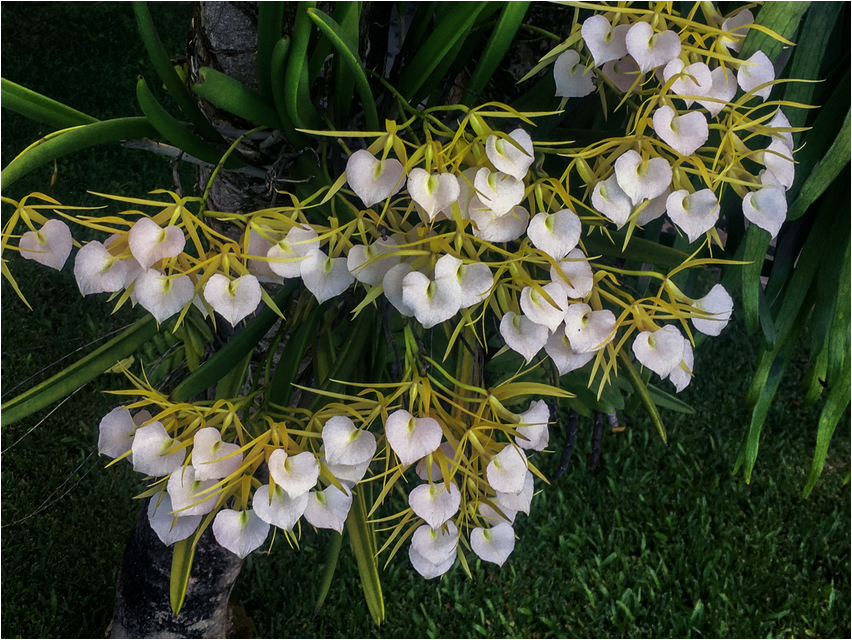
Brassavola (lat. Brassavola) is a genus of herbaceous flowering perennial plants of the Orchid family (lat. Orchidaceae).
For lovers of citrus scents, plants of this genus are a real find, because their flowers exude the most delicate citrus aroma, albeit at night. This type of orchid is one of the easiest orchids to cultivate and has been grown in Europe since the 17th century.
What’s in your name
The Latin name of the genus “Brassavola” honors the memory of the Italian physician and botanist, Antonio Musa Brasavola (1500 – 1555), who lived during the Renaissance. This name was given to the genus by the Scottish botanist Robert Brown (12/21/1773 – 06/10/1858), who was considered the best plant expert among his contemporaries. Robert Brown (although it would be more correct to say Brown, but that’s how it happened in Russian, because everyone knows the “Brownian movement” discovered by these scientists) did a great job of simplifying the classification of the plant world.
Description
Orchids of the genus Brassavola can be lithophytes, that is, they live on rocky slopes, but more often they are epiphytes, growing on tropical trees in Central and South America.
Their reproduction is carried out by elongated stem stems such as pseudobulbs, which produce from one to three leathery, juicy, pointed leaves. The height of plants, as a rule, does not exceed 25 centimeters.
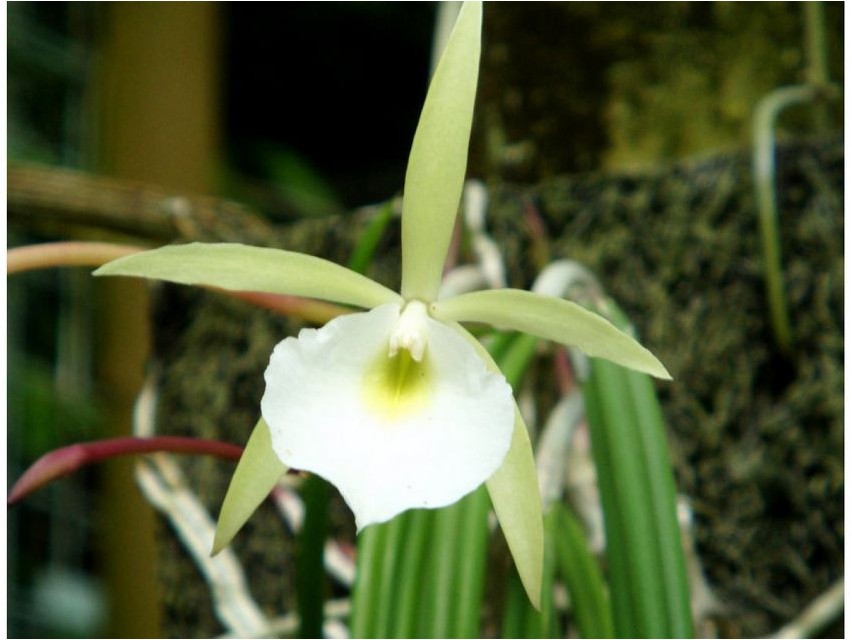

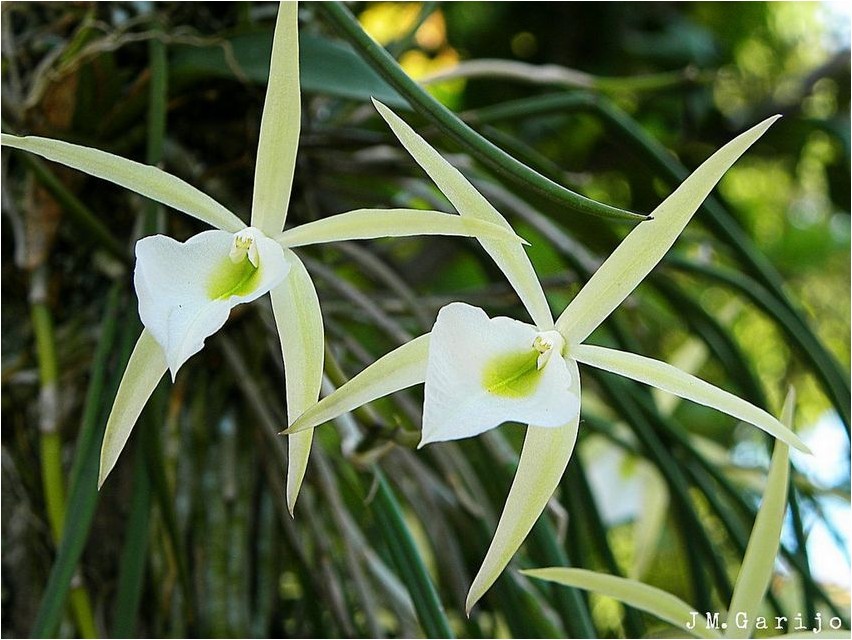
The flowers are usually white, greenish-white or yellow-violet, solitary or forming small inflorescences – few-flowered racemes, apical or lateral. The width of the flowers varies from 2. 5 to 12. 5 centimeters. The life of one flower depends on the species and lasts from 5 to 30 days. The petals of the flower, like the sepals, are elongated, narrow, sticking out in different directions. The lip of the flower is wide and often decorated with fringe.
Flowering is accompanied by a citrus aroma emitted at night when the moth pollinating the orchids is awake. It is not for nothing that the species “Brassavola nodosa” is called “Lady of the Night”.
The first tropical orchids to arrive in Holland in 1698 were orchids from the genus Brassavola, species Brassavola nodosa, which were brought from the island of Curacao, located in the southern Caribbean. The popularity of orchids in Europe began with this species.
Varieties
The genus Brassavola has 20 or more species of plants. Let’s list some of them:
* Brassavola fasciculata
* Brassavola nodosa (lat. Brassavola nodosa)
* Drooping brassavola (lat. Brassavola revoluta)
* Grandiflora brassavola (lat. Brassavola grandiflora)
* Brassavola subulifolia (lat. Brassavola subulifolia)
* Brassavola cucullata
* Gardner’s brassavola (lat. Brassavola gardneri).
Growing conditions
Orchids of the genus Brassavola can live in low light conditions and air humidity of less than 40 percent. But those who dream of growing truly beautiful plants should surround orchids with love and care.
In order for the roots to be thick and fleshy, and the leaves to be juicy and healthy, the plant should be provided with air humidity of 60-70 percent. This can be done by placing the flower pot in a humidity tray filled with a damp sponge or moss. After the growing season, watering is reduced, only supporting the pseudobulb so that it does not turn into a shriveled creature.
The air temperature during the day should be maintained from 18 to 24 degrees Celsius, and at night not lower than plus 13 degrees.
Orchids of the genus Brassavola love bright light. An indicator of sufficient illumination are small red freckles that form on the surface of the leaves. If none are observed, you should find a sunnier place for the plant.