Livistona
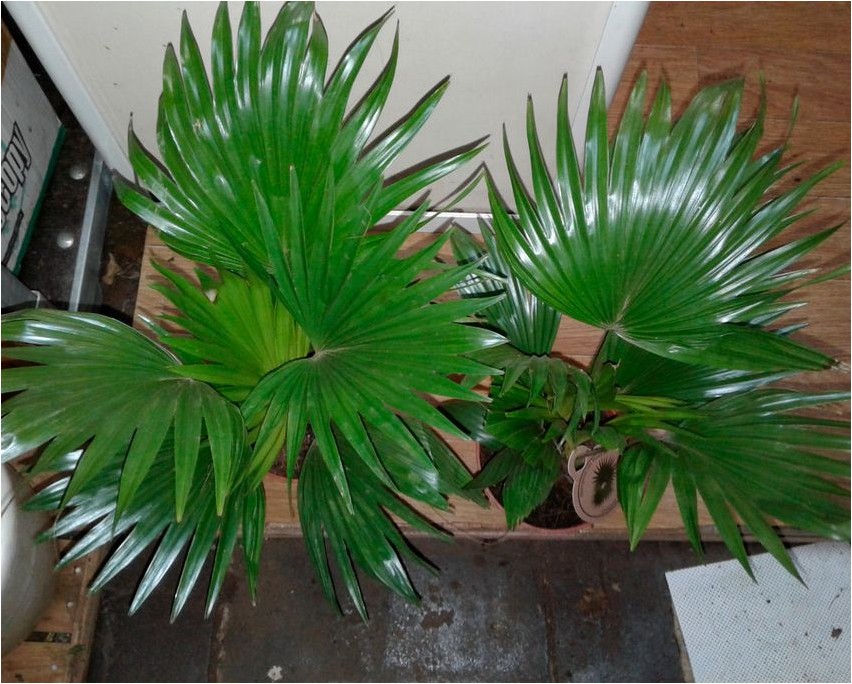
Livistona (Latin: Livistona) is a perennial plant in the Palm family. In the wild, the Livistona palm grows in moist forests, marshy fields, and coastal areas in South Asia, New Guinea, Polynesia, and eastern Australia.
Common Species and Their Characteristics
Livistona is a fan palm, characterized by rapid growth and undemanding conditions. Currently, there are 36 species.
*Livistona australis (Latin: Livistona australis) is a species with a thickened trunk consisting of closely packed older leaves. The leaves are very large, up to 50-60 cm long, covered with sharp black spines, and are located on long petioles. Livistona australis is a spreading plant, easily reaching the ceiling indoors. *Livistona decipiens (Latin: Livistona decipiens) is a species represented by plants up to 12 m tall with a brown trunk reaching 250 cm in diameter. The leaves are large, fan-shaped, dark green with a grayish-waxy coating on the underside, divided into drooping segments with numerous veins. The petioles are long and finely toothed.
*Livistona eastonii (Latin: Livistona eastonii) is a species represented by tree-like, slender, thin-stemmed palms growing 8-10 m tall. The leaves are large, fan-shaped, divided into narrow segments. This species is distinguished by its flowering, with medium-sized, cream-colored flowers.
*Livistona mariae (Latin: Livistona mariae) is a species represented by large plants up to 30 m tall with a gray, slimy trunk covered with old basal leaves. The fan-shaped, deeply dissected leaves are approximately 2 m long, pinkish-red at first, becoming bluish-green with age. The flowers are cream or light yellow, borne in erect panicles. The fruits are glossy black and spherical.

*Livistona rotundifolia (Latin: Livistona rotundifolia) is a species represented by plants 10-14 m tall. The fan-shaped leaves are green, glossy, and rounded, reaching 1-1. 5 m in diameter, dissected into pleated lobes along two-thirds of their length. The petioles are covered with spines. The flowers are yellow, borne in axillary inflorescences.
Care
Livistona is a sun-loving plant, preferring bright locations protected from direct midday sun. To form a uniform crown, the palm is periodically turned to face the sun. The optimal temperature is 18-20C in summer, 14-16C in winter.
Livistona grows and thrives in rooms with high humidity. If the humidity is low, mist the plants regularly, and wash the leaves with a soft cloth soaked in warm water. The substrate for Livistona consists of light turf and leaf mold, peat, rotted manure, sand, and charcoal (in a ratio of 2:2:1:1:1:0. 2).
Care
The Livistona palm loves moisture and requires regular and moderate watering, preventing stagnant water from forming in the pot. A tray filled with water should be placed under the pot. The water temperature for watering should be 20-21°C (68-71°F). In winter, reduce watering. Fertilize once a week during the active growth period, from March to September. If the soil lacks nutrients, the leaves will turn yellow and become limp, and the palm’s growth will slow. Do not fertilize the plant in winter. Due to certain natural characteristics of the Livistona palm, it requires pruning. Even with proper care and growing conditions, the leaves of the plant, starting from a young age, become dry. Leaves are pruned only after the petiole has dried. Avoid trimming dry tips; it’s better to focus on keeping the leaves completely clean.
Propagation
Livistona is propagated by seed. Sow in February-March in wide pots. Seedlings are transplanted into individual pots immediately after emergence; this minimizes the risk of damage and root entanglement.
Repotting
Repot the palm every 3-5 years. Livistona is very sensitive to repotting, so this is only done if the soil has deteriorated or the plant’s roots have filled all the available space in the pot and are growing through the drainage holes. When repotting a plant, remove rotten roots and leave healthy ones alone, placing them in a new pot in rings around its circumference. A thick layer of drainage material, such as crushed rock or pebbles, must be placed at the bottom of the pot. It is not recommended to use overly wide repotting containers, as the Livistona’s roots will rot from stagnant water.
Livistona is a large fan palm. How to care for a palm at home.
Livistona livistona