Calistegia fence
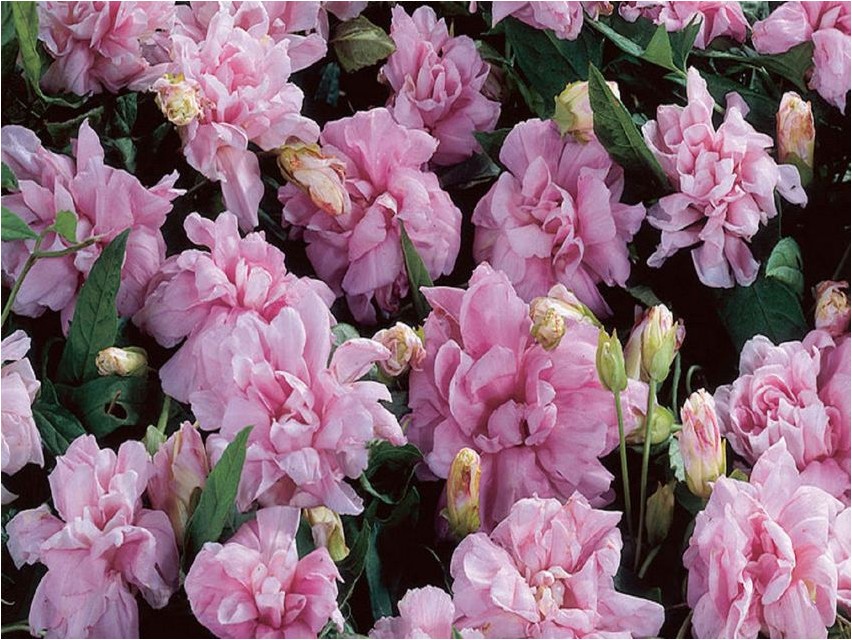
Calystegia sepium L. is one of the plants of the family called Convolvulaceae; in Latin the name of this plant will be as follows: Calystegia sepium L.
As for the name of the family of Calistegia infusion itself, in Latin it will be like this: Convolvulaceae Juss.
Description of calistegia fence
Calistegia fence is also known by the following popular names: dodder, fence dodder, brachio callus and fence bindweed. Calistegia fencea is a perennial herbaceous plant endowed with long weaving stems. The leaves of this plant are sharp and they are endowed with a heart-shaped base, and in shape they are triangular-ovate. The flowers of this plant are painted white, they are funnel-shaped in shape and quite large in size. The flowers are endowed with a fused corolla, as well as a calyx of five sepals and five stamens. The pistils of this plant are endowed with one style, an upper ovary and two stigmas. The fruit of Calistegia zaborina is an oval capsule with four seeds. The height will be about one and a half to three meters.
Flowering of Calistegia zaborina occurs during the period from May to September. Under natural conditions, the plant is found everywhere in Ukraine, Central Asia, the Caucasus, Belarus and the European part of Russia, with the exception of the Far North. It should be noted that sometimes this plant is bred as a climbing ornamental plant. To grow, Calistegia zaborina prefers willow forests, places along the banks of rivers and lakes, and also among shrubs.
Description of the medicinal properties of calistegia infusion
Calistegia infusion is endowed with very valuable healing properties, and it is recommended to use the leaves and stems of this plant for medicinal purposes. It is noteworthy that the chemical composition of this plant has not yet been fully studied. However, it is reliably known that the plant contains tannins, resins and convolvulin. It should be noted that this plant is also poisonous, for this reason some care should be taken when handling this plant.
An aqueous infusion of this plant, mixed with honey, is recommended for use as a laxative, and also for dropsy and edema. Crushed leaves of Calistegia infusion should be used externally to heal wounds.

For constipation, you should use the following remedy based on Calistegia infusion: to prepare such a remedy, you will need to take one teaspoon of dry herb per two glasses of boiling water. The resulting mixture should be infused for thirty to forty minutes, and then this mixture is filtered very carefully. Take this remedy three times a day, one tablespoon.
For edema, you should use the following remedy based on Calistegia inicum: to prepare such a remedy, you will need to take one teaspoon of the root per one hundred grams of seventy percent alcohol. The resulting mixture should be infused for seven days, and then this mixture is filtered very carefully. For swelling, twenty to thirty drops of this tincture are used. It should be noted that when used externally, such a product based on Calistegia infusion will have a wound-healing effect. It is important to remember that in order to ensure the greatest effectiveness when using such a product based on Calistegia infusion, you should strictly follow not only all the rules for taking this product, but also all the rules for its preparation.
Due to the fact that the chemical composition of the plant has not been fully studied, its use as medicine is quite limited.





