Dracaena deramensis
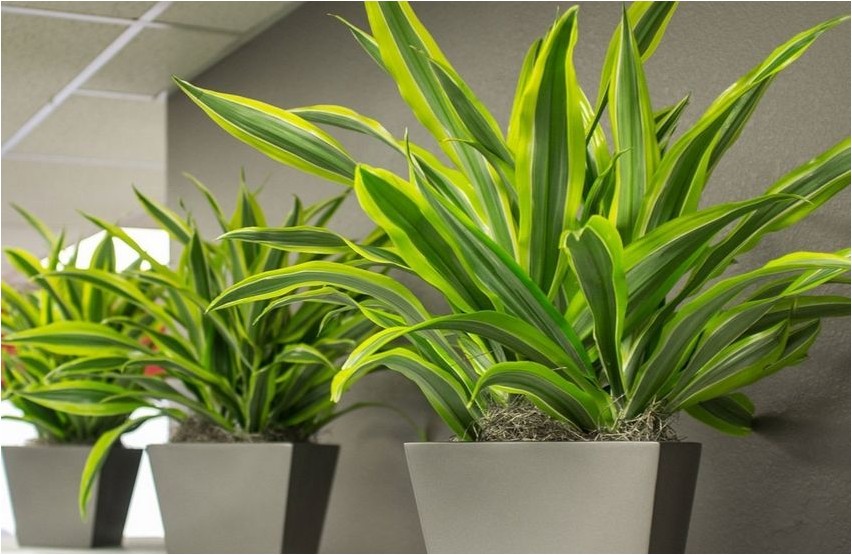
Dracaena deremes is also known under the name Dracaena deremes; in Latin, the name of this plant is as follows: Dracaena deremensis.
The plant belongs to the family called Dracaenaceae, the very name of this family in Latin will be: Dracaenaceae.
Description of growing features
It is noteworthy that Dracaena derema is not particularly demanding on the light regime: this plant can develop well both in the sun and partial shade, and even in the shade. In the summer, this plant will need to be provided with moderate watering, and the air humidity should be average. The life form of Dracaena derema is an evergreen subshrub. This plant is recommended to be grown not only indoors, but also in winter gardens, as well as in hotel lobbies and restaurant halls. As for the maximum size of this plant, the height of Dracaena dereme can vary between eighty centimeters and three meters.
Due to the fact that Dracaena derema is endowed with a fairly powerful root system, which also develops quickly, it is recommended to select tall and not very wide pots for replanting this plant. When replanting, the soil should be made heavier; this can be achieved in two ways: either increase the amount of turf soil, or reduce the amount of sand. It is important to remember that during any transplant, the root ball of the plant should be preserved. Young plants will need replanting once every two to three years, adults need to be replanted once every three to four years, but for large specimens it will be enough to just replace the top layer of soil with fresh one. It is recommended to replace about ten to fifteen centimeters. As for the soil mixture, to prepare such a mixture you will need to take one part of turf soil and one part of sand, as well as two parts of leaf soil. The acidity of such soil should be slightly acidic.
It should be remembered that those varieties of Dracaena derema that are endowed with green leaves are able to withstand a lack of lighting very firmly. To do this, you only need to turn the pot with the plant over to the light with the other side once a week, which will help prevent the top of the plant from bending. When Dracaena derema is grown in low light conditions, the formation of thinner or softer leaves may occur. When air humidity is less than sixty centimeters, the leaves may change their color to yellow and may also fall off. Such adverse consequences can also occur due to the fact that the soil will remain in a very dry or excessively waterlogged state for a long time.
Throughout the entire period of active growth, the plant will need to be fed approximately two to three times a month. The period of active growth occurs from March to August. Starting from October and ending with February, feeding should be much less frequent: approximately once a month. For feeding, you should use fertilizers that are intended for dracaenas or palm trees. However, it is also permissible to use those fertilizers that are intended for various decorative leafy indoor plants as fertilizing.

During the rest period, the temperature should be maintained between fifteen and twenty degrees Celsius. Watering during the dormant period should be moderate, and air humidity should be kept at an average level. If Dracaena derema is grown in rooms, a period of rest will be forced, which will be caused by the fact that the plant does not receive enough light, and also the air humidity is reduced.
Reproduction of Dracaena derema can occur both with the help of stem segments and air layering, as well as through apical cuttings.