Bonsai style garden
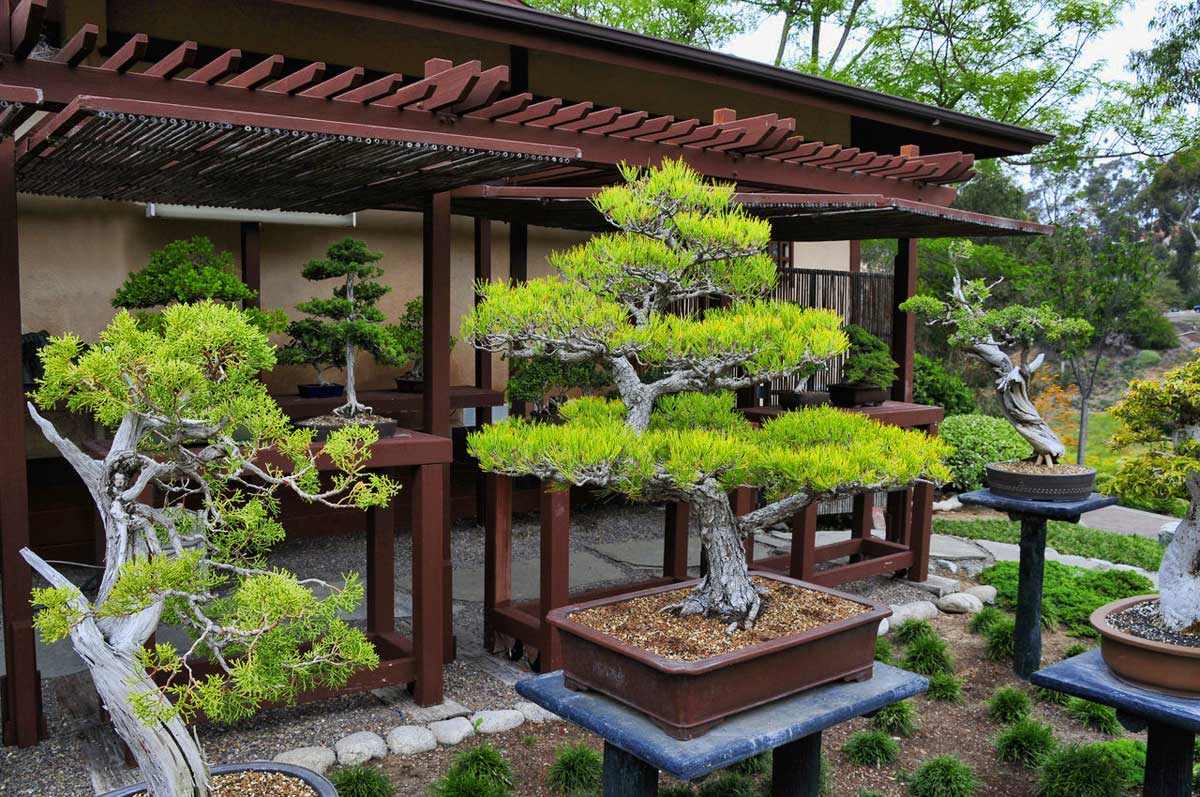
The bonsai style originated in ancient times in China. The Chinese aristocracy owned beautiful gardens and loved to engage in gardening art. Therefore, new traditions of creating Chinese gardens in various styles arose and were consolidated. Later, the traditions of Chinese gardening penetrated to Japan, where they were brought to perfection and added a special charm. It is the Japanese style of bonsai that is a role model for all gardeners.
Bonsai, in simple terms, is the art of growing plants in pots. Most often, this style uses not flowers, but shrubs and dwarf trees. But this is not just growing, it is an entire art that is regulated by a large number of different rules and regulations. Only following all these rules will allow you to grow a real bonsai garden.
Tara
The pots that are chosen for growing bonsai can be very different. They can be glazed or unglazed and have different shapes and colors. The main rule is that the pot should ideally match the plant that will be planted in it. The choice of shape and material of the pot depends on the shape and size of the plant. However, a simple bonsai pot will not do. It must represent a certain artistic value and be part of the bonsai composition.
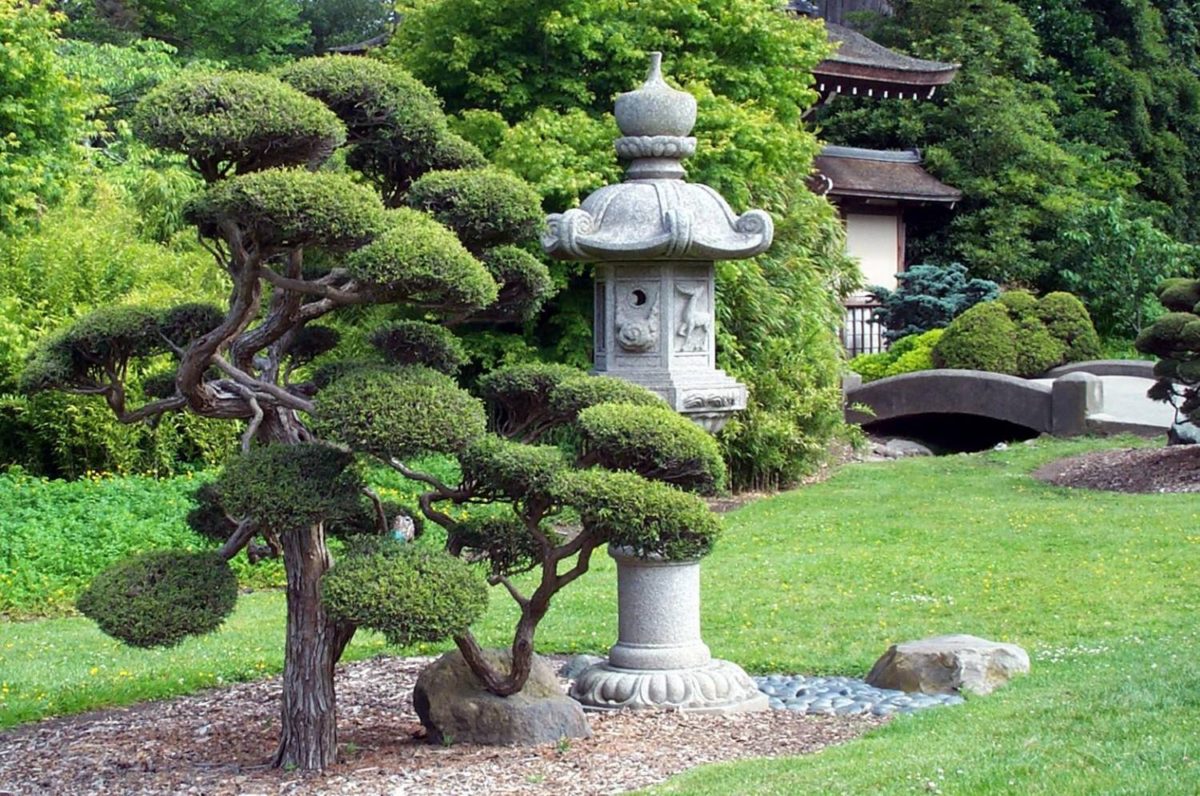
the art of bonsai in the garden can be represented by a single tree or shrub in a pot, but grown in accordance with all the stylistic requirements of the art. In addition to the pot, such plants can be planted, for example, on small rocks and other elements of the garden. The roots of the tree should entwine themselves around stones or ledges. It is important that energy costs for creating bonsai are low, and garden cultivators are not required for plowing and preparing large areas. In a bonsai garden there can be a whole architectural layer in which other compositional elements will coexist with dwarf trees. You can even arrange a whole forest of dwarf trees and shrubs in your garden.
Species
The types of trees for a bonsai garden can be different. Both coniferous and deciduous species are found here. Basically, these are those plants whose habitat is Europe and eastern Asia. The most popular among them are gingo biloba, small-flowered pine, Chinese juniper, and field maple. At the same time, each part of the plant must meet certain size requirements. Therefore, during the growth process, it is necessary to constantly adjust the shape and size of the trunk, crown, branches, etc. The following types of plants respond very well to such changes: mountain pine, Thunberg pine, rhododendron, serrated zelka.





