Althea
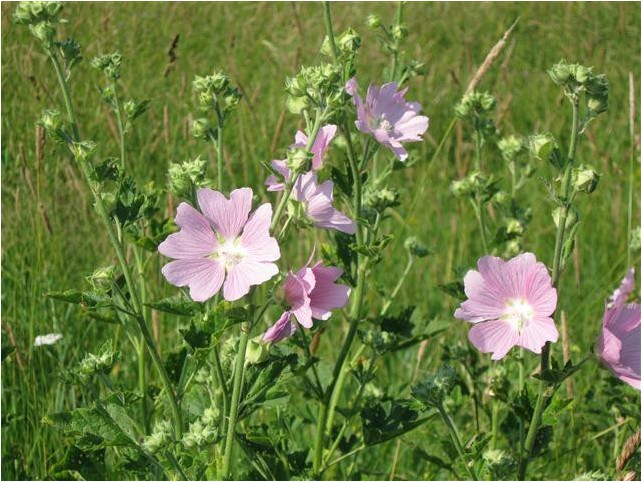
Althea (lat. Althaea) is an ornamental foliage flowering plant from the Malvaceae family.
Description
Althea is a tall herbaceous perennial, equipped with alternate petiolate leaves with a very characteristic whitish felt pubescence.
Moreover, the height of the plant ranges from seventy to one hundred and thirty centimeters. Large (two to four centimeters in diameter) marshmallow flowers are located in the leaf axils and boast a pleasant pinkish or white color. You can admire the flowering of this plant from June to August.
Where does it grow
Althea is native to the forest-steppe and steppe zones of America, Asia and Europe. This plant will not be difficult to see in bushes, meadows, as well as along the banks of lakes and rivers.
Usage
Marshmallow is a fairly common and popular medicinal plant (it is also widely known as marshmallow): both its leaves and its roots with flowers are used for medicinal purposes, while the latter are used for treatment much more often than the leaves.
Marshmallow is also used in veterinary practice – a decoction of its roots is an excellent antidote for animal poisoning.

Growing and care
It is best to plant marshmallows in areas with moderately moist, fertile garden soil, which is characterized by relatively shallow groundwater. This plant is completely undemanding in terms of care; the main thing is not to forget to systematically trim its flower stalks so that their length does not exceed thirty centimeters. Also, seedlings must be periodically loosened and thinned, and with the onset of late autumn, all above-ground parts must be cut off.
Althea reacts very well to all kinds of fertilizers, so from time to time it needs to be pampered with them.
And marshmallow reproduces mainly by seeds. It is important to take into account that the seeds of this plant, equipped with thick shells, are considered difficult to germinate, therefore, in order to improve their germination, it does not hurt to first soak them for a day in warm water, the temperature of which is in the range from twenty to twenty-five degrees, and then thoroughly dry them to a free-flowing state. In some cases, seeds are also subjected to scarification, during which mechanical damage to their shells occurs.
Seeds are sown either in rows or in holes with a depth of one to two centimeters. Under good conditions, the first marshmallow shoots can be noticed after eight to ten days, but if conditions are not favorable for this, shoots will still appear, but after eighteen to twenty days.
As for the preparation and drying of raw materials collected for medicinal purposes, this is not such a complicated process. Immediately after digging, all roots are cleared of soil adhering to them, after which the thickened upper parts of the rhizomes are cut off along with the stems. From perennial specimens, small lateral roots and lignified roots are removed, and those parts that have not yet become lignified are dried for two to three days in the air. At the same time, we should not forget that marshmallow roots are very rich in starch, and therefore, when left in the open air, they often rot and become moldy. Therefore, immediately before drying, it makes sense to cut them into pieces, the length of which does not exceed thirty to thirty-five centimeters, and especially thick roots are split into two, three or even four parts. Also, before cutting the roots, it is necessary to remove the top cork part of the bark using a sharp knife. Well-dried roots should break with a characteristic crack when bent and be either white or yellowish-whitish at the fracture sites.