Drimiopsis spotted
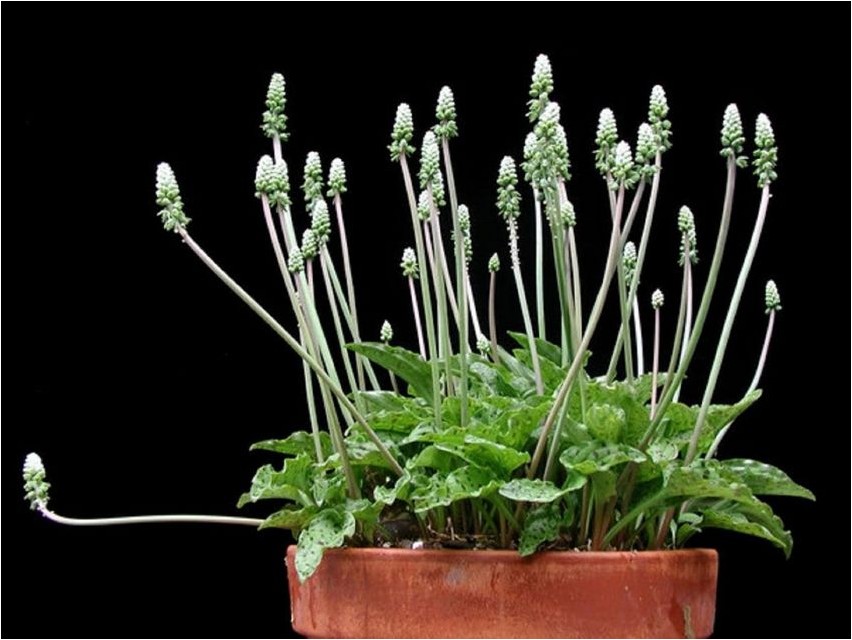
Drimiopsis spotted is one of the plants of the family called Liliaceae. In Latin, the name of this plant is as follows: Drimiopsis maculata.
It is noteworthy that only two species are grown indoors: one of which is Drimiopsis spotted, and the second is Drimiopsis pickaxe.
Description of Drimiopsis spotted
For favorable growth, this plant will require a sunny light regime, as well as abundant watering throughout the summer. At the same time, air humidity should remain at an average level. Drimiopsis spotted is both a deciduous and evergreen herbaceous plant. Tropical Africa, namely Zanzibar, is considered the birthplace of this plant. In total, in natural conditions there are several dozen varieties of Drimiopsis spotted.
The life form of Drimiopsis spotted is a bulbous plant. It is recommended to grow the plant not only in general purpose premises, but also in winter gardens and greenhouses. In addition, the plant is often grown indoors: if during the summer the spotted drimiopsis is kept on the sunny side, it will require constant shading.
As for the maximum size in culture, the height of spotted drimiopsis can reach from twenty-five to fifty centimeters, while the height of the peduncle can even reach thirty centimeters.
Description of the features of growing Drimiopsis spotted
It is recommended to replant this plant either every year or every two to three years. At the same time, it is recommended to choose fairly wide but shallow pots for replanting. As for the composition of the soil mixture, the soil required is as follows: one part each of turf and leaf soil, and one part each of humus and sand. In addition, pieces of vermiculite and coal should also be added to the soil. The acidity of the soil mixture should remain slightly acidic.

It is important to remember that when excessive soil moisture occurs, the plant bulbs may rot. In the event that the plant does not receive sufficient lighting, the leaves can become quite faded and inconspicuous. It is noteworthy that in some cases, spotted drimiopsis can be affected by scale insects or spider mites.
Throughout the dormant period, maintain a temperature of approximately 13-15 degrees Celsius. Watering should remain moderate. If grown indoors, the dormant period will be forced, lasting from October to February. This dormant period is caused by insufficient light and humidity.
Drimiopsis maculata can be propagated either by leaf cuttings or by dividing the bulbs during replanting. It is also important to remember that the plant will require cool conditions during the winter. The leaves of Drimiopsis maculata should also be washed periodically. During summer, protect the plant from direct sunlight.
The leaves and flowers of this plant are particularly decorative. The leaves are beautiful olive-green in color, with dark spots and stripes. The leaf blade length will not exceed 15 centimeters, and the cuttings will be approximately 20 centimeters long. Drimiopsis maculata blooms in spring and summer. The flowers are white, and the inflorescence itself is racemose. Cream-colored flowers can also be found. The plant has a pleasant, sweet aroma.