Russian small broom
The Russian small broom is one of the plants of the family called legumes; in Latin the name of this plant will be as follows: Chamaecyticus ruthenicus (Fisch. ex Wofoszez.) Klaskowa (Cyticus ruthenicus Fisch. ex Wofoszez.).
As for the name of the Russian small broom family itself, in Latin it will be like this: Fabaceae Lindl. (Leguminosae Juss.).
Description of the Russian small broom
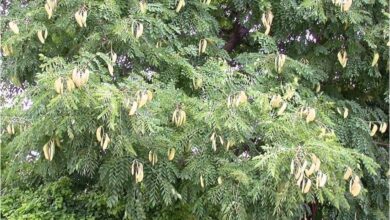
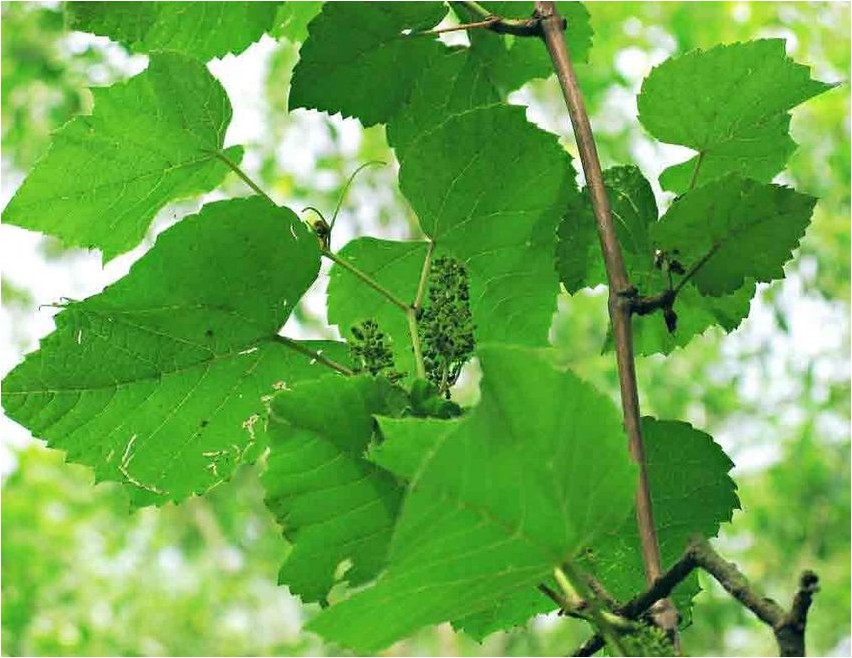
Russian small broom is a perennial plant, the height of which will fluctuate between sixty and two hundred centimeters; such a plant will be endowed with straight or curved, as well as whip-like branches. The bark of this plant can be either grayish-brown or gray in color. The stems and branches of the broom top and young shoots are covered with pubescence consisting of rather short hairs, and downwards such hairs are more or less bare. Such dense pubescence of this plant is painted in whitish-gray tones. The leaves of this plant will be gray-green in color, and they are also elliptical-lanceolate. The flowers of the Russian broom are painted in light yellow tones, they are in leafless, spike-shaped and multi-flowered racemes, and these flowers will sit in the axils of the leaves in two to five pieces. The upper lip of this plant turns out to be slightly longer than the lower one, the length of the beans is three to three and a half centimeters, while the width is six to eight millimeters. Such beans of the Russian broom appear densely and slightly shaggy-pressed with elongated hairs.
This plant blooms from May to June. Under natural conditions, this plant is found in the European part of Russia, Ukraine, Belarus and Central Asia. For growth, the Russian broom prefers pine forests, forest edges, sandy soil, hillocks, steppes, steppe and rocky-steppe mountain slopes. Most often this plant will grow in thickets. It is noteworthy that the Russian broom is not only a very ornamental plant, but is also a honey plant. In addition, the plant is also poisonous.
Description of the medicinal properties of Russian meadowsweet
The Russian broom is endowed with very valuable healing properties, and it is recommended to use the grass and fruits of this plant for medicinal purposes. The concept of grass includes flowers, leaves and stems. The presence of such valuable healing properties should be explained by the content of alkaloids in this plant. It should be noted that the Russian broom is endowed with very effective antibacterial activity.
A decoction and infusion prepared from the herb of this plant is recommended for use for jaundice, cholecystitis, pulmonary tuberculosis, angina pectoris and migraines, and also as a diuretic. An infusion of leaves and fruits of Russian broom is used as a very effective astringent and cardiotonic. It is noteworthy that the flowers of this plant are endowed with the ability to dye wool yellow.

For arrhythmia, it is recommended to use the following very effective remedy based on Russian broom: to prepare such a healing remedy, you will need to take one teaspoon of the leaves of this plant in two glasses of boiling water. The resulting healing mixture based on this plant should be infused for about one hour, and then this mixture should be filtered very carefully. Take the resulting medicinal product based on Russian broom three times a day, one tablespoon. It should be noted that such a remedy is considered very effective and the positive effect will be noticeable quite quickly if used correctly.