Catharanthus roseus
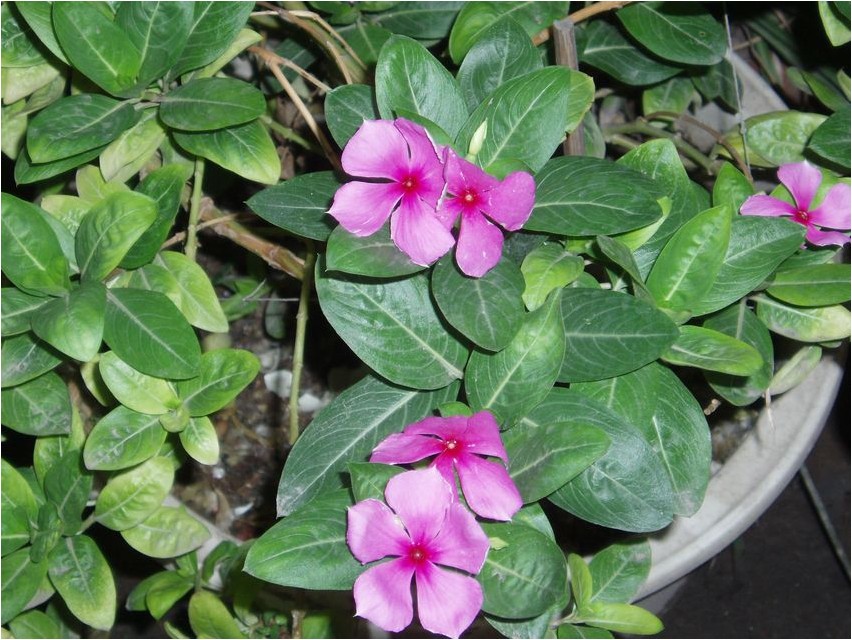
Catharanthus roseus is also known as periwinkle, ammocallis, pink vinca, cayenne jasmine, lochnera, pink pervinca, and Madagascar vinca.
The Latin name for this plant is Catharanthus roseus. Catharanthus roseus belongs to the Apocynaceae family, which is also known as Apocynaceae.
Description of Catharanthus roseus
For successful cultivation of Catharanthus roseus, it requires a sunny or partially shaded environment. Watering should be moderate throughout the summer, and humidity should be fairly high. Catharanthus roseus is a herbaceous plant. It should be noted that this plant is poisonous, especially its underground parts. For this reason, special care should be taken when handling the rose catharanthus.
This plant is often found in public spaces, such as numerous offices and lobbies, as well as indoors. When growing indoors, bright windows are preferred, with the exception of north-facing windows. Rose catharanthus is also often grown on terraces and balconies. In terms of maximum height, this plant can reach up to sixty centimeters in height.
Description of Rose Catharanthus Care and Growing
It should be noted that rose catharanthus will require regular repotting, which should be done once a year. It is recommended to use standard-sized pots. The following soil mixture is required: one part turf and sand, and three parts leaf mold. The acidity of this soil can be neutral or slightly acidic. It’s important to remember that this plant will not bloom if grown in the shade. However, if the plant experiences excessive sun and low humidity, the leaves of the rose catharanthus will turn yellow and eventually die. In some cases, this plant is damaged by mealybugs, spider mites, and whiteflies.
Throughout the dormant period, it’s important to maintain a temperature between 15 and 20 degrees Celsius. The plant will require moderate watering, and humidity should remain normal. The dormant period begins in October and continues until February. This period is forced, and its occurrence is associated with both insufficient air humidity and reduced light levels.

Catharanthus roseus can be propagated by cuttings obtained during pruning. Seed propagation is also possible; seedlings will thrive at temperatures of approximately 23 to 25 degrees Celsius.
As for the specific requirements of this plant, it’s important to note the need for shaping the plant through pruning and pinching. It’s worth noting that the rose catharanthus is grown for approximately two to three years, after which a new plant is purchased. Furthermore, the roots of this plant should never be allowed to dry out. For the pink catharanthus to thrive, fertilizing is necessary. Fertilizers should be used that promote longer and more abundant flowering. These fertilizers should contain a small amount of nitrogen.
Catharanthus. Vinca. Pink periwinkle. Days 1-11.
Catharanthus roseus (Catharanthus roseus)