Tiger sedge, or Chufa

Tiger sedge, or Chufa (Latin: Cyperus esculentus) is an edible perennial herbaceous plant, a member of the genus Cyperus in the sedge family Cyperaceae.
It stands out among its relatives for its pleasant-tasting edible tubers that form on the plant”s roots. Scientists speculate that our distant ancestors, who lived on the planet 2 million years before our time, ate only tiger sedge tubers, only occasionally diversifying their diet with other edible herbs. Tiger sedge, or Chufa, was also a popular food in ancient Egypt, and today its cultivation has moved slightly north, to some Mediterranean countries.
What”s in a name
Google Translate translates the Latin species epithet “esculentus” as “very tasty.” Botanists have given this epithet to one of the species of the genus Cyperus (Latin: Cyperus) for its small tubers, which in size, shape, and pleasant taste resemble nutritious nuts rather than the underground tubers of vegetable crops.
It”s no wonder that the plant”s official botanical name, translated into Russian as “Edible Cyperus,” has many popular names that equate the pleasant-tasting tubers with nuts: “Ground Almond,” “Tiger Nut.” The plant also has a short and sonorous name—Chufah—whose roots most likely stretch back centuries.
Description
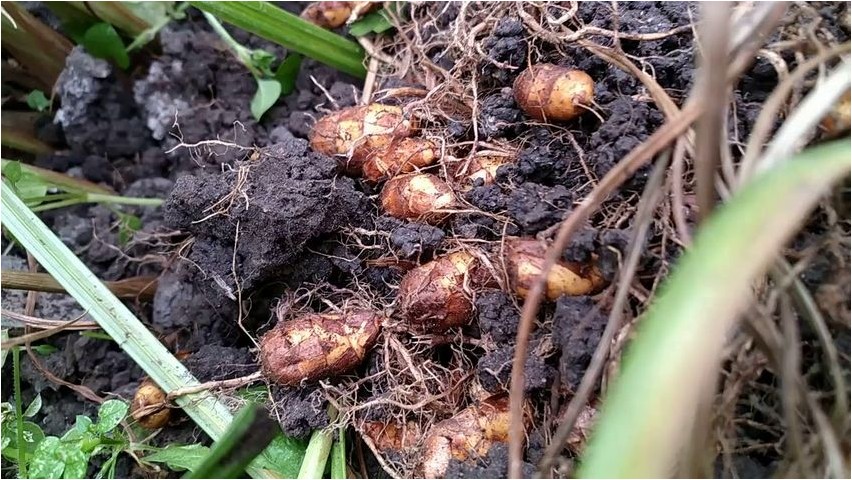
The basis of the perennial Cyperus is a complex system of underground parts, consisting of numerous thin rhizomes, a branched root system, and small nodules that form on these roots. The tubers are oblong, 0. 5 to 1 centimeter wide and up to 3 (three) centimeters long, and range in color from light brown to dark brown, with hints of pink or yellow. The tubers have a pleasantly sweet taste, a nutty aroma, and a crunchy texture like hard nuts.
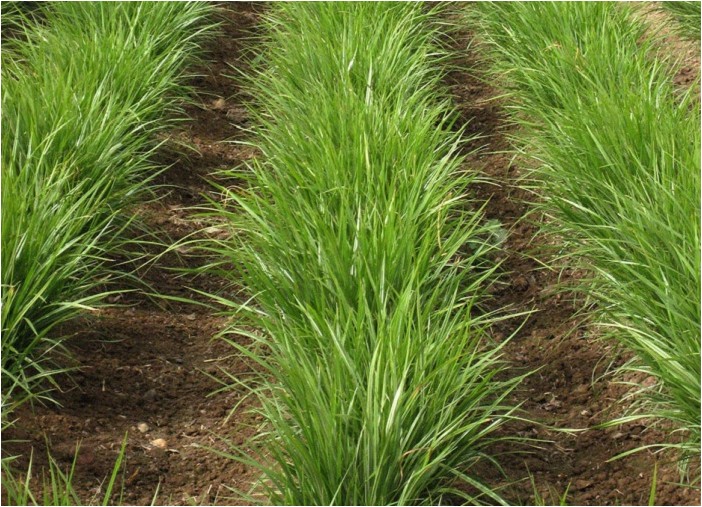
Short, straight, slender stems, characteristic of plants in the Cyperaceae family, rise from the tubers to the ground surface. Stiff, linear leaves form numerous tufts around the stem, which ranges in height from 30 to 90 centimeters.

Flowering, which occurs only in warm climates, has no ornamental value. Small bisexual flowers form umbel-shaped inflorescences that rely on the wind for pollination. The absence of flowering in temperate climates, where temperatures do not drop belo w-5 degrees Celsius, does not interfere with the formation of root nodules, for which the plant is cultivated.
Although the Tiger Almond is not very demanding of soil, loose, fertile soils with good drainage, which protect the roots from harmful moisture, are much better for harvesting a decent harvest.
Chemical Composition of the Nodules
The edibility and sweet, nutty flavor of the nodules are due to the content of such familiar components as protein, starch (a fifth of the content), fats (a quarter of the content), and sugars (with the emphasis on the last “a” — slightly more than a quarter of the total).
Use in Human Nutrition
The use of tiger nuts in the human diet has been known since ancient times, as evidenced by archaeological excavations and written records from Ancient Egypt.
They are suitable for eating fresh or roasted for a more intense flavor. Ground roots are used to enhance the flavor of confectionery products, for example, in halva, in soft drinks, and as a coffee bean substitute.
Tiger nuts oil is comparable in quality to olive oil.