Lepismium
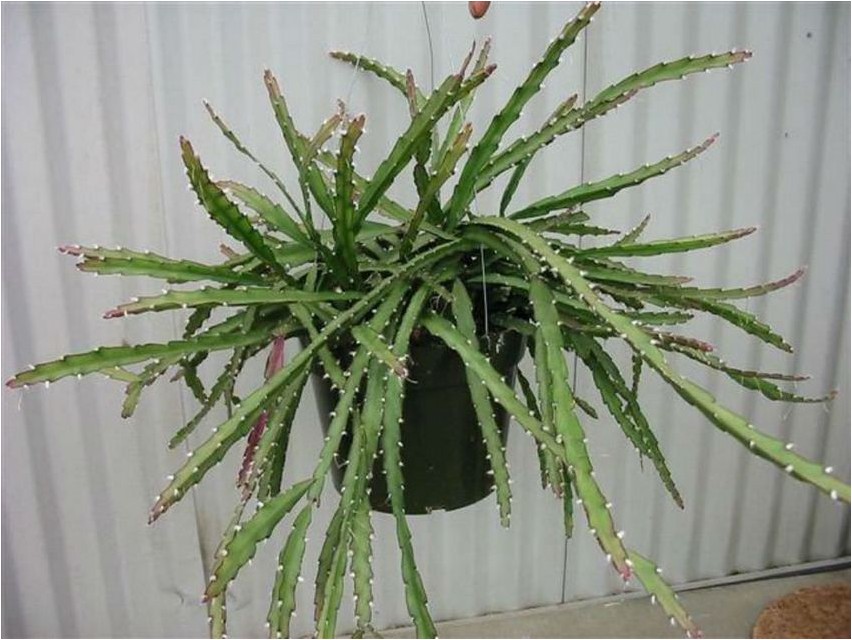
Lepismium (lat. Lepismium) are thin-stemmed epiphytic cacti from the Cactaceae family of the same name.
Description
Lepismium is a very graceful epiphytic (that is, growing on other vegetation) cactus. The stems of this beauty are divided into many separate independent segments, the middle parts of which branch quite often. Moreover, in their cross section they can all have a wide variety of shapes.
Small bell-shaped flowers, located on the edges of the stems, begin to appear closer to the end of spring. And these flowers open only during daylight hours. As for the fruits of this plant, they can boast of a fairly bright color.
In general, the genus Lepismium does not have many species – only about a dozen.
Where does it grow
The main habitat of lepismium is the forests located in tropical America.
Usage
Lepismium is highly valued for its high decorative value – this plant is quite actively grown as an hanging plant, in spacious hanging containers with spectacularly hanging stems. Lepismium is no less often grown in ordinary pots. To ensure that water does not stagnate in the pots, a good drainage layer must be laid on their bottoms.

Growing and care
It is recommended to plant Lepismium in wide and relatively shallow containers, in a soil mixture intended specifically for cacti, which is poured into the container in very small quantities – with this approach, Lepismium will always delight with its beautiful flowering. It is important to consider that this plant thrives only in high humidity. That is why in summer lepismium needs abundant watering (at least two to three times a week), and in winter it is watered much less frequently, approximately once or twice a week. As for direct sunlight, lepismium does not tolerate it at all.
Lepismium needs feeding only if it has not been replanted for a long time and this has resulted in depletion of the substrate – this plant is fertilized with mixtures specially designed for tropical cacti. Ideally, it should be replanted annually, and spring is the best time for this. And lepismium can be propagated both by seeds and vegetatively, by separating cuttings.
Sometimes, the beautiful Lepismium can be attacked by spider mites or root mealybugs, as well as unpleasant fungal diseases such as spot rust, fusarium, or root rot. This is why it is recommended to first place all newly acquired specimens in a so-called “quarantine,” isolating them from other plants as much as possible. Even an apparently healthy specimen may harbor various pests or be affected by a fungal or bacterial disease. Furthermore, it’s best to transplant your new green plant as quickly as possible into a substrate specifically designed for spectacular tropical cacti. And don’t forget that transplanted cacti should not be watered until they have successfully rooted! Lepismium can also sometimes experience problems such as shoot discoloration, as well as the appearance of brown spots or redness on the plant. These can be caused by both direct sunlight and sunburn. Insufficient light can also cause the shoots of the Lepismium to stretch.
Lepismium bolivianum.