Syzygium
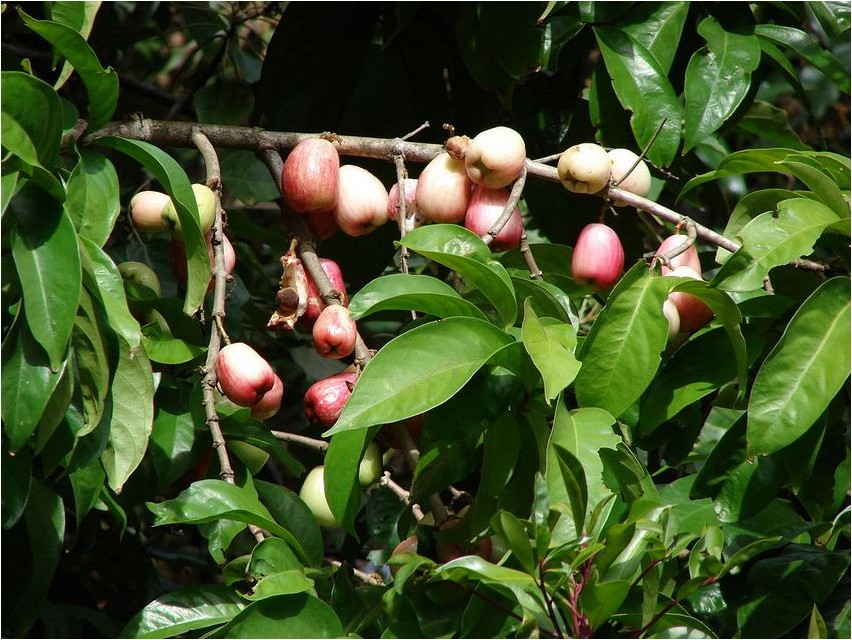
Syzygium (lat. Syzygium) is a large genus of evergreen flowering plants belonging to the Myrtaceae family (lat. Myrtaceae).
In its ranks there are more than a thousand species of plants, many of which botanists became acquainted with not so long ago, and therefore have not yet had time to give a complete and clear description of their appearance and life preferences. At the same time, there are species with which man became friends in very ancient times, using their gifts. Among them, a plant called “Clove tree” (lat. Syzygium aromaticum), which gave people an aromatic spice, cloves, received special recognition among people.
What’s in your name
Some researchers find the meaning of the Latin name of the genus “Syzygium” in the merger of two Greek words “syn” and “zygon”, meaning: “mixed together” or “combined”. The reason for this name, which was given to the plant by the Irish botanist and physician Patrick Browne (Patrick Browne, 1720 – 1790), they believe, was the leaves located on the branches in opposite pairs.
Many do not like this explanation, since such an arrangement of leaves is inherent in many terrestrial plants, and therefore does not in any way characterize the distinctive features of plants of the Syzygium family, being not a particularly creative name. But they also cannot find any other clear explanations.
Types of plants of the genus
Among the numerous species of the genus Syzygium, the majority are evergreen shrubs and trees, stretching from Africa and the island of Madagascar through southern Asia to northeastern Australia. Some species are popular ornamental plants, decorating the landscape with their glossy leaves and fragrant flowers, while others are grown in countries with tropical climates to use the fruits of Syzygium for food. Almost all species have healing abilities.
Let’s consider several types:

* Syzygium aromaticum (lat. Syzygium aromaticum) is the famous clove tree, the flower buds of which are known throughout the world as a spicy spice called “cloves”. It is an evergreen aromatic shrub with traditional leathery leaves and small purple-red flowers, which are the main advantage of the plant. The flowers owe their specific aroma and pungent taste to the essential oil they contain. Flowers and fruits have healing powers.
* Transparent syzygium (lat. Syzygium aqueum) is an evergreen tree that gives people edible fruits with crispy, juicy, sweetish pulp twice a year. Although the fruit’s shape is similar to a pear, the plant is sometimes called “Water Apple”. Native to South India and Malaysia, it has local names: “Semarang” and “Jumbo”. The tree grows slowly, reaching a height of three to ten meters. The branches of the tree are covered with oppositely arranged leathery leaves. Clusters of slightly fragrant flowers are born in the axils of the leaves, the perianth of which consists of four sepals, four pale pink or yellowish-white petals and long (up to two centimeters long) numerous stamens. Not only the fruits of the tree are used, but also the bark, a decoction of which is used to treat diarrhea.
* Syzygium cumin (lat. Syzygium cumini) is an evergreen tree with long (up to twenty-five centimeters) oval leaves that exude the smell of turpentine. The tree grows quickly, reaching a maximum height of thirty meters in its life. Pink flowers with numerous long stamens characteristic of plants of the genus. Dark purple fruits, similar in appearance to plums, are distinguished by aromatic and juicy pulp, which is edible, despite the bitter-astringent taste. In addition, the fruits, as well as their seeds, tree bark and leaves have healing powers. In Asia the tree is called “Jambolan”.
* Malayan syzygium (lat. Syzygium malaccense) – or Malayan apple (aka Yambosa). A slow growing tree with leathery evergreen leaves, fairly large flowers (five to eight centimeters in diameter) with green sepals and petals that can be white, yellow, pink-violet or dark red. An indispensable element are long (up to four centimeters) numerous stamens. Edible red bell-shaped or oblong-shaped fruits have crispy, sweetish, juicy pulp. The bark and roots are used in traditional medicine.
* Syzygium paniculatum (lat. Syzygium paniculatum) is a fifteen-meter evergreen tree growing in the tropics of Australia. The plant has glossy leaves, clusters of white flowers and fragrant red edible fruits.





