pumpkin
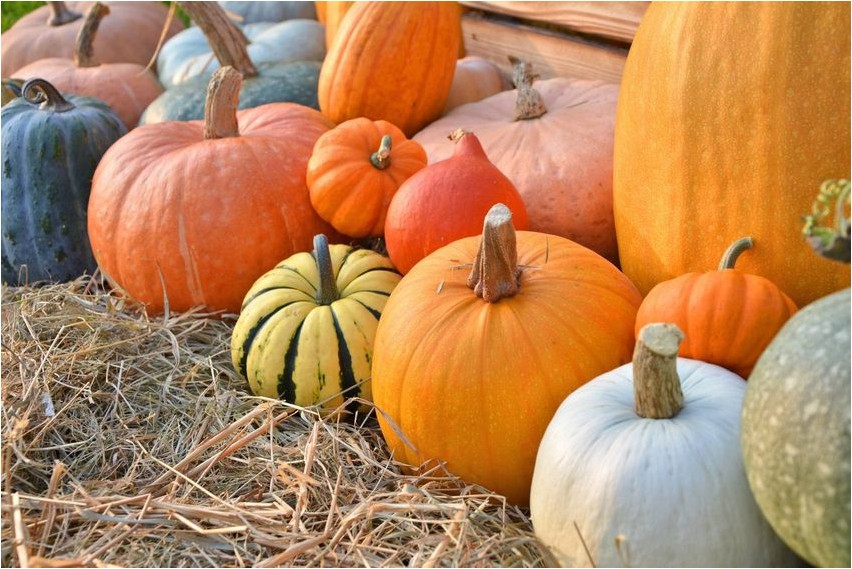
Pumpkin (lat. Cucurbita pepo) is a popular melon crop; annual herbaceous plant of the Cucurbitaceae family.
Characteristics of culture
Pumpkin is a plant with a tap root system, the main part of the roots reaches a depth of 40-50 cm, individual roots go deep up to 1. 5-2 m. The above-ground part of the crop is more powerful, represented by a creeping, branched stem, consisting of the main and lateral shoots (aka lashes). The length of the main stem can reach 14-15 m.
The leaves of the plant are erect, green, located on petioles, and can have different shapes (five-lobed, heart-shaped, notched, etc.). Starting from the 6-7 leaves, branched tendrils form in the axils, increasing the resistance of the pumpkin to gusts of wind. Like the stem, the leaves are covered with prickly spines or coarse hairs.
The flowers are solitary, bell-shaped, yellow, 6-30 cm in diameter, located on the shoots and main stem. The corolla is five-petalled. Under favorable growing conditions, the flowers open in the early morning and close by mid-day. Flowering and fruiting of a crop are inseparable.
The fruit is a multi-seeded berry (pumpkin), formed mainly on the main stem and shoots of the first order. Depending on the variety, it can be round or elongated, yellow, orange, red-orange, green and other shades. Pumpkin seeds are white, oval, and remain viable for 8-10 years, but the most productive seeds are those stored for no more than 3-4 years.

Growing conditions
Pumpkin is a light-loving crop. Spacious areas well lit by the sun are suitable for growing it. The optimal temperature for plant growth is 23-25C; at temperatures below 14C, growth stops. Any soil is suitable for pumpkin, as long as it is fertile. The culture is demanding of organic fertilizers, nitrogen, phosphorus, potassium and other micro and macroelements.
Acidic soils are not suitable for growing pumpkins; such areas should be limed beforehand. In the northern regions, in the Urals and Siberia, it is practiced to sow crops on compost or manure heaps combined with sand and turf soil. You can grow the crop near gazebos, fences without shading and on trellises. The best plant predecessors are cabbage, tomato, potato, radish, lettuce and spinach.
Planting in open ground
Before sowing, the seeds of the crop are treated in warm water, the temperature of which should be about 40-43C, then placed in an ash solution for disinfection. To hatch the embryo, the seeds can be wrapped in damp gauze, folded in several layers.
The soil for pumpkin is prepared in the fall, it is carefully dug up, and organic and mineral fertilizers are applied. In the spring, the area for planting the crop is loosened, shallow holes are made, seeds are buried in them and watered using a watering can. The distance between plants should be at least 1 m, between rows — 2 m. Often gardeners plant plants in a checkerboard pattern. Before emergence, the crops are covered with plastic film.
Planting seedlings
Among Russian summer residents, the method of planting seedlings is widespread; usually, nutmeg pumpkin is grown using this method. Sowing is carried out in the third ten days of April in boxes or separate pots filled with a special soil substrate. The crops are placed in a warm place and covered with film until shoots emerge. Seedlings are planted in open ground at the end of May.
Care
Pumpkin care involves watering, weeding and loosening. Pumpkin is a moisture-loving crop, so it requires large amounts of watering, especially during flowering. Stop watering immediately after the pumpkin ripens; this is necessary so that the fruit can rest and absorb sugars in the pulp.
The plant also needs fertilizing. During the season, two feedings are carried out: the first — when 3-5 true leaves appear on the crop, nitrophoska is added to the soil; the second — at the beginning of the formation of lashes, mullein infusion, potassium and phosphorus fertilizers and wood ash are added to the soil. Do not forget about preventive treatments of plants against pests and diseases.