Siberian geranium
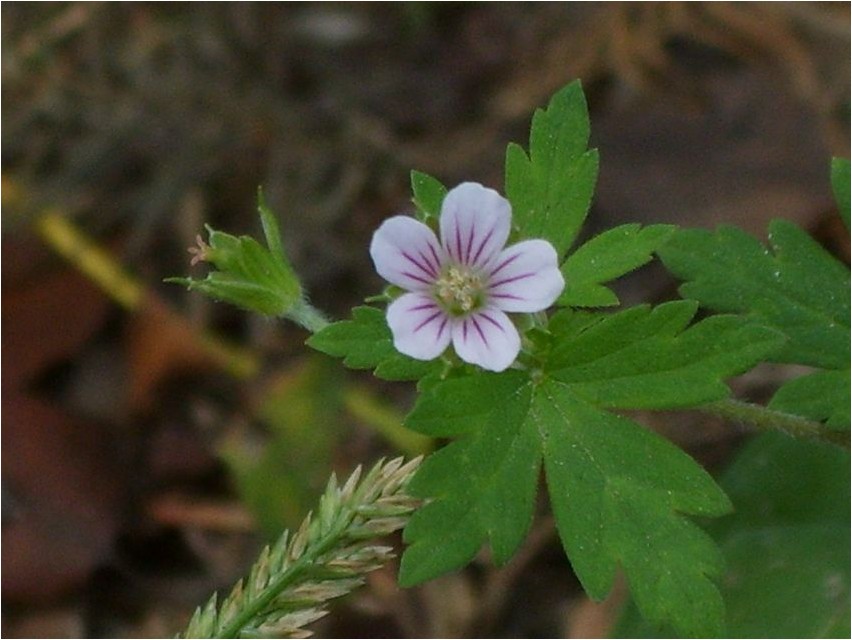
Siberian geranium is part of the plant family called Geraniaceae. In Latin, the name of this plant will be as follows: Geranium sibiricum L.
As for the very name of the Siberian geranium family, in Latin it will be: Geraniaceae Juss.
Description of Siberian geranium
Siberian geranium is a perennial herbaceous plant whose height can reach from twenty to sixty centimeters. Such a plant can be endowed with one or two stems, which can be either prostrate or ascending. In the upper part, such stems are covered with spaced or downward-facing hairs, which can be either simple or glandular. The basal leaves of Siberian geranium will die early, they will be five to seven lobed, the stem leaves are opposite and they are on petioles, the length of which is about one to eight centimeters. The blades of such leaves will be pentagonal, their width will be about two to five centimeters. At the top of such plates there are pointed lobes, and the stipules themselves will be lanceolate and long-pointed, up to about eight millimeters in length. The peduncles of Siberian geranium are most often single-flowered, but sometimes they can also bear two peduncles. The length of the small flowers will be about two to five millimeters, the petals at the base will be ciliated, and their color can be pale pink or simply white. The length of the fruit will be about two centimeters, and the seeds are linear-pointed and extremely thin.
Siberian geranium blooms during the period from June to July. Under natural conditions, this plant can be found in Eastern Siberia, Central Asia, the Far East, Western Siberia, as well as in the European part of Russia. In addition, the plant can be found in the Middle Dnieper region of Russia. For growth, Siberian geranium prefers the banks of lakes and rivers, as well as roads and field edges. As a weed, this geranium can be found in parks and near fields.
Description of the medicinal properties of Siberian geranium
This plant is endowed with quite valuable healing properties, and for medicinal purposes it is recommended to use the roots, juice and herb of Siberian geranium. The concept of grass includes the leaves, flowers and stems of this plant. The roots of Siberian geranium contain tannins, and the grass of this plant also contains tannins, flavonoids and geraniin. Carotene and vitamin C are found in the leaves of this plant, while the flowers will also contain vitamin C and alkaloids.
Infusion and decoction prepared from the roots of this plant are used in folk medicine as a hemostatic and astringent; in addition, Siberian geranium is recommended to be taken for dysentery, insomnia, fever, rheumatism, epilepsy, and also for colic. As for external use, Siberian geranium is used in the form of lotions for eczema, and as a powder as a hemostatic agent.

In Tibetan medicine, infusion and decoction of the herbs of this plant are used to treat various eye diseases and pneumonia. Moreover, on Sakhalin and Japan, this decoction is used for heart disease, respiratory diseases, lupus, beriberi disease and orchitis. At the same time, juice and decoction are often used to wash wounds.
For the flu, it is recommended to prepare the following remedy: take fifteen grams of Siberian geranium roots per glass of water. This mixture should be boiled for about seven minutes over fairly low heat, and then left to infuse for an hour, after which it should be strained thoroughly. Take this remedy two tablespoons approximately four to five times a day.





