Daisy
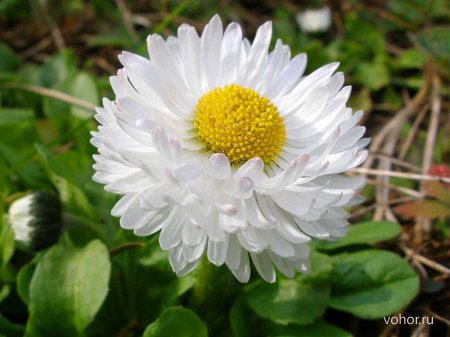
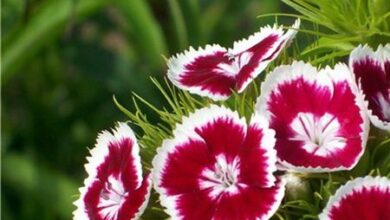
Daisies are biennial plants, but annuals also exist. Some varieties have large, single or double flowers in light, light, red, and crimson colors.
Daisies are prized for their slow blooming and ease of maintenance.
Daisies thrive best in soft, rich, and moist soil. For their sake, give them sunny spots. Water sparingly, but correctly. During cool and hot weather, increase watering. In May, apply complex mineral and organic fertilizers. Compost and humus are added to the planting area. For winter, cover the plantings with spruce branches or fallen leaves. Daisies are rare when they can be transplanted easily even while in bloom.
Daisy Care and Cultivation
Daisies thrive best in soft, rich, and moist soil. For their sake, give them sunny spots. Water sparingly, but correctly. During cool and hot weather, increase watering. In May, apply complex mineral and organic fertilizers. Compost and humus are added to the planting area. For winter, cover the plantings with spruce branches or fallen leaves. Daisies are rare when they can be transplanted easily even while in bloom.

propagation

daisies are propagated by seeds, cuttings, and by planting the bush. Seeds are sown from March to July in trays with a soft substrate. The seeds germinate fairly quickly. After approximately three weeks, transplanting is done. The grown seedlings are watered with additional mineral fertilizer. The seedlings are planted in fresh soil in August. Early in the season, the seeds can be immediately transplanted into fresh soil for planting. In August, the grown seedlings are transplanted into separate areas.
Dividing the bush allows for the preservation of varietal rarities. Bushes are divided early in the spring, mid-season, or in August. The bush is dug up, and the leaves and roots are trimmed. The dug-up bushes are precisely divided into several pieces and planted in the soil in separate areas. The divisions are planted 15-20 cm apart.

propagation by cuttings is carried out in late spring or early summer. Young lateral shoots are taken for cuttings. The cut cuttings are planted in moist substrate, covered with plastic film. In August, young plants are planted in open soil It”s worth noting that the presence of seeds multiplies the plant”s flowers. Double and hybrid varieties are propagated by cuttings or by separating the bush diseases and Pests
The plant is rarely affected by diseases (powdery mold) and is relatively pest-free. In rare cases, caterpillars and slugs may attack.
Daisy
Daisy