Pilea spruce
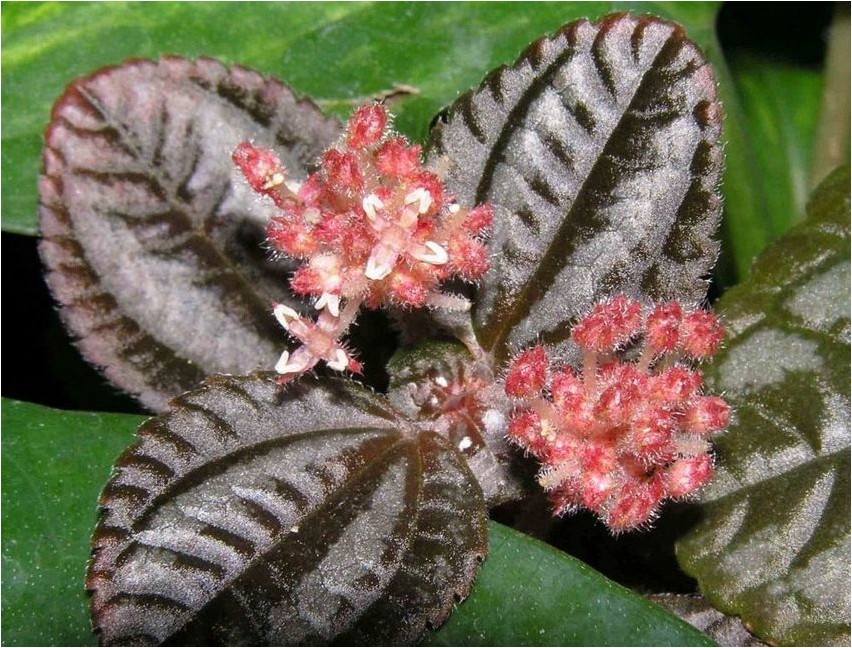
Pilea spruce is one of the plants of the family called nettles; in Latin the name of this plant will be as follows: Pilea spruceana.
As for the name of the Pilea spruce family itself, in Latin it will be like this: Urtcaceae.
Description of Pilea spruce
In order for this plant to develop favorably, it will be necessary to provide a sunny light regime, but partial shade is also acceptable. Throughout the summer, it is very important to maintain abundant watering. The air humidity should remain very high. The life form of Pilea spruce is a herbaceous plant.
This plant is recommended to be used as an hanging plant; Pilea spruce should be planted in tubs where large plants will be located. It is also recommended to keep this plant either in florariums or in indoor greenhouses. Also quite often you can find sawia spruce in greenhouses and winter gardens. As for the maximum size in culture, the height of Pilea spruce can reach about thirty centimeters.
Description of the features of caring for and growing Pilea spruce
In order for this plant to develop favorably, it will be necessary to regularly replant the Pilea spruce. It is important to carry out such a transplant once every year or two, and pots of standard proportions should be used. As for the composition of the soil mixture itself, you will need to mix one part of sand and turf soil, and also add three parts of leaf soil. The acidity of such soil can be not only neutral, but also slightly acidic.
It should be noted that Pilea spruce is endowed with very intensive growth. It is precisely this rapid growth that can lead to the exposure of the lower part of the stem. This deficiency will be especially pronounced in the winter months. When there is excessive soil moisture, leaf rot may occur. When the plant receives insufficient nutrition and the root ball becomes dry, a border colored in brown tones may appear on the leaves of this plant. In some cases, Pilea spruce can be damaged by spider mites.

Throughout the entire dormant period of this plant, it is important to maintain the temperature between fifteen and twenty degrees Celsius. The dormant period is forced if the plant is grown indoors. This period of rest will begin in October and last until February. The reason for the dormant period will be an insufficient degree of air humidity, as well as reduced illumination.
Reproduction of Pilea spruce will occur by rooting cuttings, which should be done in water or in a mixture consisting of sand and peat.
The specific requirements of this culture include the fact that this plant needs reliable shading from direct exposure to intense sunlight. In order to maintain the compactness of the bush of this plant, in the spring it is important to perform short pruning of Pilea spruce.
It is also important to remember that the plant will not tolerate excessive soil moisture. The leaves of Pilea spruce are endowed with decorative properties. The leaves of this plant are broadly oval and can reach eight centimeters in length. The color of such leaves will be light green, and their veins will be dark burgundy. The leaves of Pilea spruce are wrinkled and also velvety. If all growing standards are followed, this plant will delight you with its stylish appearance for a long time.