Umbrella wintergreen
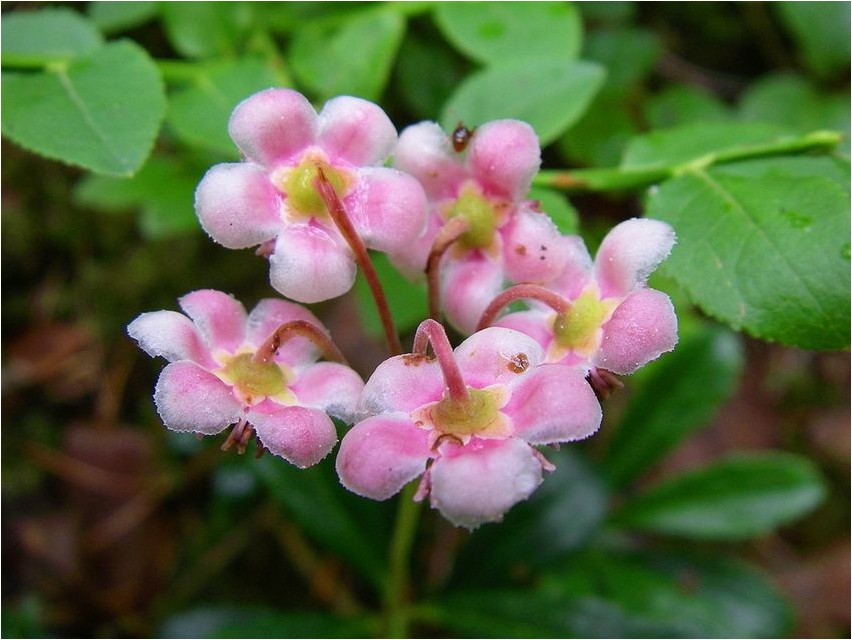
Wintergreen is one of the plants of the family called wintergreen; in Latin the name of this plant will be as follows: Chimaphylla umbellata Nutt.
As for the name of the winter umbrella family itself, in Latin it will be like this: Pyrolaceae Juss.
Description of winter-loving umbrella
Wintergreen umbrella is a perennial herbaceous plant, endowed with a creeping rhizome and an erect stem, the height of which will be about eight to twenty centimeters. The shoots at the bottom of this plant will be branched and erect. The leaves are oblanceolate-cuneate, sharply serrate, short-petiolate and wintering, and on top such leaves are colored dark green. From below, these leaves will be paler; they come closer together on the stem in such a way that whorls form. The flowers of this plant are painted in pink tones, they are drooping and form umbrella-shaped brushes, which are located on rather long stalks. The fruit of this plant is a capsule with a diameter of about five millimeters. Such a box is short-fluffy and flattened-spherical.
The flowering of winter-loving umbellata occurs in the period from June to August. Under natural conditions, this plant is found in the territories of Primorye, Amur region, Ukraine, Sakhalin, Belarus, pine forests of the European part of Russia, as well as in Western Siberia.
Description of the medicinal properties of wintergreen umbrella
Wintergreen umbrella is endowed with very valuable healing properties, while the grass of this plant contains gallic acid, resin, tannins, flavonoids, mucus, gum, quinic acid, andromedotoxin and organic acids.
It should be noted that the leaves and herbs of this plant are quite widely used in homeopathy. Preparations based on wintergreen are diuretics and urinary tract disinfectants. Also in homeopathy, an essence prepared from a fresh flowering plant is used for cystitis, nephritis, hematuria, gonorrhea, urolithiasis, albuminuria, urethral constriction, chronic gonorrheal urethritis and urinary retention. It should be noted that in its action this plant is very similar to bearberry, but it turns out to be much weaker.

Preparations based on this plant are used for ascites and edema, gout and joint diseases, which is due to the fact that, along with diuresis, there is an increase in the release of chloride and nitrogen salts. Decoctions based on the herb and leaves of wintergreen can increase appetite, improve digestion and lower blood sugar in diabetes mellitus. Such remedies turn out to be effective as tonics and general strengthening agents, especially in cases of excessive physical fatigue. Such drugs are used for tuberculosis, toothache, gastralgia, as an analgesic for pain after childbirth, as well as an anti-inflammatory and antiseptic agent; externally, such drugs are recommended for use in chronic skin diseases.
Decoctions of the herb and leaves of wintergreen are used for stomach ulcers, intestinal tuberculosis, duodenal ulcers, enterocolitis and chronic colitis, delayed menstruation, chronic constipation and chronic prostatitis. Also, poultices from the herb wintergreen are used for tumors of the lips, tonsils, mammary glands and carcinoma. Traditional medicine uses the healing properties of this plant for all types of bleeding, as well as for any menstrual irregularities.





