Cumin
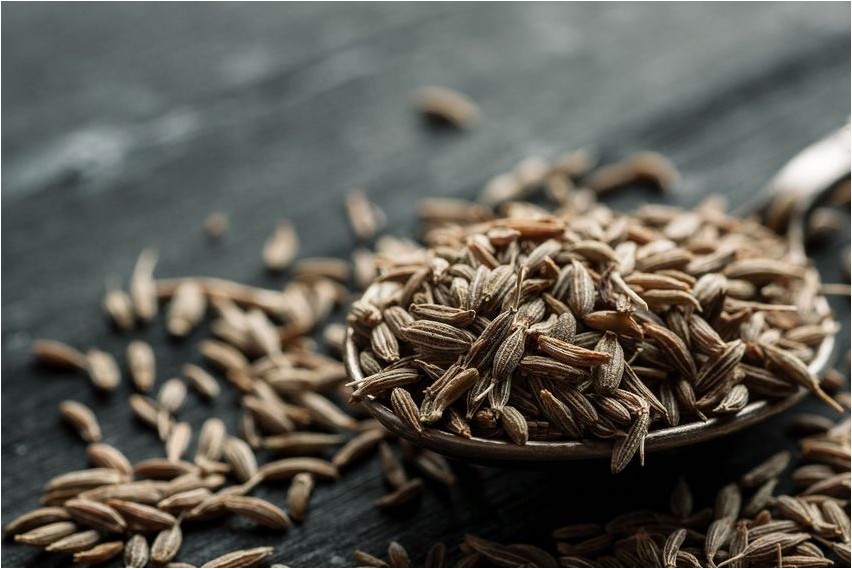
Cumin (lat. Carum) is a genus of biennial or perennial plants of the Apiaceae or Celery family. The most common representative of the species is caraway (lat. Carum carvi), other names are wild anise, field anise, tsmin, kmen, timon.
Cumin is cultivated in large quantities in Russia, Ukraine, Romania, France, Germany, Canada and Bulgaria.
Characteristics of culture
Cumin is a herbaceous plant 20-80 cm high with a fleshy spindle-shaped root. The stem is round or angular, smooth, hollow, geniculate. By the end of the growing season, the stem becomes brown in color and subsequently dries out. The stem forms shoots of the first, second, third, fourth and fifth order, each of which ends in an umbrella inflorescence.
The leaves are bare, petiolate, double or triple pinnate. The leaf blade is oblong, the terminal lobes are lanceolate. Depending on the location, the leaves may differ from each other in shape and size, for example, the lower leaves have slightly serrated edges; the leaf blades of subsequent leaves are more dissected.
The flowers are numerous, small, five-petalled, usually white or lilac-pink. The fruit is an ovoid carp (ovoid two-seeded). The fruit is divided into mericarps (otherwise semi-fruits), division occurs closer to ripening. The fruits are very aromatic, with a bitter-spicy and pungent taste. Cumin blooms in June-July, the fruits ripen in July-August.
Growing conditions
Cumin is a rather demanding plant; in order to get good yields, it is important to comply with all growing conditions. The preferred soil for the crop is fertile, loose, neutral, and moderately moist. Saline, acidic, heavily waterlogged and swampy soils are unsuitable.

Lack of moisture negatively affects the above-ground parts of plants: leaves and shoots become coarser, flowering accelerates. Cumin does not have any special requirements for location, although it is advisable to grow it in sunny or semi-shaded areas. It is not forbidden to sow cumin between the rows of main crops, but in this case the aromaticity of the seeds is reduced.
Sowing
Sow caraway seeds in early spring in a row manner. The distance between the rows should be about 25-30 cm. The seeding depth is 1. 5 cm. The seeding rate is 0. 6-0. 7 g per square meter. When two true leaves appear on the seedlings, thinning is carried out, leaving an interval of 20-30 cm between plants. As a rule, seedlings appear in 14-20 days, which largely depends on weather conditions and care. In the first year, plants develop very slowly, so various herbs can be sown between the rows.
Care
Caring for caraway seeds comes down to watering, loosening and weeding. The culture is favorable to fertilizing; in mid-summer, plants are fed with phosphorus and potassium fertilizers. For the winter, caraway seeds do not need shelter, and this rule also applies to cold regions with harsh winters. In the second year, the plants develop faster, they have a flowering stem, which branches greatly as they grow.
Cumin reproduces by self-sowing, so you should not be late in collecting the seeds, otherwise they will quickly fall off. The seeds are collected after they acquire a brown color. The seeds are ripened in dry rooms, then washed, dried and placed in a glass container with a tight lid.
Application
Cumin is especially widely used in cooking, and few people know that it also has powerful healing properties. Cumin is useful in a healthy and dietary diet. The range of diseases that cumin can treat is enormous. It helps calm fermentation processes in the gastrointestinal tract, increases the amount of gastric juice, and helps cope with colic and flatulence. The seeds of the culture have diuretic, anti-inflammatory, carminative, antiseptic and antibacterial effects.