Cretan Pteris
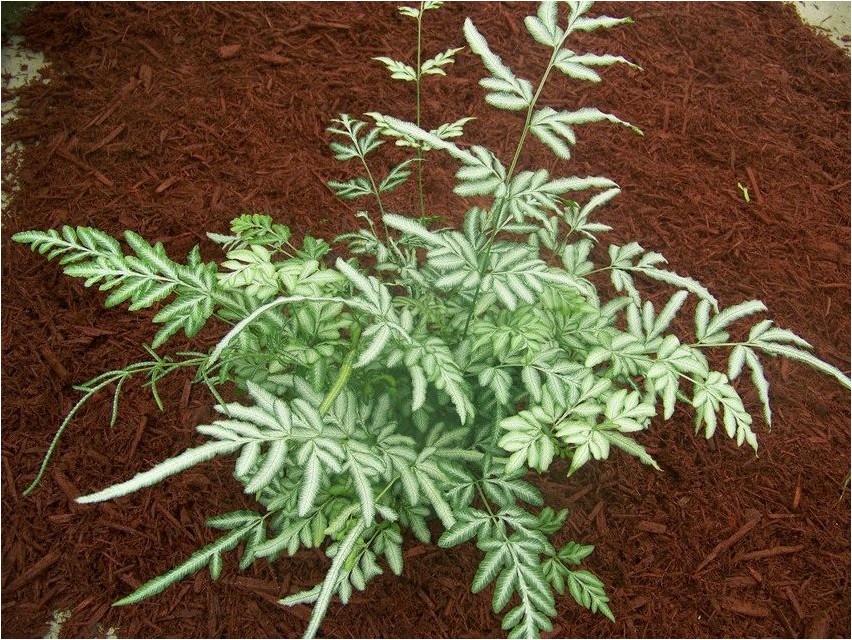
Cretan Pteris is a member of the Pteridaceae family, and its Latin name is Pteris cretica.
The family name of Cretan Pteris is Pteridaceae.
Description of Cretan Pteris
For favorable growth, this plant requires partial shade. Moderate watering is recommended throughout the summer. Humidity should be maintained at a fairly high level. Cretan Pteris is a herbaceous plant.
Cretan Pteris is recommended for growing in conservatories or greenhouses. It is also often found in numerous florariums, display cases, and cool rooms. In cultivation, Cretan Pteris can reach a maximum height of approximately forty centimeters. Description of the Care and Growing Features of the Cretan Pteris
For the optimal development of this plant, regular repotting is recommended. Repotting every two to three years is sufficient, and standard pot sizes are recommended. The soil mixture itself should be one part sand and one part turf, plus two parts leaf mold. The acidity of this soil can be either neutral or slightly acidic.
It is important to remember that under unfavorable growing conditions, this plant may experience leaf tips drying out. Such unfavorable conditions include either improper watering or excessively dry air. In some cases, the Cretan Pteris may be attacked by scale insects.
During the entire dormant period, it is important to maintain an optimal temperature between 14 and 16 degrees Celsius. During this period, the plant will require moderate watering, while the air humidity can remain normal. It should be noted that when growing Cretan pteris indoors, this period is forced. This is caused by insufficient light and relatively low humidity. This dormant period begins in October and lasts until February.

Pteris cretense can be propagated by dividing the plant, which should be done during repotting. Non-garden varieties can be propagated by sowing spores, but this should be done at a temperature of 25 degrees Celsius and under glass.
Specific requirements for this plant include high humidity. It’s also important to remember not to allow the soil to dry out. It’s also important to avoid planting Pteris cretense near heating appliances.
The leaves of this plant are decorative. The leaves of Pteris cretense are light green, pinnately dissected, and can reach approximately fifty centimeters in length. The petiole between the segments of these leaves will be winged.
It’s worth noting that there is also a specific garden form of this plant, which will have a fairly wide white stripe running along the midrib of the leaf. In addition, other forms with white-variegated leaves, the degree of dissection of which can vary, are also distinguished.
Orchid and Fern Symbiosis | Fern Repotting | Pteris Cretica albolineata | Pteris cretica