Ikako
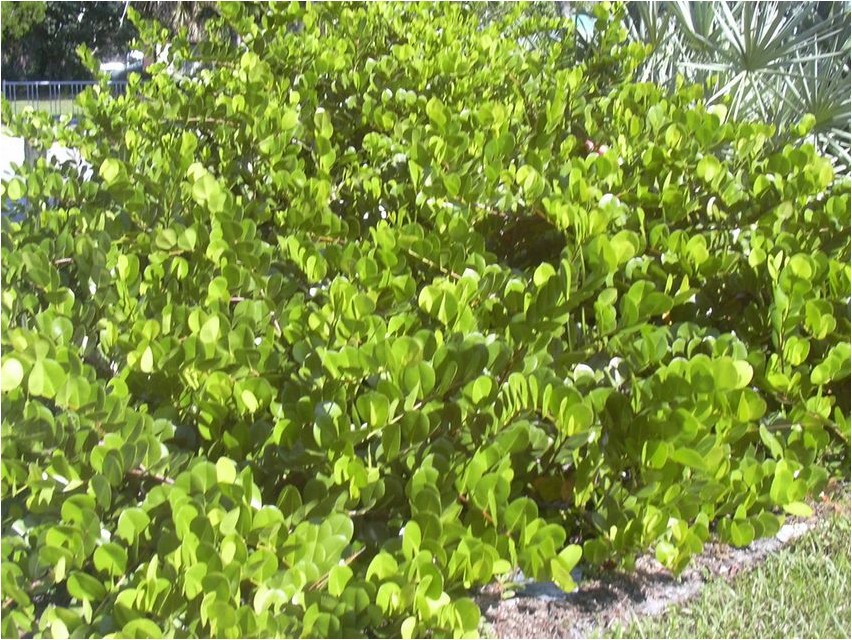
Icaco (lat. Chrysobalanus icaco) is a woody fruit plant from the Chrysobalanaceae family. Ikako is popularly called coconut or golden plum.
Description
Ikako is an evergreen tree or shrub whose height ranges from one to six meters.
The leathery oval leaves of ikako reach a width of two and a half to seven centimeters, and a length of three to ten centimeters. And the color of the leaves can vary from light red to greenish.
Collected in compact inflorescences, miniature white ikako flowers usually appear in late spring.
And towards the end of summer, wonderful fruits appear. All of them are collected in oval clusters and painted in dark purple or pale yellow tones with a slight pinkish blush. And in size and shape, ikako fruits are similar to plums. As for their taste, it is usually sweet-sour and slightly tart. By the way, the white fruit pulp located inside the seed is very difficult to separate.
Where does it grow
Icaco grows mainly in inland areas and near sea beaches throughout tropical Africa, the Caribbean and South America. In addition, this culture can be found in the south of the Bahamas and Florida.

Application
Icaco fruits can be eaten raw or made into excellent jams and jellies. This fruit is no worse suited for baking.
The bark and leaves of this plant are actively used to treat diabetes, diarrhea and dysentery. And tea made from its leaves is an excellent remedy for problems with the kidneys and bladder.
These fruits have a beneficial effect on the gastrointestinal tract, and thanks to their high content of delicate fiber, they have proven themselves to be excellent in the difficult task of relieving constipation. The pectins contained in ikako help remove heavy metal salts and radionuclides from the body, as well as reduce cholesterol levels in the blood. It is especially good to use these fruits for high blood pressure and various kidney diseases — they contain a lot of potassium. In addition, they are very useful for heart ailments — ikako fruits have a pronounced diuretic effect and help normalize water metabolism. And in Brazil, this fruit is actively used during the treatment of rheumatism and diabetes.
The pulp of ikako has long been used as a black dye, and oil is extracted from the seeds of the fruit, which has gained immense popularity among the local peoples of America. This oil is used in the manufacture of various lubricants, as well as soap and candles.
Icaco is often planted for decorative purposes. Despite the fact that this crop does not withstand frost at all, its coastal varieties are highly resistant to salt, so ikako are often planted along the coasts — this measure helps prevent erosion, which is detrimental to them.
Ikako, like plums, can be stored for quite a long time. Moreover, not only a refrigerator, but also a basement is suitable for storing these fruits. And thanks to the high density of ikako fruits, they can be easily transported over long distances.
Contraindications
There are currently no special contraindications to the consumption of these fruits, so in this case it makes sense to focus only on individual intolerance.
And since ikako is an exotic and unusual fruit for us, you shouldn’t eat too much of it the first time. For the first test, one hundred grams will be enough — if this is not followed by an allergic reaction or any other unexpected reactions of the body, then you can gradually increase the dosage of Ikako to three hundred to four hundred grams.