Pleione formosan
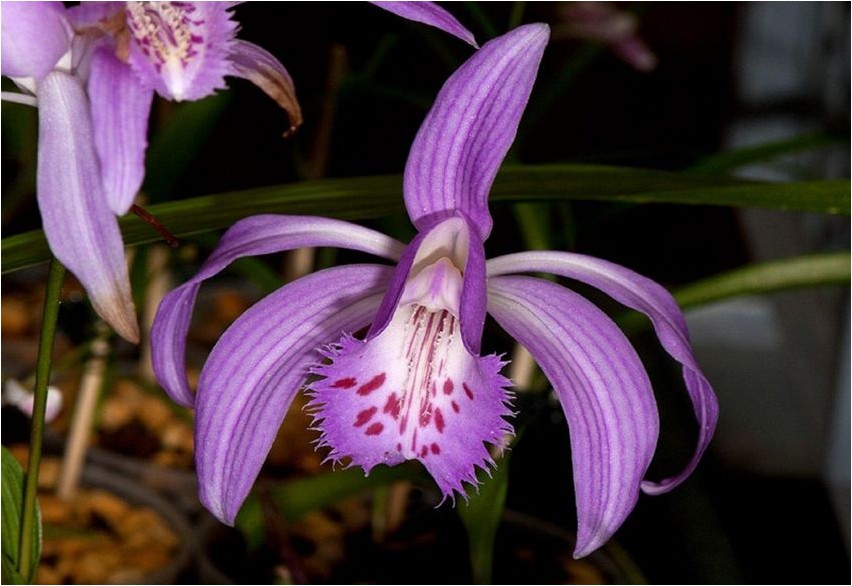
Pleione formosan is also known as the Tibetan orchid. In Latin, the name of this plant will be as follows: Pleione formosana.
Pleione formosan is one of the plants of the family called orchids, in Latin the name of this family will be: Orchidaceae.
Description of Pleione Formosan
For the favorable development of this plant, it will be necessary to provide a light regime of partial shade, while air humidity should be kept at an average level. As for watering, moderate watering should be provided throughout the summer season. The life form of Pleione formosan is a herbaceous plant.
This plant is recommended to be grown in fairly cool winter gardens. As for the maximum size in culture, the height of Pleione Formosan can be about thirty centimeters.
Description of the features of care and cultivation of Playone formosan
For the favorable development of this plant, you should not forget about regular replanting: replanting will be required at least once every two years. In this case, it is recommended to use pots of standard proportions, giving preference to plastic products. As for the composition of the soil mixture, you will need to combine sand, peat and turf soil in equal proportions. It is also recommended to add pieces of bark or any other leavening agents to such soil. The acidity of such soil should be slightly acidic.
It is important to remember that in indoor conditions it will be quite difficult to keep this plant cool throughout the winter season. During the rest period, the optimal temperature should be approximately zero degrees. This dormant period begins in October and lasts until February.

Reproduction of Playone formosan occurs through division, which should only be done when replanting this plant. Actually, the specific requirements of this culture include the need to keep it in cool, even cold, conditions during the winter.
The amazingly beautiful leaves of Playone formosan are endowed with decorative properties. Each pseudobulb of this plant has only one leaf, and such leaves in their shape will be very reminiscent of lily of the valley leaves.
The flowers of this plant can be colored in both orange and pink tones, as well as cream. The flower of this plant is dressed in the classic shape of an orchid: it will be pink in color with a creamy lip, as well as orange spots in the throat. It is worth noting that in Western Europe this plant is often grown in open ground. Particularly popular is the form called Pleione Limpricht: in Latin the name of this plant will sound like this: Pleione limprichtii.
It should be noted that in the event that the growth of this plant is delayed or its roots are damaged during transplantation, leaf curling can often occur. Actually, it is for this reason that the assimilation process will be disrupted, after which there will be a decrease in the supply of nutrients that are in the pseudobulbs.
As for humidity, this should be closely monitored throughout the entire period of the plant. When plants’ leaves die, it is recommended to reduce watering and keep the pseudobulbs very dry. After leaf formation occurs until August, it is important to water Playone formosan with regular flower fertilizer once every two to three weeks.
The peak of the decorative value of this plant occurs only during its flowering, which is usually not quite long.