Ficus
Fruit and berry crops, Ficus (lat. Ficus) is a large genus of plants of the Mulberry family (lat. Moraceae). The species with the Latin name “Ficus carica” is one of the most ancient plants cultivated by humans.
For at least eleven thousand years, people have been cultivating this species from the genus Ficus for its hearty and healthy fruits, which we call “figs.”
Description
The numerous species allow plants to take on very different shapes, and therefore, depending on environmental conditions, it can be a branched shrub, a tall tree, or a vine clinging to a support. Moreover, many ficuses, before becoming full-fledged representatives of terrestrial vegetation, live on supports, like plants called “epiphytes” by botanists. When their roots grow to the surface of the earth, the plants are anchored in the soil, turning into truly terrestrial plants, with powerful support that supports the fantastically wide crown of the tree. Although “epiphytes” are plants that do not threaten the life of the support plants that shelter them, ficus trees, having powerful roots, sometimes take the life of their “landlord” with too strong friendly hugs.
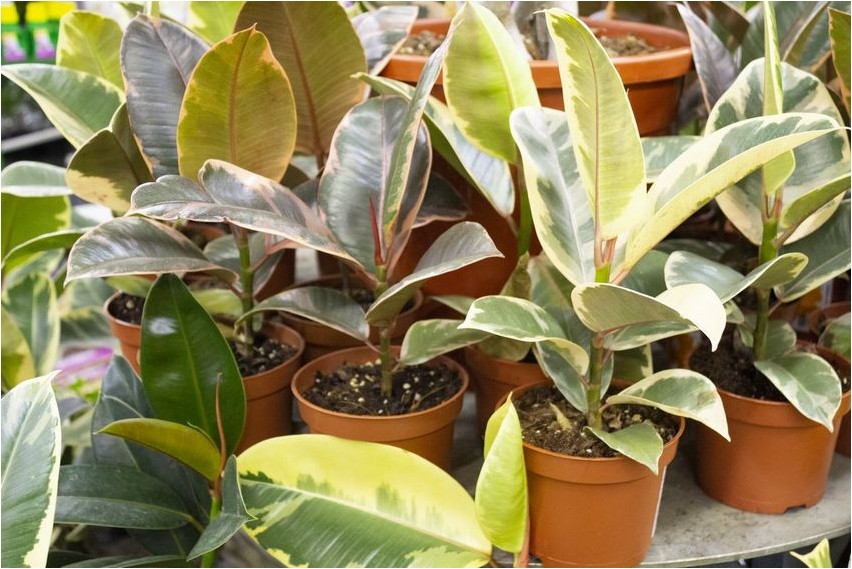
Ficus leaves also differ in variety. For example, “Ficus rubbery” and “Ficus Benjamin” have whole leaves, with a smooth edge, oval shape, and Ficus carica, which is otherwise called the “Fig tree,” has lobed leaves, familiar to all people from the picture where Adam and Eve cover their private parts with “fig leaves.” In tropical areas the leaves are evergreen, but there are also deciduous species of Ficus.
Ficus flowers are very small and shy, and therefore they hide their inflorescence inside a hollow sphermic receptacle, at the top of which there is a hole for wasps with long proboscis, which pollinate the flowers, transferring pollen from male flowers to female ones, and also lay their own eggs here. Such a community of wasps and ficuses is an amazing natural phenomenon
From pollinated female flowers, single-seeded fruits are born, located inside a hollow receptacle. Therefore, what people usually call a Ficus fruit, for example, a fig, is actually a harmoniously arranged natural structure that provides shelter for numerous small fruits surrounded by a soft nutritious shell. Botanists called such “fruits” the word “Siconium”. The fruits of most species of plants of the genus Ficus are edible, however, only the “fig”, “syconium” of the Fig tree, has gained worldwide popularity and has been grown by humans since ancient times.

Latex flows through the plant vessels of all types of Ficus, the color of which varies from white to yellowish. The amount of latex secreted varies from species to species. The leader in latex is Ficus rubber, which is used to produce rubber.
Varieties
The Ficus plant genus is quite numerous, with more than eight hundred species in its ranks. Among them, the most famous are the following:
* Ficus carica, or Carian (lat. Ficus carica), called Fig tree, fig tree, Fig.
* Ficus elastica, or rubbery (lat. Ficus elastica).
* Ficus benjamina (lat. Ficus benjamina) is a popular indoor plant.
* Ficus lyre (lat. Ficus lyrata), distinguished by picturesque leaves.
* Ficus blunted (lat. Ficus retusa).
* Dwarf ficus (lat. Ficus pumila).
* Ficus varifolia (lat. Ficus diversifolia).
Usage
Scientists believe that the Fig tree or Fig is the very first plant that people began to specifically grow for their own needs. It is interesting that the fresh fruits of the tree are not rich in useful components, but when dried, the fruits become very high in calories, quickly satisfying a person’s hunger. In addition, the dry fruit contains the dietary mineral, manganese, and some other minerals beneficial to the human body, as well as vitamin K.
Several species are popular indoor plants that successfully purify indoor air from harmful emissions from modern finishing materials.
Ficus elastica serves as a source of rubber.
Ficus is also used by traditional healers to treat human ailments.