Blechnum humpback
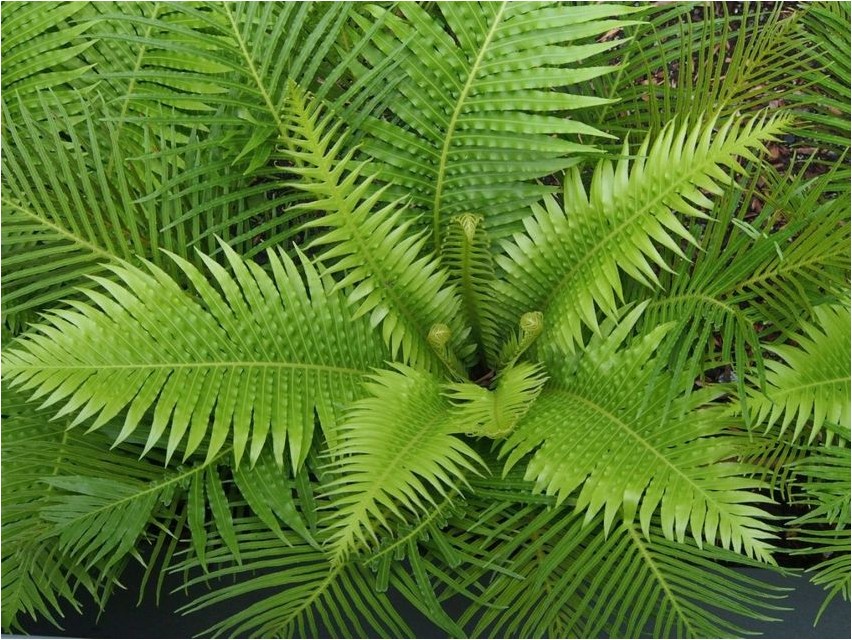
Blechnum humpback is also known under the name humpbacked derbyanka. In Latin, the name of this plant is as follows: Blechnum gibbum.
Blechnum humpback should be classified as one of the plants of the family called derbyaceae; in Latin the name of this family will be: Blechnaceae.
Features of growing humpback blechnum
It is worth noting that the humpback blechnum is considered a rather unpretentious plant to care for, however, in order for the plant to develop most favorably, certain conditions for growing the plant will need to be observed. As for the light regime, the humpback blechnum prefers partial shade. In summer, the plant will need to be provided with fairly abundant watering. The most preferable for growing humpback blechnum is very high air humidity. The life form of this plant is an evergreen shrub.
It is recommended to grow Blekhnum humpback not only in winter gardens and display windows, but also indoors. It is worth noting that even novice gardeners choose this plant for growing at home: after all, the humpbacked blechnum does not require particularly painstaking care. It is noteworthy that in cultivation this plant can reach a maximum size of one meter in height, while the leaf span of Blechnum humpback is about one and a half meters. This plant will require repotting every few years, but it is recommended to choose standard sized pots. As for the composition of the soil mixture, it is recommended to prepare the following mixture: take one part of turf soil, peat and sand for two parts of leaf soil. At the same time, so-called vermiculite or any other additives that will have a loosening effect should be added to such soil soil. As for the degree of acidity of the soil, it is recommended to choose slightly acidic soil.
Among the special requirements for growing humpback blechnum is that the plant is extremely contraindicated in excessive dry air. In addition, it is also important to remember that this plant is extremely sensitive to the slightest drying out of the substrate. Insufficient air humidity should not be allowed: otherwise, the humpback blechnum can also be damaged by spider mites, scale insects, and even aphids. Throughout the entire dormant period, you will need to provide the plant with the following optimal growing temperature: approximately eighteen to twenty degrees. Watering should be moderate, and the degree of air humidity should also be kept at an average level.
In the case when you grow a plant indoors, the dormant period will be forced. The dormant period occurs due to the fact that both air humidity and the degree of illumination are reduced. The rest period occurs from October to February.

Reproduction of Blechnum humpback occurs through spores, and reproduction occurs only when the soil temperature is about twenty to twenty-five degrees. It is important to remember that excessive drying of the soil can be detrimental to this plant. At the same time, air humidity should always be maintained at no lower than seventy percent: only in this case will the plant be able to develop normally.
The leaves of Blechnum humpback are distinguished by their decorative properties. The leaves of this plant are pinnately dissected, they have very large and rigid fronds, and are also endowed with an arched bend. The color of such leaves will be rich green. As for the stem, it should be noted that a pronounced trunk begins to develop only in mature plants.