Sakura
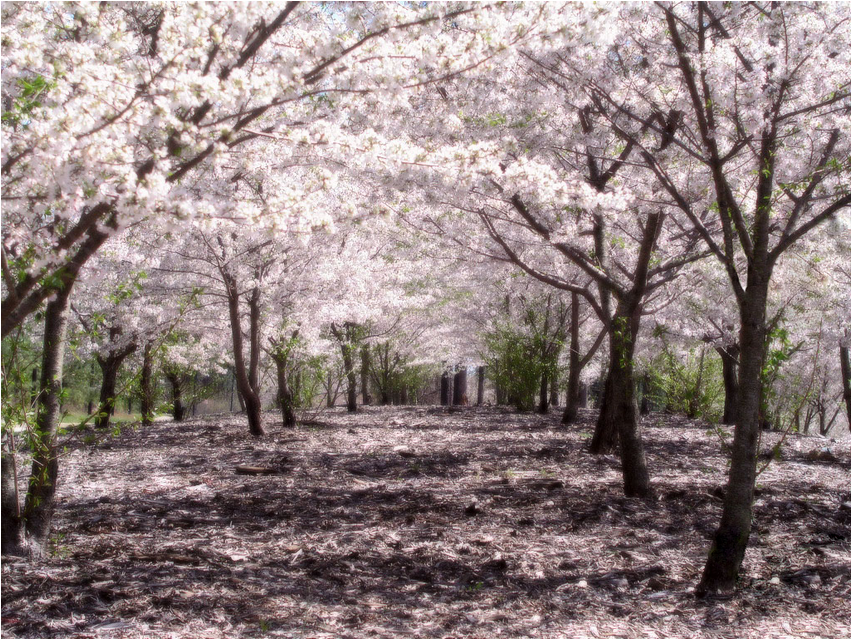
Sakura (lat. Prunus serrulata) is an ornamental plant from the Rosaceae family, often called finely serrated cherry. Sakura is the national symbol of Japan.
Description
Sakura is an amazingly beautiful tree, the height of which is largely determined by age. Usually it does not exceed eight meters — taller trees are extremely rare and, as a rule, their age is very, very respectable. The smooth bark of trees is densely covered with a huge number of cracks of a wide variety of colors. Sakura wood is quite flexible — this is due to its very impressive resin content. And the oval leaves of sakura are equipped with slightly jagged edges.
Cherry blossoms begin to bloom in early spring, and the flowers begin to bloom long before the leaves appear on the trees. Incredibly attractive five-petal double flowers boast a wide variety of colors — from snow-white and yellowish to spectacular hot pink. Each sakura brush contains from seven to nine flowers. But the flowering period of sakura is very short — less than a week.
Fruits also form on sakura, however, in most cases they are inedible (although the fruits of some species of this crop are sometimes used in cooking) — they reach eight to ten centimeters in diameter and have a reddish or black color. But not all varieties of sakura are capable of bearing fruit.
Currently, there are a huge number of varieties of sakura — in Japan alone there are more than three hundred species.
The most popular cherry variety is Satonishiki, which boasts impressive resistance to adverse weather conditions, including rain. The Naniye variety is no less popular, but it suffers greatly from rains — to be more precise, it quickly rots. But this variety is characterized by the largest and most amazingly tasty fruits, the weight of which can reach twelve grams.

Where does it grow
The Himalayas and Japan, as well as China and Korea, are considered the birthplace of sakura. And it was from these countries that it gradually began to spread to other warm regions.
Application
Sakura is used mainly as an ornamental plant — it will look very impressive in any garden. However, the fruits of some of its varieties can also be eaten. They are slightly smaller in size than our cherries, and their taste will delight you with a pleasant sourness. Such fruits make wonderful jam and aromatic wines.
Sometimes sakura leaves are also eaten. These leaves have a very specific taste — spicy, sour or salty-sweet. They are either salted or pickled, similar to tomatoes or cucumbers. All sorts of Japanese national sweets are often wrapped in pickled leaves. They also make an excellent addition to rice.
In addition, sakura fruits boast an excellent expectorant effect and excellent diuretic effect.
Growing and care
Many gardeners successfully grow sakura on their plots — in central Russia it takes root very well. The main thing is to plant these light-loving trees in well-lit areas. And the soil intended for planting them must contain an impressive amount of humus and the necessary amounts of various nutrients.
As for planting time, it is best to plant sakura in the spring, as soon as warm weather sets in, or in late autumn. And to make flowering more abundant, it doesn’t hurt to plant several different varieties at once, maintaining a distance of about two meters between them. For the winter, sakura should definitely be covered.