Orchis
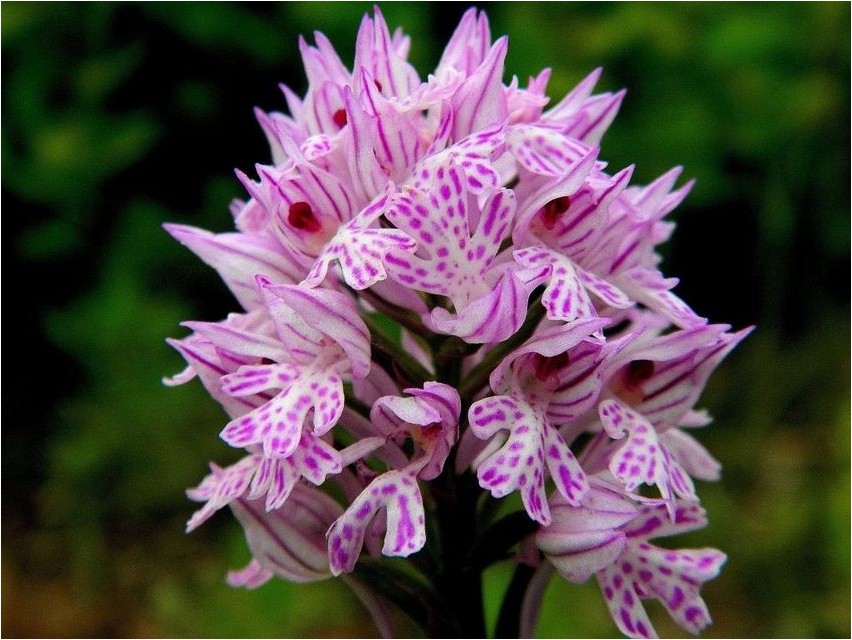
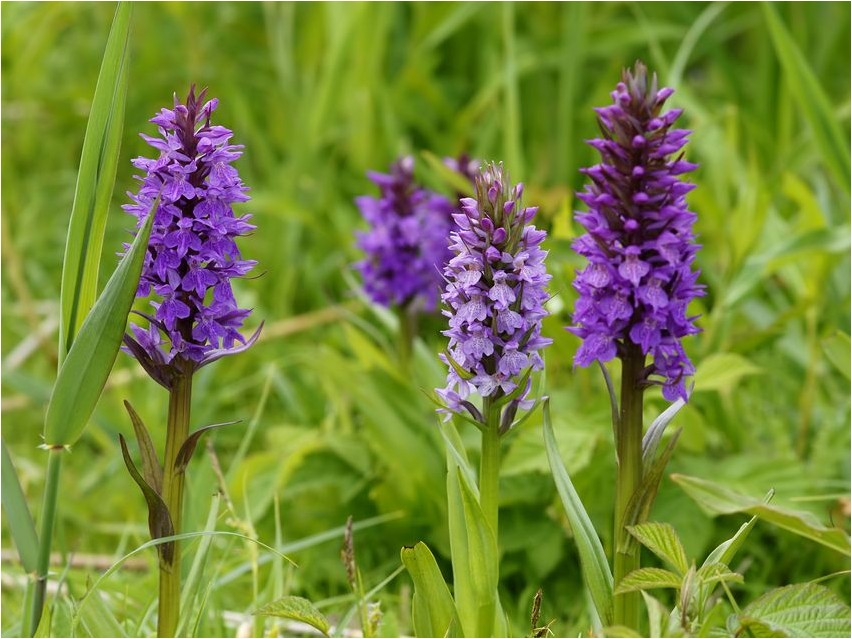
Orchis (lat. Orchis) is a type genus of flowering plants of the Orchid family (lat. Orchidaceae). We are accustomed to admiring Orchids growing in the warm and humid tropics, not realizing that plants of the Orchid family also grow in our harsh regions.
Of course, due to the unkind climate, they are inferior to their tropical relatives in the brightness of flower petals and the size of inflorescences and flowers, without losing their charm and the unique structure of miniature flowers.
What’s in your name
The Latin name of the genus, as often happens in the classification of the plant world, is based on an ancient Greek word meaning “testicle” when translated into Russian. And the genus owes this name to its underground part, which has a pair of tubers, the shape of which is similar to the shape of “testicles”.
The origin of the Russian name of the genus, “Orchis”, has several versions. Let us present one of them, voiced by Vladimir Ivanovich Dal in his famous dictionary. Dahl found something in common between “Orchisnik” and “Yadrishnik”, which is based on the word “kernel”.
Due to the miniature size and unique structure of the flowers of the Orchis genus, the plants are popularly called “tears” or “cuckoo tears”. But there may be overlaps here, since “cuckoo tears” are also called Lyubka bifolia (lat. Platanthera bifolia) from the genus Lyubka, which is a relative in the Orchidaceae family, as well as plants of the genus Shaker (lat. Briza), belonging to a completely different family, namely, the family Cereals (lat. Poaceae).
Description
Plants of the genus Orchis, which initially numbered more than 1, 300 species in its ranks, were divided by botanists into several genera, after which this genus became the owner of at least 23 species, very diverse in appearance. But they all have a pair of underground tubers, which take the form of thickenings on the roots and have reserves of nutrients that provide plants with longevity, and give humans edible and healthy tubers. Indeed, unlike its tropical relatives, which do not require direct contact with the soil to live, Orchis is a common terrestrial plant.

The above-ground part is represented by a simple leafy dense stem, the height of which varies among different species from 10 to 50 centimeters. Widely lanceolate leaves gently clasp the erect, hard stem.
Orchis has a long flowering period, which begins in April and ends in late summer. The spike-shaped multi-flowered inflorescence is formed by miniature flowers, which remain firmly on the peduncle for up to 10 days, awaiting pollination. When the long-awaited pollen lands on the stigma of the pistil, the petals wither, giving way to the fruit ovary. Indeed, despite the presence of underground tubers, Orchis propagation is carried out largely through seeds.
Orchis flowers are painted in yellow, lilac-pink, red, violet, and dark cherry tones. Flowering begins from the base of the raceme, gradually rising up the peduncle. And only the Monkey Orchis (lat. Orchis simia) breaks tradition, opening the flower petals in the reverse order, that is, from top to bottom along the inflorescence.
Usage
In the Middle East, dried tubers of some Orchis species are ground into flour and a drink is prepared from it, adding to the flour, in addition to water or skim milk, sugar, cinnamon, rose water and coconut. This drink warms you well in the winter cold, giving the body vital energy. The drink is called “salep”.
Dried tubers of some species of Orchis are used by traditional healers in the treatment of gastritis, colitis and food poisoning, as well as to strengthen human immunity weakened by disease. These species include, at a minimum, Orchis militaris and Orchis mascula. The flowers of the latter have a funny natural shape, which gave the specific epithet to this plant: