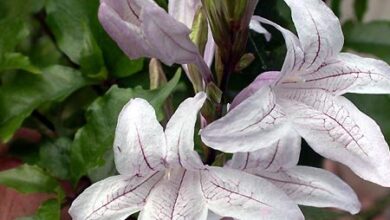
Adenium obese
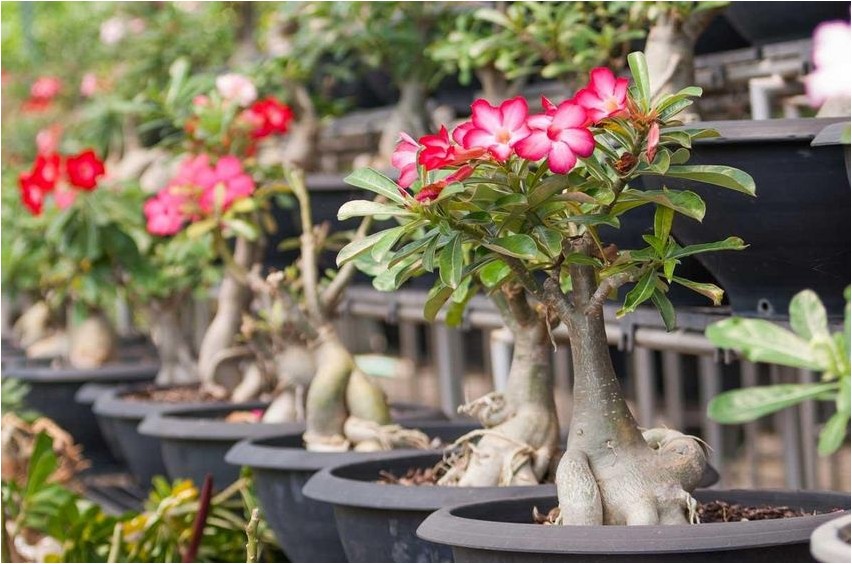
Adenium obese is also known as adenium thick and desert rose. In Latin, the name of this plant will be as follows:
Adenium obesum. Adenium obese is one of the plants of the family called Kutraceae; in Latin the name of this family will be: Apocynaceae.
Description of adenium obese
In order for this plant to develop favorably, it will be necessary to provide a sunny light regime. During the summer season, adenium obese should be watered abundantly, while the degree of air humidity should be kept at an average level. The life form of adenium obese is an evergreen shrub. It should be noted that this plant is poisonous, and the poisonous sap will be found in all parts of the plant.
This plant is most often used as a profusely and beautifully flowering crop for landscaping a variety of well-lit and warm rooms, as well as winter gardens. It is noteworthy that in the summer the temperature for growing adenium obese should not fall below eighteen degrees. As for the maximum size in cultivation, the average height of this plant in cultivation will be about one and a half meters.
Description of the features of care and cultivation of adenium obese
For the favorable development of this plant, regular replanting plays an important role, which should be done in the spring every two years. As for the composition of the soil mixture itself, you will need to mix two parts of turf soil, as well as one part each of sand and peat. The acidity of such soil can be either neutral or slightly acidic.
It is important to remember that lack of lighting can have an extremely negative effect on adenium obese. In the case when excessive moisture in the soil occurs, rotting of the roots may occur, and the plant itself may become soft and watery. In some cases, this plant can be affected by aphids, scale insects and mealybugs.

Throughout the entire dormant period of adenium obese, the optimal temperature regime should be maintained at ten to fifteen degrees Celsius. It is noteworthy that at this time the plant will need rather infrequent watering, and air humidity can remain standard. When adenium obese grows indoors, this dormant period is forced and will last from October to February. The reasons for this dormant period will be both insufficient lighting and low air humidity.
Reproduction of adenium obese will occur through apical cuttings. These cuttings should be grafted onto oleander shoots. In addition, propagation is possible through self-rooted cuttings and seeds. However, we should not forget that when cuttings there will be no thickening of the stem, which is typical for this plant.
The specific requirements of this culture include the need for a bright and sunny place. During the summer season, the plant should be watered abundantly, but the soil clod must be allowed to dry out between waterings. The pot in which the adenium obesum is located should be turned from time to time, which ensures that the plant does not grow one-sided. The flowers of this plant have decorative properties. It should be noted that sometimes adenium obese can bloom twice in a year, but most often this flowering occurs in the summer season. The flowers of this plant are colored in white, red, pink, lilac, purple, cream and crimson tones.