Southern Plectranthus
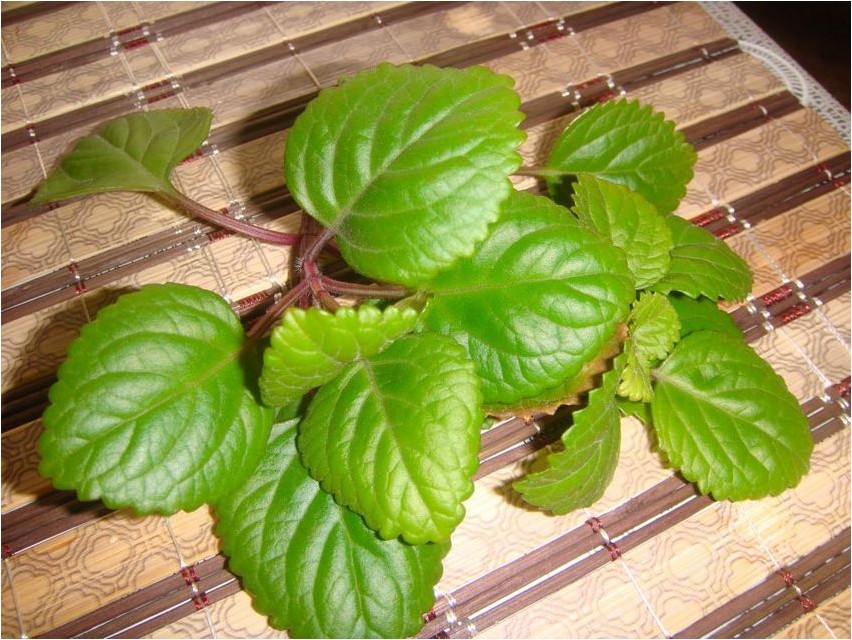
Southern plectranthus is also known as Scandinavian ivy and Swedish ivy. In Latin, the name of this plant will be as follows: Plectranthus australis.
Southern Plectranthus is one of the plants of the family called Lamiaceae; in Latin the name of this family is Lamiaceae.
Description of southern plectranthus
In order for this plant to develop favorably, it will need to be provided with either a sunny light regime, or a partial shade regime, or a shade regime. Throughout the summer, it is very important to maintain abundant watering. As for air humidity, southern plectranthus needs average values. Life form: herbaceous plant.
This plant can quite often be found both in residential premises and in general purpose premises: for example, in offices and lobbies. In addition, the plant is often grown in winter gardens, greenhouses, and florariums. Southern plectranthus is endowed with drooping and hanging shoots, for this reason it can be used as an hanging plant, which is intended for landscaping work and private premises, as well as loggias and balconies. It should be noted that the plant will grow well in hydroponic culture.
This plant can grow for a year or two without pruning or pinching, but after this the southern plectranthus will lose its decorative effect. Actually, all plant care will consist of watering and fertilizing. If you want the plant to grow for many years, you will need to provide especially careful care and suitable growing conditions. It should be noted that when a plant is rejuvenated and grown from cuttings, its lifespan will be literally unlimited.
The shoots of this plant are quite weak, their height can be no more than ten centimeters. Such shoots will lie down, and if this plant is not trimmed, the shoots can even reach a length of more than one meter.

Description of the features of care and cultivation of southern plectranthus
For the favorable development of southern plectranthus, regular replanting will be required. The plant will need such a transplant once every two to three years, and it is recommended to select pots of standard proportions. When the plant grows as a ground cover, the growing location of southern plectranthus should be changed as necessary. As for the composition of the soil mixture itself, you will need to mix one part each of sand and turf soil or compost, as well as three parts of leaf soil. In addition, it is permissible to take one part each of sand and leaf soil, as well as two parts of garden compost or turf soil. The acidity of such soil can be either neutral or slightly acidic.
When a plant receives insufficient light, its shoots may droop and stretch, and the leaves themselves may turn yellow. If there is a lack of nutrition and excessive soil moisture, the edges of the leaves may dry out or turn black. In case of excessive hypothermia, the roots of the southern plectranthus may be damaged, as well as the young leaves and growing points themselves. It should be noted that the plant is quite resistant to pests, but in some cases it can be damaged by aphids, whiteflies, scale insects and spider mites.
Throughout the entire period of active growth, to enhance branching, formative pruning or pinching of shoots should be carried out either every year or every two years. Such measures should be taken around the end of February – beginning of March. The plant needs bright but diffused light. For this reason, it is recommended to keep the plant either on eastern or western windows.