Satsuma
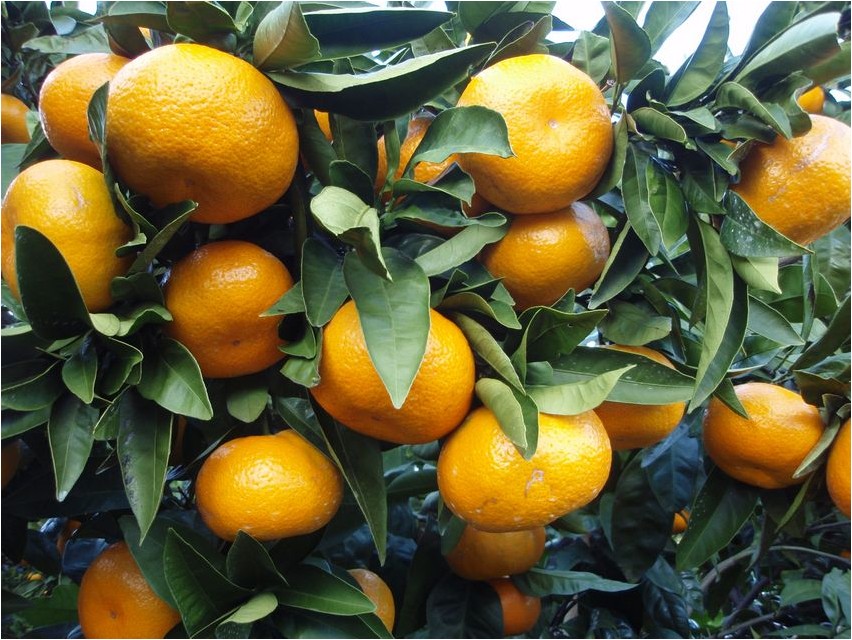
Satsuma (lat. Citrus unshiu) is a plant that is one of the varieties of mandarin and represents the Rutaceae family. Satsuma is quite commonly known as unshiu mandarin and is native to the Far East, including Japan and China.
Description
Satsuma is a relatively small evergreen tree with a spreading crown. In open ground, the crown of a satsuma can reach a height of two to three meters, and the height of the crown of a plant grown at home usually does not exceed one to one and a half meters. The slightly drooping branches of this crop are characterized by the absence of thorns and the presence of smooth green bark.
The plump dark leaves have a slightly elongated oval shape and are endowed with distinctly protruding veins. The leaves become narrower towards the tops, and the average lifespan of each leaf is approximately two to four years.
Satsuma usually blooms in May — its numerous flowers are arranged in small groups (no more than four to six pieces in each). And elongated white flowers appear on last year’s short branches.
Fruit formation on satsuma occurs without pollination. They differ from other tangerine varieties in their round and slightly flattened shape. The peel comes off the fruit without much effort, and the weight of each fruit reaches an average of seventy grams. By the way, the skin of satsuma fruits is very delicate and cannot withstand long-term transportation.
Satsumas begin to bear fruit when they reach three years of age, and harvesting usually occurs at the end of October.

Application
Satsuma fruits bring great benefits to the human body. However, this fruit is not recommended for allergy sufferers — it contains substances that can cause allergic reactions.
Dried satsuma peel is often used instead of orange peels as a bitter-spicy stomach remedy, as well as to improve the taste of medicines taken.
Growing and care
Due to the fact that satsuma fruits do not contain seeds, this crop is propagated mainly by grafting onto seedlings of various citrus crops (most often lemon seedlings). As a rule, it takes several months to root cuttings — to avoid such a labor-intensive process, many gardeners prefer to purchase already grafted satsuma.
Satsuma growing at home practically does not need watering in winter — only if the soil begins to dry out, it can be slightly moistened. But from April until September, it needs abundant watering and high-quality fertilizing. Until the satsuma reaches the age of seven or eight years, it needs to be replanted every year, and after this time it is replanted only once every two years.
Satsuma grows best in sunny, bright rooms. However, just like most other subtropical crops, in the winter season it needs coolness — a temperature range of four to ten degrees ideally meets this requirement.
Satsumas can sometimes be affected by pests such as mealybugs, citrus red mites, or various varieties of scale insects. This crop is also affected by diseases — when there is a deficiency or excess of moisture, satsuma leaves are attacked by spotting, which inevitably leads to their gradual falling off.
In general, satsuma is distinguished by quite high endurance and tolerates frost quite easily. Moreover, in Russia and Western Europe it is bred mainly in indoor conditions.