White pigweed
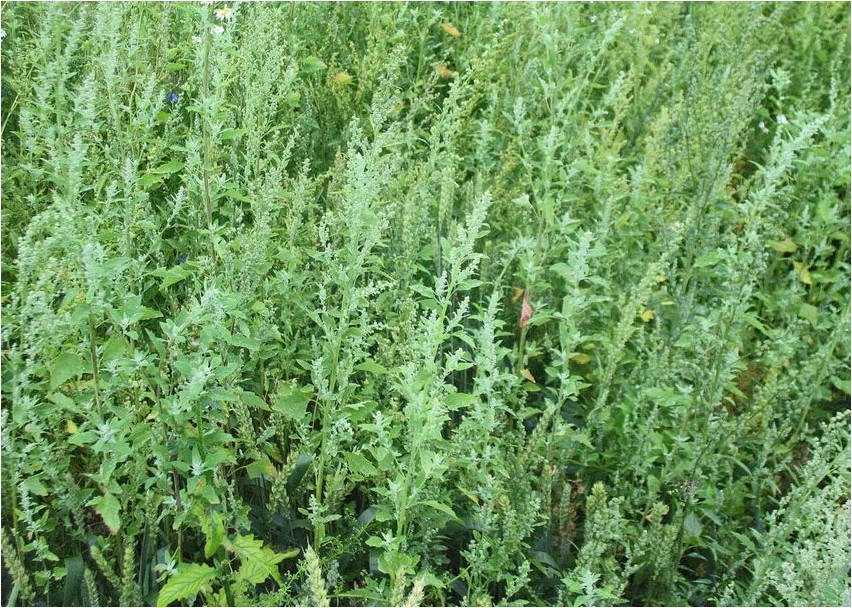
White pigweed is one of the plants of the family called goosefoot; in Latin the name of this plant will be as follows: Chenopodium album L.
As for the name of the white goosefoot family itself, in Latin it will be: Chenopodiaceae Vent.
Description of white mari
White or common pigweed is an annual herbaceous plant, the height of which will fluctuate between ten and thirty centimeters. For the most part, this plant is highly branched; almost always it will be endowed with a clear powdery coating. The leaves of white goosefoot can be from oval-deltoid to oblong-deltoid, and extremely rarely they are also lanceolate. The leaves of this plant at the very base are wedge-shaped or rounded and contracted into petioles of varying lengths. The flower balls of white goosefoot are collected in spike-shaped inflorescences, which will form a leafy and richly branched panicle, or into almost leafless, axillary and terminal inflorescences. The fruit of this plant is a shiny and black achene, the diameter of which is only slightly greater than one millimeter. White gooseberry blooms in July, while the fruits ripen in September.
For growth, this plant prefers places along river valleys in all regions, and also rarely in Arctic regions. It should be noted that white pigweed is a weed of both garden crops and crops, which is found near roads and in garbage areas. It is noteworthy that this plant is not only a perganos, but also a very valuable honey plant.
Description of the medicinal properties of white mari
White pigweed is endowed with very valuable healing properties, and it is recommended to use the herb of this plant for medicinal purposes. The term grass includes leaves, stems and flowers. The presence of such valuable healing properties should be explained by the content of lipids, alkaloids, betaine, trigonelline, flavonoids, essential oil, sitosterol, vitamin C, triterpenoid saponins, ferulic and vinylic phenolcarboxylic acids in this plant. White mari seeds contain fatty oil.
As for traditional medicine, healing remedies based on white mari have become quite widespread. Infusion and decoction prepared from the herb and leaves of this plant are recommended for use in gastralgia, peptic ulcers of the stomach and duodenum, inflammatory diseases and spasms of the digestive organs, neurasthenia, migraines, hysteria, paralysis and convulsions as a sedative. In addition, such drugs are used as laxatives, anti-inflammatory, analgesics and anthelmintics. As an expectorant, white gooseberry is used for coughs, bronchitis and pulmonary tuberculosis, and as a diuretic it is used for various diseases of the spleen and liver.

Externally, the herb of this plant is used as a poultice for calluses, rheumatism, radiculitis and lumbago. A decoction and infusion prepared from the white mari herb is recommended for use as a gargle for sore throats, as well as for insect bites and skin diseases, for washing wounds and lotions. The juice of the white goosefoot herb is found to be very effective in treating heat stroke, while the herb powder of this plant is used for baby powders.
It is noteworthy that it has been experimentally proven that the white mari herb is endowed with antibacterial activity and estrogenic effects. The ash from the stems of this plant helps in removing warts and birthmarks.





