Thin seed plant, or Leptospermum
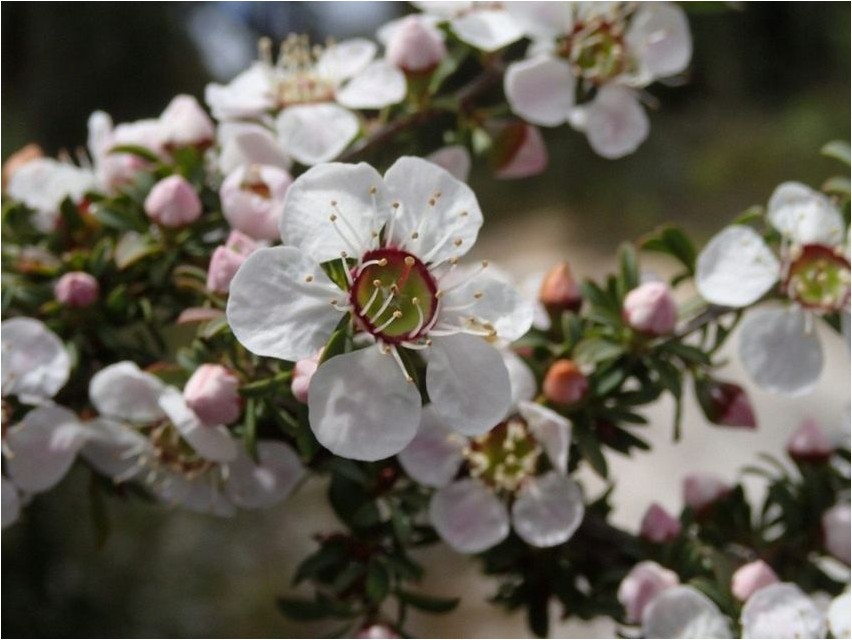
Thin seed plant, or Leptospermum (lat. Leptospermum) is a genus of flowering honey plants of the Myrtaceae family (lat. Myrtaceae).
The genus is represented in nature by shrubs and small trees growing in Australia, New Zealand and the countries of Southeast Asia, most often on low-nutrient, moist soils. The plants are commonly known as “tea trees”, although some species of other genus are also so called. This name comes from the practice of the first settlers of Australia, who steeped the leaves of plants of some species of this genus with boiling water to make herbal tea.
What’s in your name
The Latin name of the genus “Leptospermum” is based on two Greek words: “leptos” and “spermum”, which are translated into Russian by the words “thin” and “seed”. The reason for the name was the appearance of the seeds of plants of the genus.
Description
The first description of plants of the genus was made in 1776 by German botanists, father and son, the Forsters, but an unambiguous identification of individual species of the genus occurred only in 1979. In general, many species are very similar that even botanists sometimes find it difficult to distinguish them from each other.
Members of the genus Leptospermum can vary in size, from branched, lush shrubs to small trees covered with papery, scaly, or fibrous bark. Depending on the type of plant, the height can vary from one to twenty meters.
Relatively small leaves are arranged alternately on the stem. They have a hard leaf plate, which, when crushed, exudes a pleasant aroma. The leaves have stipules. The edge of the leaf blade is serrated.

Single or grouped flowers are equipped with bracts and sepals, which in most species fall off (fall off) when the petals open. Leptospermums have five conspicuous radiating petals of white, pink or red, alternating with five groups of stamens, which are generally shorter than the petals.
The fruit is a woody capsule that opens at the top to release the light seeds. Although in some species the capsule retains the seeds inside until the death of part or the entire plant.
Representatives of the genus Leptospermum are distinguished by the presence of essential oils in all parts of the plant.
Varieties
Today the genus includes eighty-seven plant species, including:
* Myrtle seed plant (lat. Leptospermum myrsinoides)
* Large-leaved thin seed (lat. Leptospermum grandifolium)
* Large-flowered fine seed (lat. Leptospermum grandiflorum)
* Three-veined thin seed (lat. Leptospermum trinervium)
* Visible thin seed (lat. Leptospermum spectabile).
Usage
Quite decorative leaves and spectacular inflorescences of plants of the genus Leptospermum find fans among gardeners and flower growers. In areas with a temperate climate, plants of the genus are not able to grow in open ground, but they thrive in greenhouses and as a houseplant.
When Europeans began to slowly settle in the distant continent, they used the leaves of certain species of plants of the genus Leptospermum as tea leaves, simultaneously achieving a double effect: they received a pleasant drink, plus they strengthened their immunity due to the healing abilities of the plants.
Healing abilities of plants of the genus
The nectar of the flowers is collected by bees, turning it into honey with a lemon aroma, which has antibacterial and antimicrobial activity.
Since all parts of the plant genus contain essential oils that have medicinal properties, people have learned to extract such oils, putting them at their service.
Like Eucalyptus oil, a close relative of Leptospermum, the essential oils of the latter are distinguished by their ability to fight pathogens of inflammatory processes in the human body. They have a beneficial effect on human skin, helping it maintain elasticity and youth longer.