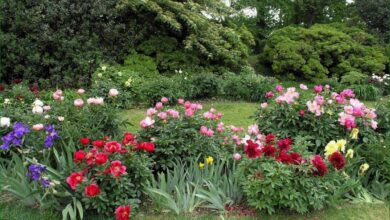
Fatsia
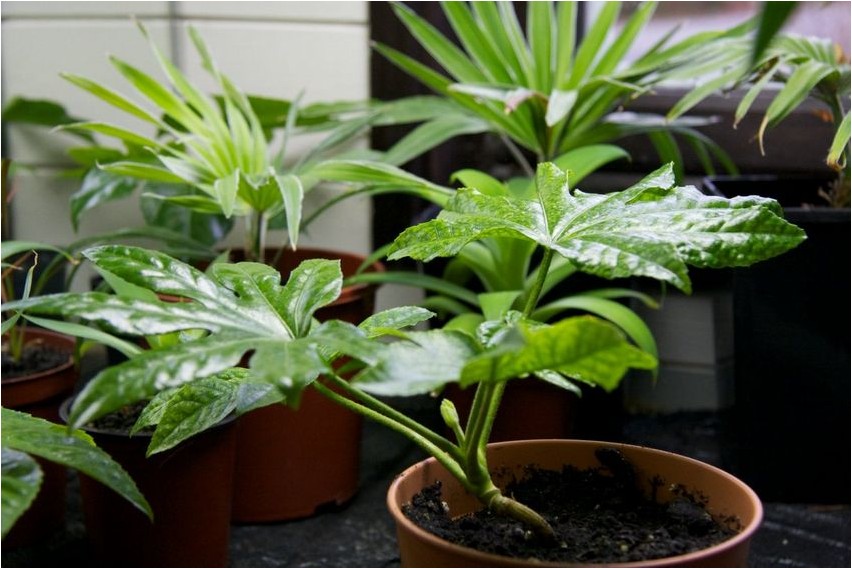
Fatsia (lat. Fatsia) is an incredibly spectacular evergreen tree, which is a prominent representative of the Araliaceae family.
Description
Fatsia is a luxurious evergreen deciduous ornamental tree. And it can safely be classified as a fast-growing plant — even in indoor conditions it can quickly stretch up to one and a half meters up. And in natural conditions, the height of these luxurious shrubs can reach six meters.
The diameter of the large palmate leaves of Fatsia often reaches thirty centimeters. These maple-like shiny leaves are painted in rich green tones (it is extremely rare to see variegated fatsias — they are also very beautiful). By the way, the young leaves of this plant are always whole — division into characteristic lobes, which give it an amazing decorative effect, occurs only after some time.
At home, fatsia blooms very rarely. Its small yellowish-greenish or white flowers form pretty umbrella inflorescences. At the end of flowering, the plant produces fruits that look like berries and are characterized by a dark blue, almost black tint.
Where does it grow
Japan is considered to be the birthplace of fatsia, so this plant can be found especially often in this country. Many such trees grow on the island of Taiwan.
Usage
Fatsia, which has exceptionally positive energy, has been cultivated for more than two centuries. This amazing plant has a lot of useful properties — it not only perfectly helps optimize various physiological functions of the human body, but also significantly improves the air around it, and even promotes sound absorption! Fatsia’s abilities are also known, such as the ability to humidify the air, produce healthy electrostatics and cope with even the most severe headaches!

Growing and care
Fatsia is shade-tolerant and completely intolerant of direct sunlight. But it can be grown quite safely under artificial light! It will feel best in an earth mixture formed by turf and humus soil in combination with sand (proportion 2:1:1). Universal ready-made soil mixtures are also suitable for growing this beauty. The most important thing is to provide this green pet with proper drainage, since in the absence of it it can easily shed its leaves. In addition, Fatsia can shed its leaves as a result of too much waterlogging or drying out and due to sudden temperature changes. And yellowish or pale brown dried spots on the leaves are evidence of sunburn.
Fatsia should be planted exclusively in wide pots. Adult specimens are usually replanted every two or three years, and the next pot should be even wider than the previous one. As for young plants, they are replanted annually.
Fatsia should be watered moderately (once every three or four days), since excess moisture can cause irreparable harm to it. It is recommended to spray it from time to time. Also, during the active growing season, it is necessary to feed the plant once or twice a month (combined fertilizers would be an ideal option for these purposes).
Fatsia requires frequent pruning, the main task of which is nothing more than the formation of the crown and the regulation of rapid vertical growth. And in winter, the plant should be kept at a temperature not exceeding thirteen degrees (in the most extreme case — fifteen degrees).
Feeling great in a tropical climate, Fatsia can tolerate light frosts. This plant is propagated both by apical cuttings and freshly collected seeds.