Delosperma Indoor Plant and Leucojum
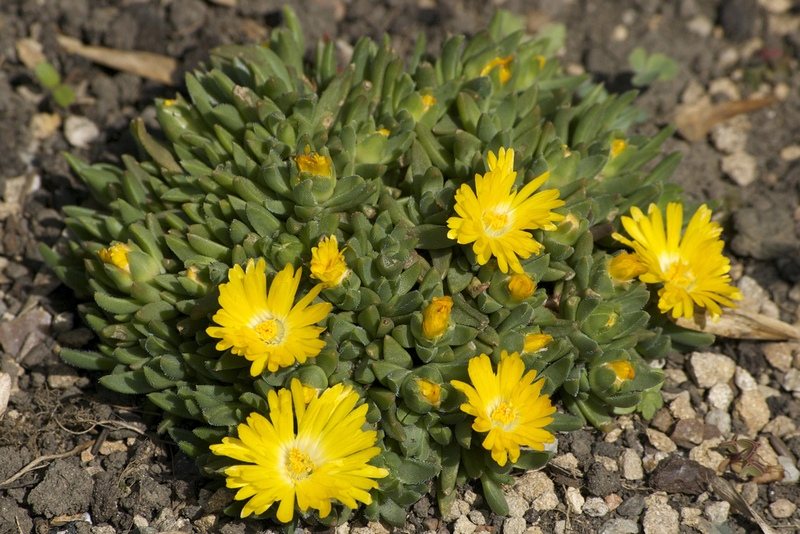
In addition to common tips for growing delosperma, we’ll share a few tricks. You’ll agree, there’s little that can rival these beautiful indoor plants. The plant’s name comes from the island of Madagascar, India, Argentina, and South Africa, and there are about 20 species of delosperma in the wild. The flower looks beautiful in pots when the soil is lightly sprinkled with small pebbles. The pebbles serve as drainage and a decorative element.
Now let’s look at the basic recommendations for growing and caring for these indoor plants. Delosperma belongs to the Aizonaceae family, which is native to South Africa, meaning the plant needs to be provided with the most natural growing conditions possible, including full sunlight throughout its lifespan. The temperature should be moderate, not lower than 8°C. During winter and the dormant period, the average temperature for delosperma should be around 10-12°C.
Now a few tips, so to speak, tricks and subtleties.
1. To prevent the leaves and stems from rotting, it’s best to sprinkle the top layer of the delosperma pot with drainage material and fine gravel.
2. There are some very beautiful delosperma species, mainly grown in Mediterranean countries in flowerbeds and garden beds. Although they are very beautiful and vibrant, they do not grow well indoors, so it’s better to grow acclimatized varieties.
 leucojum: Growing and Care
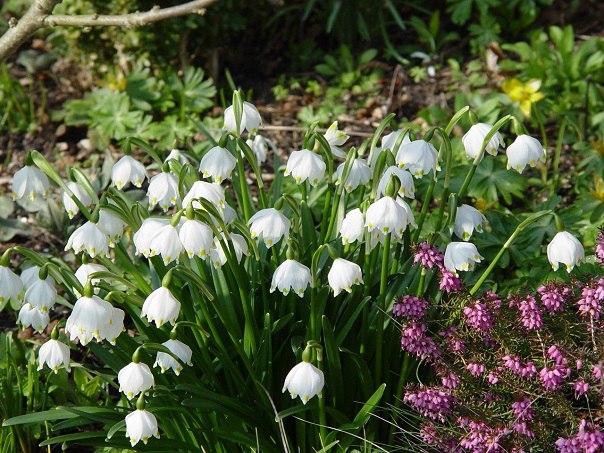
Leucojum is also known as white violet. Growing conditions for Leucojum are similar to those of snowdrops and lilies of the valley. This bulbous plant has drooping white flowers. Characteristic green spots are visible on the tips of the petals. Leucojum plants easily spread beyond garden plantings into the wild, which allows them to be considered neophytes, that is, plants that have recently appeared in our regions. Domestic gardeners are eagerly cultivating Portuguese, North American, and native species. In our region, we grow Leucojum vernalis, which has yellow spots on the tips of its leaves, and Leucojum d’Ages.