Red onion
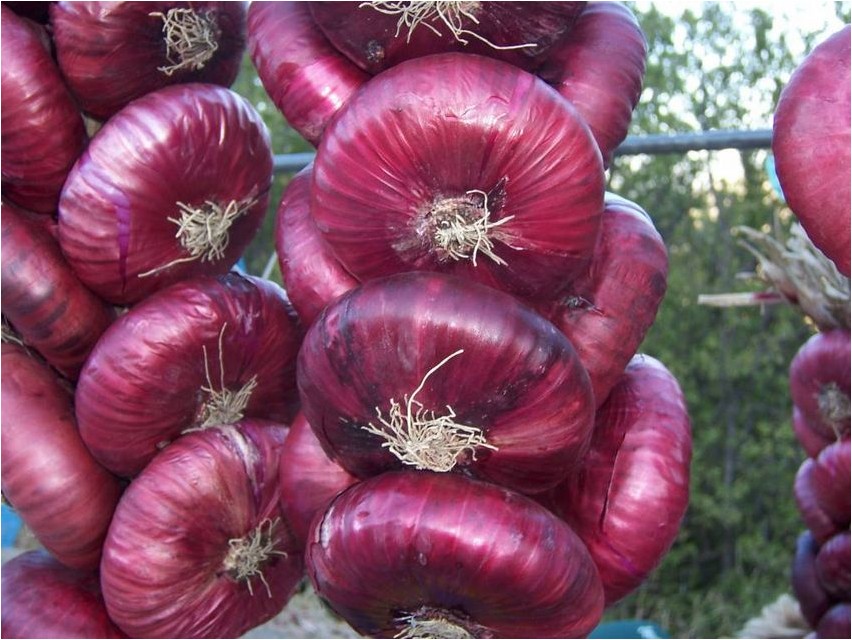
Red onion (lat. Allium cepa) is a vegetable plant belonging to the very piquant Allium family. Red onion is also called “Yalta” or “Crimean”.
Description
The fruits of red onions are covered with a rather pretty reddish-purple skin, under which lies a juicy pulp, colored in purple-whitish shades. These very interesting round bulbs are slightly flattened on both sides.
As for the taste of red onions, opinions on this matter vary greatly — some people find it bitter, while others, on the contrary, find it sweet. In general, the taste qualities of this product largely depend on the technology of its cultivation and on the area in which this crop is cultivated. If all the basic rules for growing red onions are fully observed, they will delight you with a pleasant and rather unusual sweetish taste.
Usage
In cooking, this type of onion is used by analogy with its relative — onions. These onions are baked, fried, grilled or steamed, as well as pickled and stewed.
Red onions can often be found in a wide variety of appetizers, original salads, as well as in side dishes and first or second courses. This product perfectly helps to diversify the already very pleasant taste of all kinds of fish and meat dishes. In addition, even desserts are prepared with its addition. It is also added to baked goods — it is especially common in pizza and savory pies.
This very unusual type of onion boasts the presence of a huge amount of antioxidants — there are at least twice as many of these beneficial substances in red onions as in other varieties of this crop. This feature gives this onion a powerful anti-inflammatory effect. And a rather impressive number of different sulfur groups helps to activate the production of cysteine in the body — this greatly helps to reduce not only the level of toxicity in the body, but also weight.

If you use this product regularly, you can significantly improve the quality of the thin cell membranes of vital red blood cells and even reduce cholesterol levels. Also, the beneficial substances contained in such onions make it possible to use it both as a prophylactic and as a medicine for the treatment of various colds. Red onions cope no worse with the flu — even massive outbreaks of this disease are not at all scary for them.
Red onion also has antiseptic properties — this feature allows it to very effectively fight various microbes. And this vegetable has the most beneficial effect on the functioning of the gastrointestinal tract — red onion juice is endowed with the ability to increase the acidity of the gastric environment.
In addition, this colorful onion has a beneficial effect on the functioning of the brain and nervous system. It will also serve well against atherosclerosis and insomnia. It won’t hurt to include red onions in your menu if you have constant fatigue or headaches.
The rich and unique chemical composition of this vibrant vegetable allows it to be used in cosmetology. Masks made from red onion help to significantly improve the condition of the hair, and the gruel prepared from it copes perfectly with all kinds of skin ailments. The juice extracted from valuable bulbs is no less useful — it will become a reliable assistant in the fight against age spots and acne and will significantly improve the overall condition of the skin. And compresses made from onion peels help quickly get rid of calluses. If you prepare a decoction from this husk, it will definitely help normalize the menstrual cycle.
Among other things, red onion is also an excellent anthelmintic. And in folk medicine it is widely used to combat gastritis and hemorrhoids (for this purpose, its juice is combined with honey).
Contraindications
Red onion is contraindicated for use in cases of serious kidney and liver diseases, as well as in severe gastrointestinal diseases. As for all other people, they are strictly not recommended to exceed the maximum permissible daily intake — 100 g of this product per day will be more than enough.