Russian willow
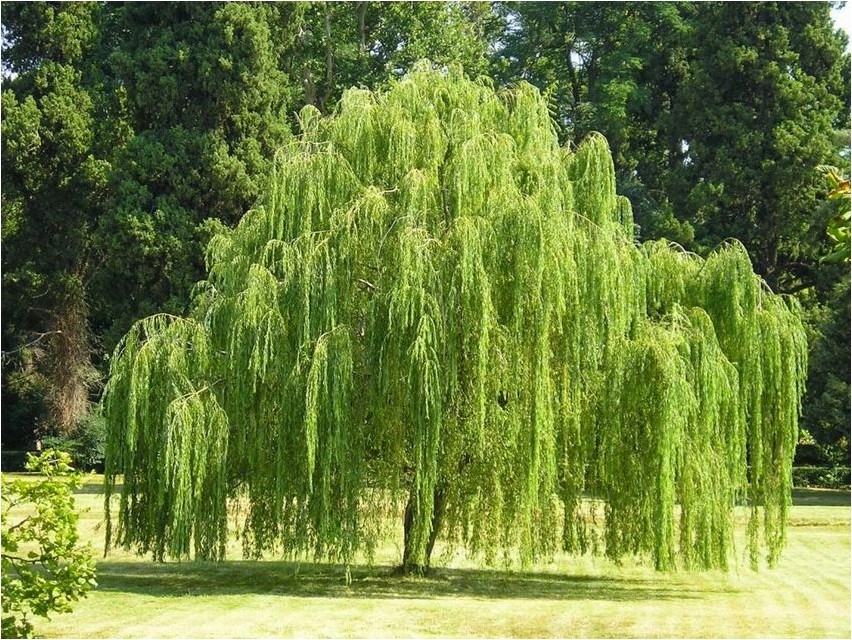
Russian willow is one of the plants of the family called willow; in Latin the name of this plant will be as follows: Salix rossina Nas.
As for the name of the Russian willow family itself, in Latin it will be: Salicaceae Mirb.
Description of the medicinal properties of Russian willow
Russian willow is a tall dioecious shrub or a small tree endowed with long and thin branches. The height of such a plant will be about eight to ten meters. The leaves of Russian willow are alternate, they are linear-lanceolate, pubescent underneath, such leaves are quite densely located and have a slightly downward-turned edge. On long shoots, the leaves of this plant will be much longer and reach a length of about fifteen to twenty centimeters, and on short shoots the length of such leaves is five to seven centimeters. The fruit of the Russian willow is a capsule.
Description of the medicinal properties of Russian willow
Russian willow is endowed with very valuable healing properties, and it is recommended to use the leaves and bark of this plant for medicinal purposes. It is recommended to harvest the bark of this plant in early spring, and the leaves are recommended to be harvested in the summer.
The presence of such valuable healing properties is explained by the content of tannins, flavonoids, salicin glycoside, vitamin C and other substances in the bark of this plant.
Preparations created on the basis of Russian willow are endowed with diaphoretic, antipyretic, anti-inflammatory, astringent, anthelmintic, antiseptic, hemostatic, wound-healing, antiseptic, sedative, antimalarial and analgesic effects.

A decoction of the bark of this plant is recommended for use for diarrhea, colitis, enterocolitis, various bleeding, rheumatism, chronic gastritis, malaria and gout. It should be noted that before his discovery of the subsequent distribution of quinine, the bark of this plant was considered the only available remedy in folk medicine that helps fight malaria. It is noteworthy that an infusion of the leaves of this plant can also be used for malaria.
As for external use, a decoction of Russian willow bark should be used for rinsing for various inflammatory processes in the mouth and throat, as well as for foot baths for excessive sweating of the feet, which is also accompanied by an unpleasant odor. For inflammatory processes of the skin, ulcers, abscesses and bedsores, it is recommended to use an ointment based on this plant. To prepare such an ointment, you will need to take willow bark powder and butter.
The bark powder of this plant should be sprinkled on bleeding wounds to stop the bleeding. It is also recommended to suck this powder into the nostrils in order to stop nosebleeds.
For varicose veins and pain in the legs, you should use foot baths from a decoction consisting of Russian willow bark and oak bark in equal parts. For dandruff, hair loss and itchy scalp, it is recommended to wash your hair with a strong decoction consisting of equal parts of burdock roots and Russian willow bark.
For fever, rheumatism and aspirin intolerance, it is recommended to use the following remedy based on Russian willow: to prepare such a remedy, take one teaspoon of dry crushed bark per glass of cooled boiled water. The resulting mixture should be infused for two hours, after which this mixture is carefully filtered. Take two tablespoons of this remedy three to four times a day before meals.
To wash hair, use a decoction of two tablespoons of the bark of this plant and two tablespoons of burdock roots: this decoction is infused for two hours in a liter of water, and then it is carefully filtered.