European undergrowth
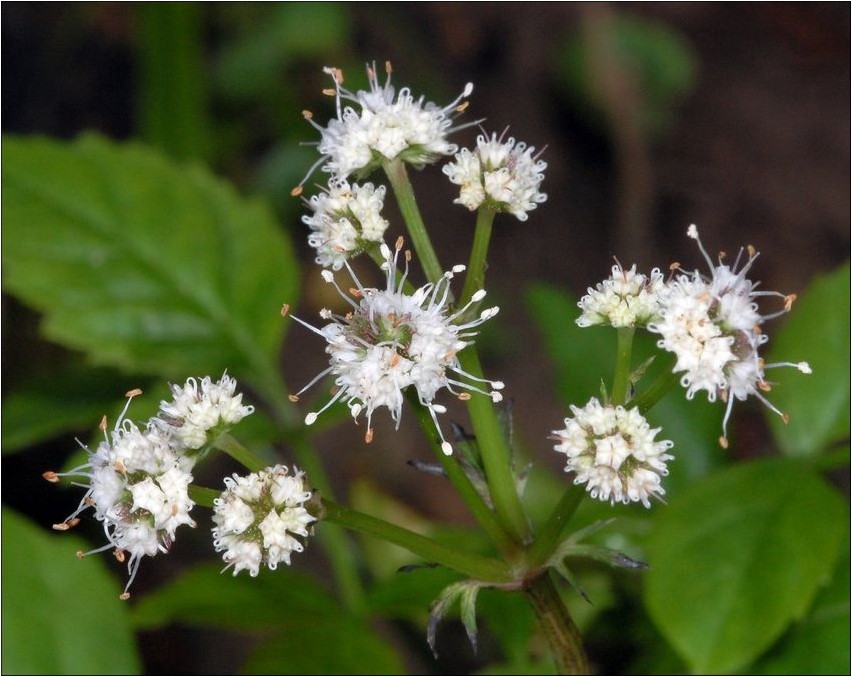
European undergrowth is one of the plants of the family called Umbellaceae; in Latin the name of this plant will be as follows: Sanicula europica L.
As for the name of the European undergrowth family itself, in Latin it will be: Apiaceae Lindl. (Umbelliferae Juss.).
Description of the European undergrowth
European undergrowth is a perennial herbaceous plant, endowed with a stem, the height of which will fluctuate between forty and eighty centimeters. Most often, such a stem is single, and it will always be straight. The basal leaves of this plant are on rather long petioles, and their plates are three to five separate. The inflorescences of European undergrowth will be terminal and three-four-forked; they are endowed with flowers that are collected at the very ends of the rays through spherical umbrellas. The flowers of European undergrowth are on rather short stalks, and the fruit is ovoid-spherical, it will be seated with hook-shaped spines, and the length of such a fruit will be about four to five millimeters.
European undergrowth blooms during the period from May to July. Under natural conditions, this plant can be found in the European part of Russia, Crimea, the Carpathians and the Dnieper region of Ukraine, the Caucasus and the Altai region of Western Siberia. For growth, European undergrowth prefers coniferous-deciduous and broad-leaved forests.
Description of the medicinal properties of European undergrowth
European undergrowth is endowed with very valuable healing properties, and it is recommended to use the grass of this plant for medicinal purposes. The term grass includes leaves, flowers and stems.
The presence of such valuable healing properties is recommended to be explained by the content of allantoin, triterpene saponins, organic malonic, oxalic, citric and malic acids in the roots of this plant, as well as the following phenolcarboxylic acids and their derivatives: rosemary and chlorogenic acids. The grass of this plant contains allantoin and saponins. The leaves will contain polyacetylene compounds, triterpene saponins, vitamin C, organic acids citric, oxalic, malonic and malic. The fruits of the European undergrowth contain fatty oil, which contains linoleic, oleic and petroselinic acid.

A decoction or infusion prepared from the flowers of European undergrowth is recommended for use in dysentery, diarrhea, pulmonary tuberculosis, hematuria, leukemia and anuria, and is also used as a diaphoretic. For rheumatism, fresh leaves of this plant are used locally as a rub. European undergrowth is endowed with very effective antibacterial, antiexudative and fungicidal properties.
As for homeopathy, the aerial part of this plant is used as a hemostatic agent and is used to prepare essences.
For pharyngomycosis, it is recommended to use the following very effective remedy based on this plant: to prepare such a healing remedy, you will need to take two teaspoons of European undergrowth flowers per three hundred milliliters of boiling water. The resulting healing mixture should be infused for about one hour, and then it is very important to strain this mixture thoroughly. Take this healing remedy based on European undergrowth three to four times a day, one-third of a glass. Provided that it is properly prepared and used, this healing remedy turns out to be very effective.





