Potatoes
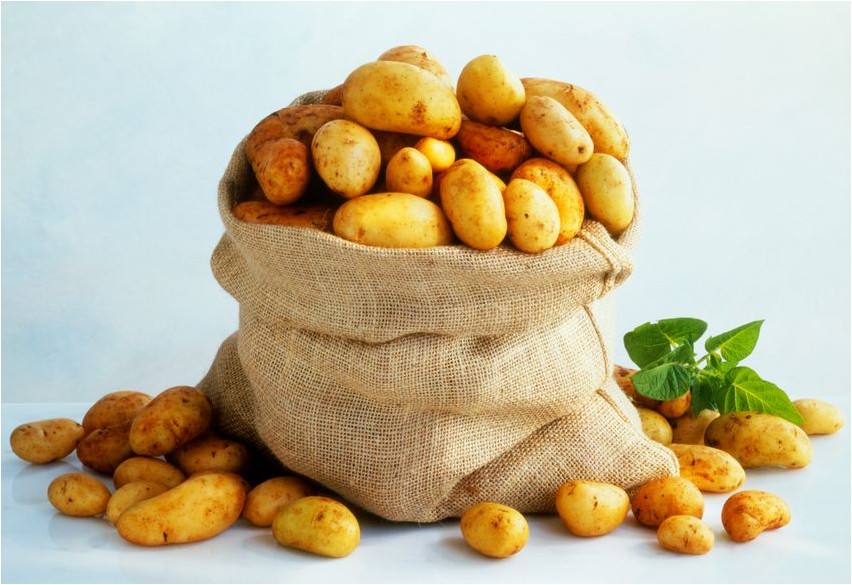
Potato (lat. Solanum tuberosum) is a popular vegetable crop; perennial tuberous herbaceous plant.
Description
Potatoes are classified as perennial crops, but in the Russian Federation they are cultivated as an annual, since low temperatures have an extremely detrimental effect on the tubers. The potato stem is ribbed, erect, branched, light green, no more than 150 cm high. The root system of the crop in question is branched, most of the roots go 60 cm deep.
The leaves of the plant are pinnate, dissected, entire, dark green in color, and equipped with petioles. The inflorescences are presented in the form of complex curls; they can be white-yellow, pure yellow, purple or violet-red in color, depending on the variety. The fruits are multi-seeded spherical or oval berries. A potato tuber is a thickened and short stem shoot; many eyes are formed on it. Tubers have a round, oval or elongated shape; color — yellowish, brown, violet-blue or pale pink.
Subtleties of cultivation
Potatoes are a light-loving crop and do not tolerate shaded areas well; as a result, the plants develop slowly and the tubers are prone to rotting. Lack of sunlight leads to elongated stems and limited flowering, which threatens a small harvest of tubers. The normal temperature for cultivating the crop is 20-22C. Temperatures above this limit lead to a slowdown in tuber development.
Potatoes also have a positive attitude towards moisture, although they cannot tolerate dampness or waterlogging. With a lack of moisture, the foliage quickly withers and as a result dries out. Soils for the crop in question are preferably loose, permeable, rich in potassium, nitrogen and phosphorus. Excess of minerals has a detrimental effect on the tops. The second increases green mass. Potatoes are negative for heavy clayey, damp, strongly acidic and dense soils. The best precursors of the crop are vegetable crops. Many gardeners advise not to grow potatoes in one area for several years, although in practice no one uses this rule.
Soil preparation
The soil for potatoes is plowed to a depth of at least thirty centimeters, large lumps are broken up and organic fertilizers are applied. The application of fresh manure should be avoided, as it promotes the development of pathogenic bacteria and plants are exposed to various diseases. In addition to organic fertilizers, the soil is also fed with mineral fertilizers, this can be superphosphate, ammonium nitrate and potassium salt.

Landing
Potatoes are planted in late April — early May. For planting, I use pre-sprouted tubers weighing 50-80 g with thick sprouts 1-1. 5 cm long. Tubers of unknown origin are treated in a 1% solution of boric acid for at least 20 minutes. The crop is planted in soil heated to 6-8C, according to the 30*80 pattern to a depth of 6-12 cm, in this case the warming and germination of tubers is best ensured.
Care
Until potato sprouts appear, loosen the soil at least twice every seven days. This procedure will prevent the appearance of weeds and fully aerate the soil. Plants that have gained a height of about 10-12 cm are hilled using a hoe. The second time they hill up in about a month.
Watering the crop is carried out in dry summers; for this you can use automated watering cans that operate under the influence of water pressure. Mineral fertilizers are applied when the first signs of potato wilting appear. During the flower formation phase, plants are sprayed with organo-mineral fertilizers with a stimulating effect.
Harvesting and storage
The potato harvest is carried out in mid-September, or later, but in dry and sunny weather, otherwise the crop will not be stored well. A week before digging, the tops of the plants are cut off with a trimmer and raked.
The tubers obtained by digging are sorted, left in the sun to dry and scattered under a canopy. After drying, the potato harvest is placed in wooden containers or special bags. The potato harvest is stored in the cellar, the optimal storage temperature is 2-3C.