Wanda
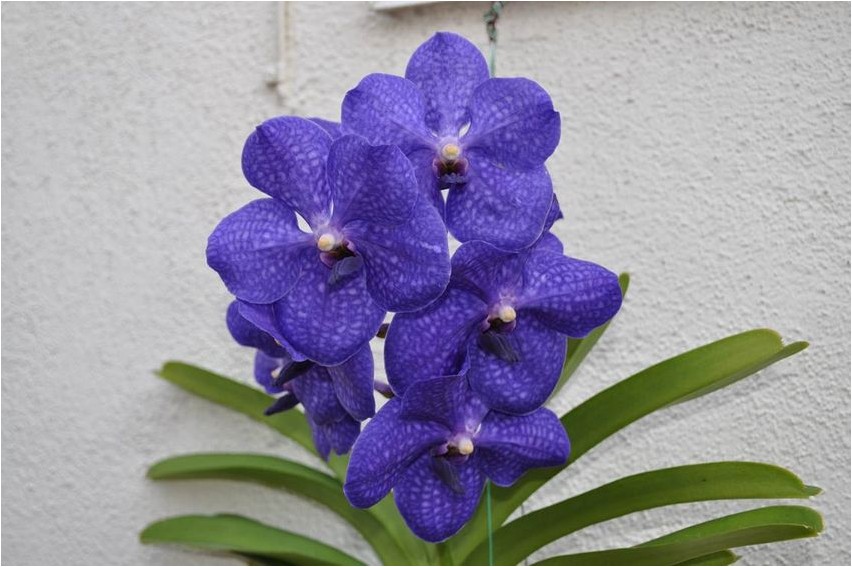
Vanda is a type of orchid. This plant has a dense stem, which is covered with leaves, as well as rather thick roots.
Such roots can sometimes reach even more than two meters in length. Peduncles consist of approximately two to fifteen flowers. About one to four flower stalks can bloom at the same time. These flowers are different in that at first they are small in size and rather pale, and then after a couple of days they become more colorful and also increase in size.
Care and cultivation of vanda
Different varieties of this plant will require different temperatures, so it is impossible to say for sure what temperature regime this plant will require.
However, most often there are vandas on sale that require daytime temperatures within a radius of twenty-two to twenty-eight degrees, and at night the thermometer should not fall below fourteen degrees.
The plant will also require fairly intense sunlight during the day, but at night the temperature should not rise above twenty-four degrees.

You should constantly ventilate the room in which the pot with the plant is located. The window should also be left open at night. But in the summer it is recommended to take the plant out into the fresh air, which will help the intensive development of this plant.
Actually, these plants are distinguished by their special love of light. However, some species are already adapted to the conditions in ordinary apartments, so growing them will not be particularly difficult. However, not every window will be suitable for growing vanda.
When it comes to choosing a south-facing window for growing this plant, it’s difficult to say that this option is the most preferable. During the fall and winter, a south-facing window is the optimal location for growing Vanda, as the plant will continue to grow, preventing any diseases and preventing any unwanted weakening. However, if Vanda is grown on a south-facing window from approximately the end of March to the end of August, excessively intense light can lead to excessive growth. Furthermore, constant direct sunlight can also cause leaf burn. Therefore, it is recommended to move the plant slightly away from the south-facing window during this period, but it is difficult to give a definitive guide as to when to move the plant. Experts recommend paying close attention to the plant: as soon as small red or purple spots appear on the Vanda leaves, this indicates the need to move the plant further away from the south-facing window. However, other changes in the plant’s appearance may also occur: white spots may appear or the leaves may turn yellow. These are signs of more serious damage to the plant, which may eventually lead to the complete death of the Vanda.
Vanda Propagation
Regarding Vanda propagation, this plant can only be grown from seed under specific conditions, which is only achievable in a laboratory.
If you plan to propagate Vanda yourself, you should use division. Vanda can be propagated by apical cuttings and lateral shoots. You will need to trim the top of the stem by about half its length, ensuring that the stem has several aerial roots. This stem is then planted in soil and kept in a warm, out-of-sun location. Mist the plant daily; watering is not required.