Pitomb
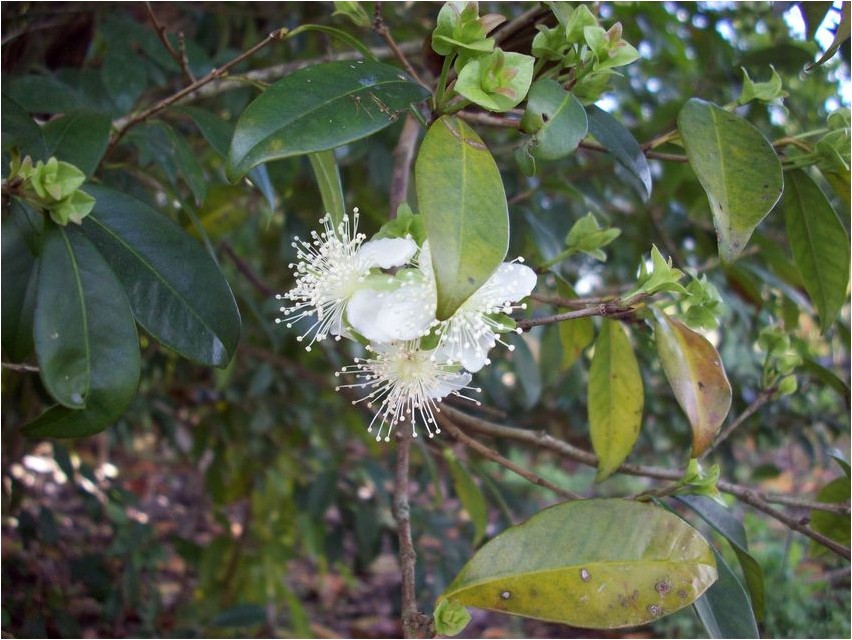
Pitomb (Latin: Eugenia luschnathiana) is a slow-growing evergreen fruit tree belonging to the Myrtaceae family.
Description
Pitomb is a tree growing from six to nine meters tall, bearing slightly wavy, glossy, lanceolate or oval leaflets. Their upper surfaces are dark green, while their undersides are exceptionally pale. The leaflets can grow from two and a half to seven and a half centimeters long. Each leaflet is attached to a very short petiole.
Pitomb”s miniature flowers form terminal, branched inflorescences and often reach thirty centimeters in length. Remarkably, the fruits from all inflorescences always ripen simultaneously. The oval fruits of the pitomba, ranging from 2. 5 to 3. 2 cm in size, have delicate, very thin orange-yellow skin and fragrant, juicy, and very soft golden-yellow flesh. In the central cavity of each fruit, one can see fairly large, brownish-reddish seeds, numbering between one and four. Each seed, containing one or two white kernels, occupies almost the entire seed cavity and is surrounded by a glassy-white, juicy, and soft aril, which can be up to 5 mm thick. Each aril is firmly attached to the seed coat and has a tart flavor and a very distinctive aroma. Incidentally, both in consistency and color, the pitomba is very reminiscent of an apricot.
The average lifespan of each pitomba tree is sixty years. The trees begin to bear fruit as soon as they reach a height of one meter. In tropical climates, the fruit typically ripens in November.
Where it grows
Pitomba is a plant native to southern Brazil. It is here that it is primarily cultivated today. However, it is equally popular in Bolivia and Paraguay. Little is known about pitomba in other countries.
Ripe pitomba fruits are generally not exported outside the countries where they were grown, due to their poor transportability and short shelf life. Therefore, pitomba is exported either canned or unripe.

Uses
Most often, pitomba is used to prepare carbonated drinks, as well as canned food, jams, jellies, juices and preserves. However, it is quite possible to eat it raw. Some gourmands suck it right from the bone, like a lollipop. And aryllus of ripened fruits is processed into juice.
Pitomba juice is very healthy — it contains an impressive amount of various microelements and vitamins. This fruit is also good because its calorie content is relatively low — every 100 g of fruit contains only 60 kcal.
And the evergreen leaves of pitomba, which have a rather unusual shape, allow the trees to be used for decorative purposes.
Growing and care
Pitomba grows well in tropical climates on low-lying plains. This crop is usually not very demanding on soils (it grows very well even on acidic poor soils), but it is very photophilous and needs abundant watering. And the heat-loving pitomba must be protected from exposure to low temperatures. If the thermometer drops below zero degrees, the beautiful plant will die.
In industrial and home gardens, this crop is grown mainly from seeds. True, more experienced gardeners plant pitomba with the help of grafting. Recently, this tropical plant is increasingly being grown in containers as a decorative indoor crop.
Pitomba Fruit Review — Weird Fruit Explorer Ep. 227





