Austrian wormwood
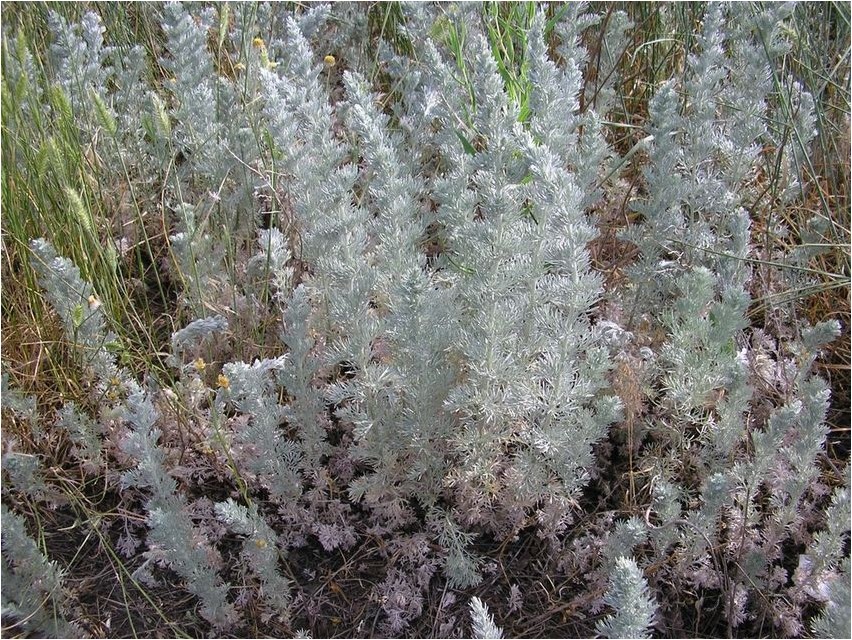
Austrian wormwood is one of the plants of the family called Asteraceae or Asteraceae; in Latin the name of this plant will be as follows: Artemisia austriaca Jacq.
As for the name of the Austrian wormwood family itself, in Latin it will be like this: Asteraceae Dumort. (Compositae Giseke).
Description of Austrian wormwood
Austrian wormwood is known by many popular names: white brooms, small wormwood, wormwood and May wormwood. Austrian wormwood is a perennial root-producing herbaceous plant, which is colored in gray-brown tones. The stems of this plant can be either ascending or straight, and their height will vary between twenty and forty centimeters. The leaves of Austrian wormwood can be either double- or triple-pinnate with linear lobules; in fact, like the whole plant, such leaves will be silky gray pubescent. The baskets of Austrian wormwood are spherical and small, they will droop and gather in a paniculate rather narrow inflorescence. The corolla of this plant will be fluffy and yellow in color.
Austrian wormwood blooms from July to August. Under natural conditions, this plant is found in the Caucasus, Central Asia, Ukraine, Moldova, Crimea, Belarus, as well as the European part of Russia, with the exception of the Far North. As for the general distribution, this plant is found in Iran, Central Europe and Asia Minor. For growth, Austrian wormwood prefers old fallow lands, forest-steppe and steppe zones, saline meadows, pastures, pastures, steppe and steppe slopes.
Description of the medicinal properties of Austrian wormwood
Austrian wormwood is endowed with very valuable healing properties, and it is recommended to use the herb of this plant for medicinal purposes. The term grass includes flowers, stems and leaves. Such healing raw materials should be harvested during the period from July to August.
The presence of such valuable healing properties should be explained by the content of organic acids in this plant, the bitter glycoside absinthine, organic acids, resin, vitamin C, salts of various acids and essential oil.

This plant has the ability to enhance the secretory activity of the stomach and intestines, and also possesses highly effective diaphoretic, choleretic, diuretic, anthelmintic, anticonvulsant, antipyretic, antiemetic, appetite stimulant, and mild sedative properties.
An aqueous infusion prepared from the herb of Austrian wormwood is recommended for improving appetite and gastrointestinal function. This remedy is also used for various joint conditions, gout, hepatitis, malaria, and cholecystitis, as an antiemetic and anticonvulsant.
For insomnia, it is recommended to apply the tops of Austrian wormwood stems along with their flower heads to the temples and forehead. Fresh leaves of this plant are recommended for swelling of the soles and calves of the feet. Austrian wormwood leaves, crushed with egg white, should be applied to bruises resulting from contusions. It should be noted that remedies based on Austrian wormwood are strictly contraindicated for pregnant women and elderly, obese individuals. However, if used correctly, positive effects will be noticeable fairly quickly, and the remedy itself will be highly effective.





