Beaucarney
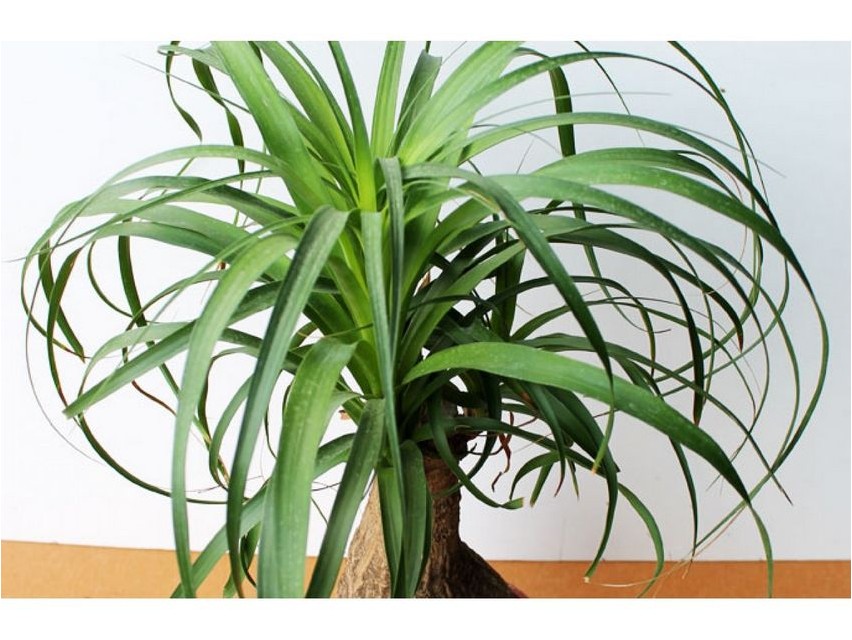
Beaucarnea has recently become an increasingly popular plant. This circumstance is due to the fact that bokarneya is considered to be quite unpretentious in care, and also has a very unique appearance.
Bocarnea is part of the genus Nolina and belongs to the Agave family. The genus Nolina includes about thirty varieties of succulent plants. This genus was first described in the early nineteenth century.
Bocarnea reflexum is especially common, and among the people this plant can be recognized by the name elephant’s foot. Bocarnea has a very unusual appearance: the plant has a thick trunk that expands downwards and becomes like a bottle. At the top of this trunk there are rather dense bunches of leathery leaves, painted in dark green tones. The leaves themselves are quite narrow, ribbon-shaped, and their length can reach one meter. However, in natural conditions the height of such a plant can reach even eight meters, however, at home the plant will not grow above one and a half meters.
This plant is native to Texas and northern Mexico. The plant thrives in hot and especially dry conditions; during rains, moisture accumulates, which bocarney uses the rest of the time.
Under natural conditions, in summer, adult plants develop a paniculate inflorescence with many cream flowers. It does not bloom at home; only old plants bloom in greenhouses. Bocarnea is considered an unpretentious plant, since moisture accumulates in the expanded base of the trunk (called the caudex), which allows them to easily withstand for a long time without watering. But excess moisture in the soil can be detrimental to nolina. Excess water is not absorbed and does not evaporate; the plant can easily rot.
Care and cultivation of bocarnea

As for lighting, the plant will need bright places, because its homeland is intense sunlight. It is recommended to place the bocarney on the south sides. If the plant does not receive enough light, the trunk begins to bend and at the same time stretches towards the light source. In summer, the plant should be placed on the balcony, but rainwater must be avoided.
As for the temperature regime, the optimal temperature for the summer period is considered to be from twenty to twenty-five degrees. In winter, the plant will require cool temperatures, within a radius of ten to fifteen degrees Celsius.
This plant tolerates the relatively dry air of apartments very well. Beaucarnea should be watered approximately twice a month, using lukewarm water and moderate watering. Watering the plant through the saucer is acceptable. In winter, the plant should not be watered at all, but watering once a month is acceptable. The plant won’t die from drought, but it can easily rot from excess moisture.
If you keep the plant in moderate light and water it regularly, the trunk will stretch upward and thicken slightly at the base. The leaf crown will appear quite large and disheveled.
If you want your plant to be short and have a thick trunk, you’ll need very bright light and frequent, abundant watering. This thickening will increase in size and allow moisture to accumulate.
As for fertilizing, Beaucarnea should be fed with a complex mineral fertilizer, starting around mid-autumn. The following soil composition is required: two parts turf, one part leaf mold, peat, humus, and sand. The following soil composition is also acceptable: one part peat and leaf mold, and two parts sand.