Lofant anise
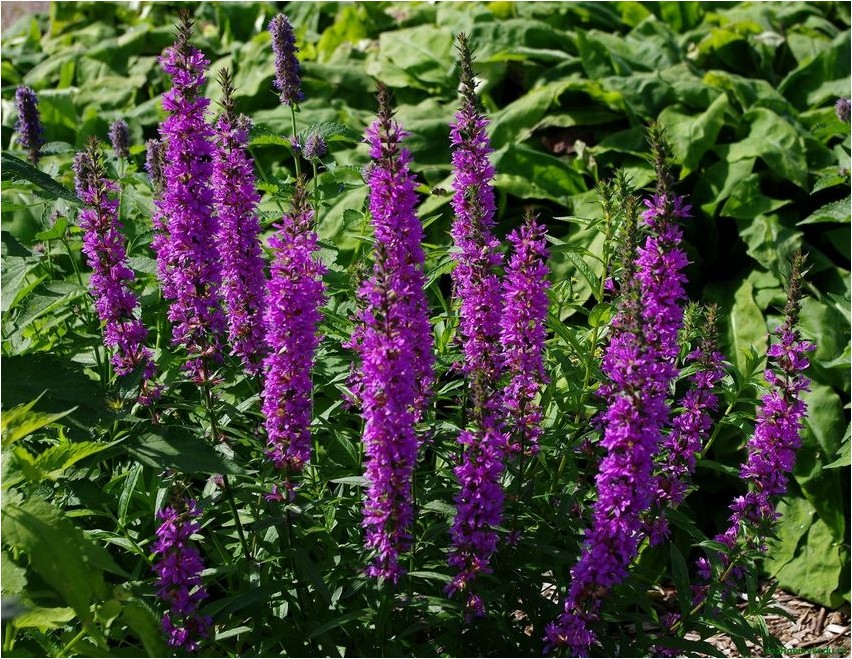
Anise lofant (lat. Lophanthus anisatus) is a perennial plant of the Lamiaceae or Lamiaceae family. Another name is fennel grass.
Natural range – Central Asia, Southern Europe, North America and Canada. Small plantations of the crop are cultivated in Crimea and Moldova.
Characteristics of culture
Anise lofant is a herbaceous plant 1-1. 5 m high with numerous tetrahedral shoots and a fibrous root system. The leaves are sparsely toothed, petiolate, heart-lanceolate, 4-4. 5 cm wide and 7. 5-10 cm long. The flowers are medium-sized, blue-lilac, less often white, collected in spike-shaped inflorescences developing on lateral and axial shoots. The fruit is a smooth, oblong-oval nut of dark brown color. The seeds are small and dark.
Active growth of the crop begins in March, buds form at the end of May, and mass flowering occurs from June to August. The entire above-ground part has a sharp, unobtrusive anise aroma and a pleasant sweetish taste. With good care in one place, a lofant can grow up to 8-9 years. The crop is light-loving, drought-resistant, but demanding on growing conditions.
Growing conditions

Anise lofant prefers fertile, loose, moderately moist and neutral soils. Does not accept heavily limed, heavy clay and waterlogged soils. Areas for cultivation should preferably be well lit and protected from northern winds. When planting, you should avoid lowlands with stagnant cold air and melt water.
Reproduction and planting
Anise lofant is propagated by seeds and by dividing the bush. Seeds remain viable for 2-3 years. Lofant seeds are sown in seedling boxes filled with fertile soil. When two true leaves appear on the seedlings, the seedlings dive into separate containers. Seedlings are planted in the ground at intervals of 20-25 cm in late May – early June, but only after the threat of frost has passed. Sowing in open ground is not prohibited. The seeding depth is 2-2. 5 cm. Sow the seeds in a row. The distance between the rows should be 35-40 cm. To facilitate sowing, the seeds are mixed with fine-grained sand in a ratio of 1:2.
Under favorable growth conditions, seedlings appear in 10-12 days. The crops are thinned until two true leaves appear on the seedlings. Repeated thinning is carried out as necessary, the final distance should be about 20-25 cm. Anise lofant is propagated by dividing the bush in spring or autumn. The bush is dug up, divided into parts using a knife and planted in the ground. Important: each division must have a root system sufficient for development and 4-5 renewal buds.
Care
Caring for anise lofant includes systematic weeding, loosening, fertilizing and watering. In early spring, plants are fed with liquid nitrogen fertilizers or humus. Subsequent feeding is done after each cutting of greenery. Mullein infusion is ideal for this purpose. For the winter, ridges with lofant are insulated with peat chips, pine or spruce spruce branches or crushed bark. A dense layer of snow will become a natural covering material.
Harvest
Lofant is harvested during the period of budding or flowering. Cut greens are dried under a canopy in the shade or in a well-ventilated area without direct sunlight. After drying, the plants are crushed, poured into glass jars and covered with lids. You can also package lofant in bags made of thick paper.
Application
Lofant anise is widely used in medicine. People call the plant a symbol of beauty and youth. Lofant infusions reduce blood pressure and regulate metabolism. Lofant is useful for hepatitis, gastritis, and diseases of the gastrointestinal tract. Infusions of flowers are used for paralysis. Anise lofant is often used in the manufacture of cosmetics for skin and hair.
Lofant greens are used in the preparation of salads, soups, potato and cabbage dishes. As a fresh seasoning, lofant is added to rube, sandwiches and cottage cheese. The flowers and leaves are brewed and consumed as a medicinal tea. Lofant is also ideal for decorating garden plots.





