Stock rose mallow
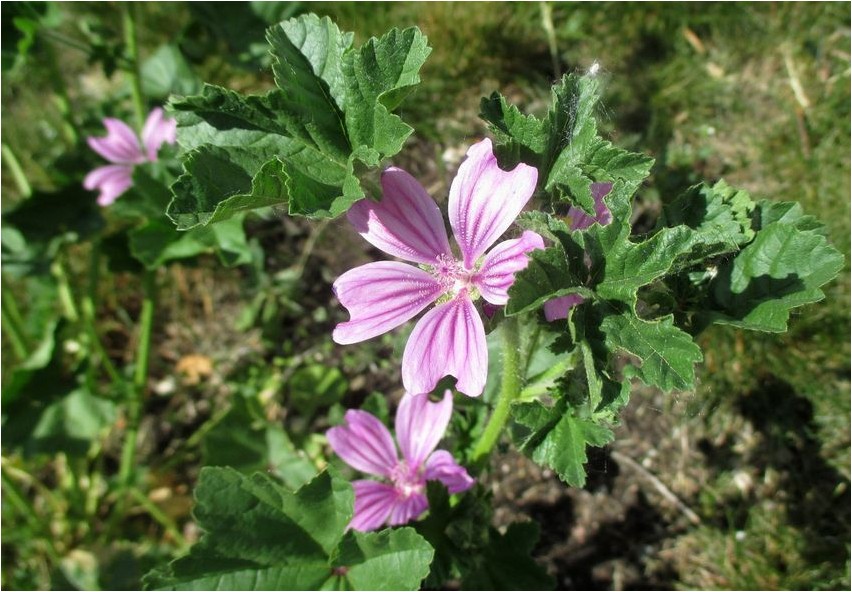
The stockrose mallow is one of the plants of the family called malvaceae; in Latin the name of this plant will be as follows: Malva alcea L.
As for the name of the rose mallow family itself, in Latin it will be: Malvaceae Juss.
Description of the rose mallow
Stockrose mallow is a perennial herbaceous plant, the height of which will fluctuate between forty and one hundred and twenty centimeters. The entire plant can be colored yellowish-green or light green. The stem of the stockrose mallow will be branched, cylindrical and straight, it can also be simple, covered to the very top with tufted hairs. The rays of such hairs are protruding, and they are also endowed with an admixture of rather long spaced hairs, which can be either simple or two-pointed. The leaves of this plant will be petiolate, with the lowermost ones being rounded or rounded, the middle leaves are on shorter petioles, while the upper leaves will be three-lobed. The flowers of the stockrose mallow are located at the top of the stem and are collected in umbellate or racemose inflorescences. The corolla of this plant will be quite large in size, approximately two and a half to three times larger than the calyx. The corolla is painted pink, and the petals will be hollow.
Under natural conditions, stock rose mallow is found on the territory of Ukraine, Belarus, as well as the following regions of the European part of Russia: Volga-Don and Upper Volga regions. For growth, this plant prefers garbage places, bushes, parks and gardens.
Description of the medicinal properties of stockrose mallow
Stockrose mallow is endowed with very valuable healing properties, and it is recommended to use the roots and herbs of this plant for medicinal purposes. The concept of grass includes stems, leaves and flowers. The presence of such valuable healing properties should be explained by the content of fatty oil in the seeds of this plant.
A decoction prepared from the flowers of the mallow is recommended for use as an anti-inflammatory, mucous, emollient and astringent for colitis, enterocolitis, gastritis, stomach and duodenal ulcers. In addition, this healing agent is effective for various respiratory diseases, including pneumonia and bronchitis.

An infusion made from the aerial parts of this plant is used as a diaphoretic and antispasmodic, and is also used as a gargle for various colds and inflammatory conditions. A decoction made from the roots of the aerial parts of the hollyhock is indicated for blepharitis and conjunctivitis, and a poultice made from the flowers and leaves of this plant is used for tumors.
It should be noted that the stems of this plant contain fiber, which is used to produce cardboard and paper. Remarkably, the young leaves of the hollyhock are quite suitable for consumption as a substitute for spinach.
For all of the above-mentioned ailments, the following highly effective remedy based on this plant is recommended: to prepare this remedy, take one tablespoon of hollyhock flowers per glass of water. Boil the resulting mixture for a couple of minutes, let it steep for an hour, and strain. Take the resulting medicinal remedy made from hollyhock mallow, taking either half a glass or one-third of a glass.





