Carob Tree
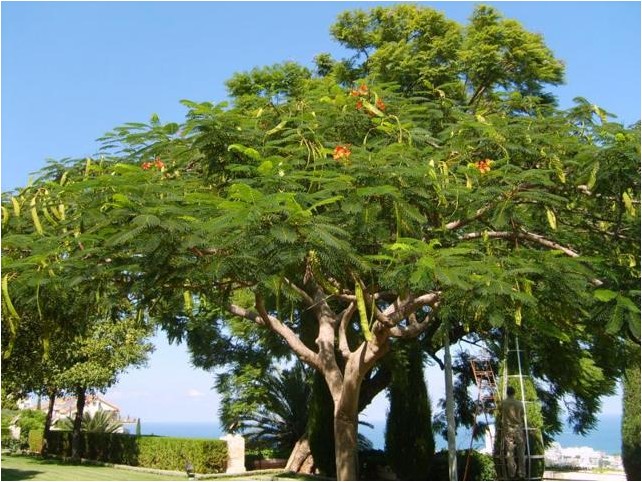
The carob tree (Latin: Ceratonia siliqua) is a fruit tree belonging to the legume family. Other names include carob tree or carob pod.
Description
The carob tree is an evergreen tree with an unusually broad crown, reaching heights ranging from six to twelve meters. Its leaves are quite dense and pinnate, and its miniature flowers form rather interesting clusters. These flowers lack corollas, and their inconspicuous sepals quickly fall off.
The fruits of this unusual carob tree are pods, which can range from ten to twenty-five centimeters in length, with a width of two to four centimeters and a thickness of approximately 0. 5 to 1 cm. These dry pods smell yeasty when broken. All the beans are indehiscent and brown in color, containing not only seeds but also a surprisingly sweet and very juicy pulp, whose sugar content can reach up to 50%.
Where it grows
The carob tree has long been cultivated in the Mediterranean region. It”s not uncommon to encounter wild specimens there.
Uses
The dried pods yield a powder called carob, which is used by those who avoid caffeine as a substitute for cocoa powder. It”s used to make a drink with a flavor very similar to cocoa, and it”s also widely used in baked goods. In Egypt, these beans are a favorite treat for many, and in Turkey, Sicily, Portugal, Malta, and Spain, they are used to make excellent refreshing non-alcoholic drinks, as well as rich liqueurs and compotes. Beans are also used to make a wide variety of medicinal preparations, which are widely used for gastrointestinal disorders. They also help strengthen the immune system and are useful in treating coughs and colds.
The high iron content makes these unusual fruits indispensable for anemia. They are also a valuable component of a restorative diet for heavy menstrual periods, as well as after various surgeries or serious illnesses. These fruits are also rich in zinc, making them an excellent remedy for the treatment or prevention of impotence.

The potassium found in carob fruits has a beneficial effect on kidney and cardiovascular function, while magnesium helps normalize nervous system function and heart health. The calcium in carob helps strengthen teeth and bones, and vitamin B2 is excellent for vision.
Carob seeds produce a gum that is widely used in the food industry as a thickening agent. The seeds are also sometimes used as a nutritional supplement in livestock feed.
Syrup made from this exotic tree is incredibly popular among some ethnic groups, as it is an excellent remedy for dry coughs, colds, and sore throats. It is excellent for removing toxins and waste from the body and is a real relief for all kinds of nervous system disorders, chronic sleep disturbances, diarrhea, and poisoning. This syrup is also effective for shortness of breath, especially if caused by allergic reactions. Normalize blood pressure and cholesterol levels, improve gastrointestinal function, and reduce heart palpitations—this miraculous syrup can do it all!
And since these spectacular beans are completely hypoallergenic, they are a wonderful food for children and expectant mothers. They are also often given to infants to reduce regurgitation and relieve diarrhea.
Contraindications
The only contraindication to eating these beans is diabetes, as carob is very high in sucrose. Everyone else can safely consume them, regardless of age or overall health.
Carob